Publicité
China - The Belt and Road Initiative: a sense of togetherness
Par

Partager cet article
China - The Belt and Road Initiative: a sense of togetherness
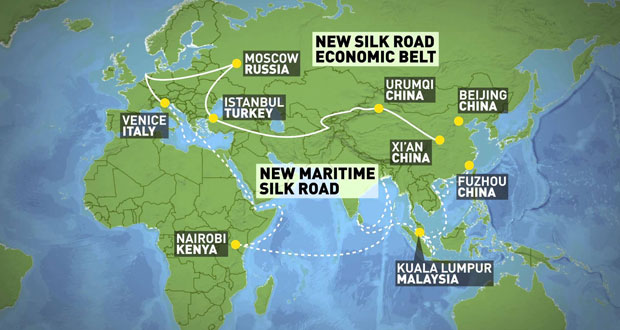
China’s Belt and Road refers to the Silk Road Economic Belt and the 21stCentury Maritime Silk Road, a trade and infrastructure network connecting Asia with Europe and Africa along ancient trade routes.
“Media organizations can enhance cooperation through personnel exchanges and sharing news products to increase understanding of people in countries along the routes,” Liu told the representatives. The conference, hosted by the People’s Daily, attracted participants from 101 countries, including one representative from Mauritius.
Liu Yunshan, a member of the Standing Committee of the Political Bureau of the CPC Central Committee, called on media organizations to create a sound environment for promoting the Belt and Road Initiative “which is the world’s largest global economic recovery plan, and marks China’s contribution to the global governance and peace”.
“The initiative aims to promote the efficient allocation of resources and deep integration of markets, and to encourage the countries along the Belt and Road to achieve economic policy coordination”, added Liu Yunshan.
China has signed agreements with more than 30 countries to further this initiative. More than 70 countries and organizations expressed their support and willingness to join, essentially forming an international cooperation frame with extensive influences.
In 2013, Chinese President Xi Jinping put forward the initiative of jointly building the Silk Road Economic Belt and the 21st-Century Maritime Silk Road, when visiting the Central and Southeast Asian countries. “Belt” refers to a link stretching from China to Europe through Central Asia, while “Road” refers to a link from China to its port facilities on Africa’s coastline and through the Suez Canal into the Mediterranean Sea. Collaborative construction of an infrastructure network connecting all sub-regions in Asia and between Asia, Europe and Africa is one of the main focuses of the economic initiative.
By sheer coincidence, the Belt and Road conference took place just after the July 12 ruling against China by the Law of the Sea Tribunal in The Hague, which found Beijing to be engaging in a host of illegal actions and violations of international law as it has pressed its territorial claims in the South China Sea. The tribunal declared that China’s exclusion of Filipino fisherman from the area, its building of half a dozen artificial islands, and the damage it has done to coral reefs and endangered species are violations of the law.
“GROW GLOBAL TRUST”
Soon after the decision, some one hundred of China’s most famous actors, musicians, television personalities, and other celebrities furiously denounced the tribunal on social media, reproducing a map of the disputed area and declaring, “China’s territorial sovereignty is not a matter for arbitration.”
Hours after the tribunal issued its decision, the headline on People’s Daily was: “U.S.-led conspiracy behind the farce.” Last week, China’s ambassador in London, Liu Xiaoming, accused Washington of trying to “humiliate China diplomatically, to damage China’s image, and also to give [the US] a legal ba- sis with which to challenge China.” More generally, the Chinese reaction has been to deny the tribunal’s jurisdiction, to dismiss its ruling as not just incorrect but, as the nationalist paper Global Times put it, “radical and shameful.” The tribunal’s ruling is “nothing but a scrap of paper,” vice Foreign minister Liu Zhenmin said, and therefore China is justified in ignoring it.
To conclude, let us emphasize the words of Gauhar Zahid Malik, Executive Editor of Daily Pakistan Observer, who stated, in one of the numerous speeches, the Belt and Road Initiative “would help grow global trust in human mutuality, minimize threats to world peace, promote tranquility and tolerance for greater human welfare. It will foster a sense of togetherness among nations despite diverse systems of governances and constitutions. The project’s prominent feature of new globalism with economic deliveries attracts me most. Never before an initiative of this dimension has been put on ground; it automatically introduces the initiators of this global mega project as worldwide well-wishers of humanity. Its value is permanent; its economic and human betterment yield is universal.”
Publicité
Publicité
Les plus récents