Publicité
Rethinking a global flavor
A Haitian market vendor handed me a piece of chocolate: It destroyed everything I believed about it
Par
Partager cet article
Rethinking a global flavor
A Haitian market vendor handed me a piece of chocolate: It destroyed everything I believed about it
I was a United Nations (UN) official who thought good chocolate only came from Switzerland. One bite changed my life — and launched a decade-long obsession with the world’s most complex flavor.
“Chocolate is made in Switzerland,” I told her. Half-joking.
She handed me a piece anyway.
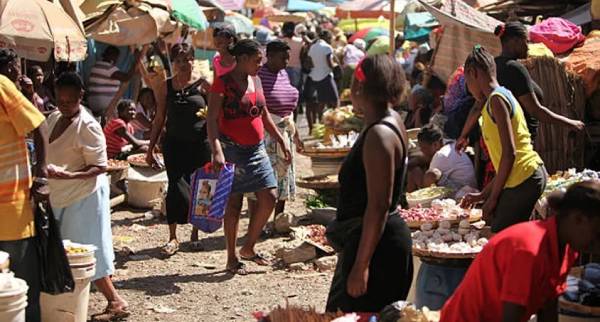
It was 2013. I was in Cap-Haïtien, Haiti, on a UN mission — the kind of work I had been doing for years, helping communities rebuild after disaster and conflict. Between engagements, I wandered into a local market. And there, among the noise and heat and color of that ordinary afternoon, a vendor offered me something that looked like crude, handmade chocolate.
I took a bite.
It was earthy. Fruity. Extraordinarily deep. It tasted like a place — like the particular soil and climate and hands of northern Haiti. It tasted unlike anything I had ever eaten from a Swiss or Belgian wrapper. In that moment, without knowing it, I had tasted terroir. And I would never look at chocolate the same way again.
The assumption we all share
Like most people, I had spent my entire life believing that great chocolate was a European achievement. The cacao growing in the tropics was just raw material — a commodity shipped to Switzerland or Belgium, where the real artistry happened. The farmers who grew it were invisible in this story. The land they farmed was irrelevant.
That bite in the Haitian market dismantled this belief entirely.
What I tasted was not the product of European craft. It was the direct expression of Haitian soil, Haitian microclimate, and a cacao tree that had been growing in that valley for generations. The flavor was not designed. It was already there, in the bean — waiting for someone to pay attention.
I got hooked. I started spending weekends visiting cocoa plantations, sampling beans, from Dame Marie to Borgne across Haiti, and I discovered something that stopped me cold: every region produced completely different chocolate. Same country. Same species of tree. Radically different flavors. I had stumbled into one of the great undiscovered stories in food.
600 aroma compounds. Wine has 200.
Theobroma cacao — the tree whose seeds become chocolate — translates from ancient Greek as “food of the gods.” The Mayans and Aztecs understood something our industrial food system forgot: this plant is extraordinary.
Science backs them up. Wine, celebrated for centuries as the pinnacle of flavor complexity, contains approximately 200 to 300 identified volatile aroma compounds. Chocolate contains over 600. The flavor universe available in a well-made single-origin dark chocolate bar is not just richer than wine — it is categorically more complex, with more variables, more molecular interactions, and a far greater sensitivity to the specific conditions of its origin.
And yet most people eat chocolate as though it were a single, interchangeable flavor. As though a bar made from beans grown in Belize tastes the same as one from Bali. It does not. It never did.
The promiscuous bean
There is something else that makes cacao uniquely extraordinary: it is, to use the scientifically accurate word, promiscuous. Theobroma cacao hybridises freely with any other cacao variety it encounters — driven by insects, proximity, and millennia of natural crossbreeding. The result is that every cooperative, every valley, every traditional farming community has cultivated, over generations, a local genetic composition that is entirely its own.
This is why the three classical groupings of cacao — Criollo, Forastero, and Trinitario — tell only a fraction of the story. Genetic science has now identified at least ten distinct clusters within the species. Modern molecular analysis keeps finding more. In El Salvador, farmers speak of cacao fino de aroma as part of their local heritage — a descriptor that captures the intense florality their local hybrid produces. No other variety, in no other place, makes that same chocolate.
The flavor complexity of cacao is not just about terroir. It is about genetics meeting terroir, and the two amplifying each other into something that defies easy description.
Nine years, five Continents, two ingredients
After that bite in the Haitian market, I spent nine years travelling the world — to Bali, the Dominican Republic, El Salvador, Belize, and back to Haiti — sampling hundreds of cacao beans from small cooperatives, looking for the best. Most samples were rejected. The farmers who didn’t make the cut were often disappointed, because we pay substantially above fair-trade prices. But our standard was absolute: the bean had to tell a story that no other bean could tell.
The company I founded, Le Chocolat des Îles — Chocolate of the Islands, named for Mauritius, the Indian Ocean Island where I was born and raised — makes chocolate from exactly two ingredients: cacao beans and sugar. No vanilla. No lecithin. No sea salt, no orange rind, no additions of any kind. Because when the bean is extraordinary, it needs no embellishment. The land has already done the work.
We call our approach Premier Cru — a term borrowed from French wine culture, meaning a high-quality product sourced from one specific location. Not just a country. One cooperative within a country. Because even within the same country, the flavor differences between valleys are profound.
An invitation
I grew up in Mauritius, where the pleasures of the table are taken seriously. My family are devoted chocophiles: there was always an unspoken expectation that when I returned from a UN mission, I would arrive with as many kilos of duty-free Swiss chocolate as I could carry. It was the proper compensation for long absences.
But it was Haiti that taught me what chocolate could really be.
This is the first in a series of five articles about chocolate as terroir — about why the world’s most complex flavor has been hiding in plain sight, and what it would mean to treat it with the same seriousness we bring to wine, olive oil, and single-origin coffee.
The gods called it Theobroma. They were right.
Ravi Goojha
Bio
Ravi Goojha is the founder of Le Chocolat des Îles, a New York bean-to-bar chocolate company focused on direct cacao sourcing and origin-driven flavor. A former international diplomat of Mauritian descent who served in Iraq, Africa, the Balkans, and the Caribbean, he has spent the past decade working with cacao farmers and studying the genetics, agriculture, and economics that shape the global chocolate industry.
Publicité
Publicité
Les plus récents