Publicité
Interview with…
Jean-Raymond Boulle : “Mauritius must demonstrate that its value extends far beyond its domestic market”
Par

Partager cet article
Interview with…
Jean-Raymond Boulle : “Mauritius must demonstrate that its value extends far beyond its domestic market”
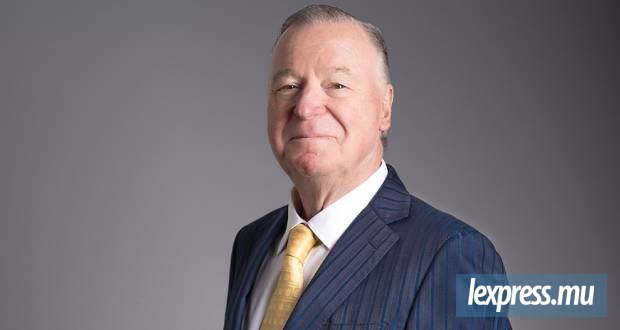
Jean-Raymond Boulle , Vice Chairman, Corporate Council on Africa.
As Mauritius prepares to host the US-Africa Business Summit, Jean-Raymond Boulle (picture), founder of Jean Boulle Group, outlines how the island can leverage its financial services expertise, international connections and strategic position to attract American investment and strengthen economic ties with Africa.
You played a decisive role in securing Mauritius as the host of the US-Africa Business Summit, which will take place from 6 to 9 December under the theme “Advancing New Frontiers in US-Africa”. Beyond the diplomatic prestige and international visibility, what tangible economic benefits could this summit generate for Mauritius? Can we expect investment announcements, trade partnerships or new projects involving American and African companies?
Hosting an international summit is an achievement, but its true value will come from the investment and commercial activity that will follow. I am confident that the Summit can deliver meaningful opportunities for Mauritius, particularly in energy, financial services, healthcare, and technology.
One of the most significant possibilities is establishing Mauritius as a preferred financial and investment platform for American capital entering Africa. We already have the necessary foundation: an established financial services industry, an extensive network of double taxation agreements and a regulatory environment that international investors understand and trust.
The Summit will provide Mauritius with the opportunity to bring these advantages directly to the attention of American investors and development finance institutions. The programme is also designed to facilitate substantive commercial discussions, including dedicated opportunities for businesses and investors to discuss transactions.
Mauritius aims to position itself as a leading hub connecting the United States and the African continent. In which sectors does the country have the strongest advantages to realise this ambition: financial services, energy, infrastructure, technology, healthcare or natural resources? And how can Mauritian businesses become more integrated into African and American value chains?
The Mauritius International Financial Centre is the obvious starting point. Ranked second among African financial centres in the Global Financial Centres Index, Mauritius has established itself as a leading gateway for international investment into Africa. Its investment-grade standing, sophisticated financial infrastructure, growing network of double-taxation treaties and position as home to the continent’s first credit-rating agency provide a compelling foundation for attracting American capital.
The next step is to integrate U.S. investors and development finance institutions more fully into this established financial platform. Doing so would allow Mauritius to play a much greater role in financing renewable energy, advanced manufacturing, healthcare and technology projects throughout Africa.
There is already considerable momentum on the American side. The U.S.-African Union Strategic Infrastructure and Investment Working Group, launched in January 2026, is intended to help address Africa’s estimated USD68–108 billion annual infrastructure financing gap. Alongside this, billions in U.S. federal lending are being directed towards critical minerals, creating further opportunities for African industries and investment.
But Mauritius must demonstrate that its value extends far beyond its domestic market. We have already built an international reputation as a stable, efficient and competitive jurisdiction for investment into Africa, supported by established regional headquarters, investment funds and Mauritian-financed projects across East and Southern Africa.
The priority now is to build on this record, helping Mauritian businesses secure international investment, establish strategic partnerships and participate more directly in African value chains. Through this, we can strengthen our position as a preferred partner for U.S. companies seeking to expand across the continent.
AGOA has recently been granted a further extension until 31 December 2028. While this decision provides some relief to African exporters, it does not necessarily guarantee stability in trade relations with the United States. How do you assess this extension, and what additional opportunities could Mauritius derive from it, particularly for its SMEs and manufacturing sector?
I welcome the extension of AGOA, as it has played an important role in strengthening trade between Africa and the United States. I was a part of the original advocacy, and the legislation passed in 2000 was a step towards a «trade not aid» approach. Since its inception, AGOA has allowed several African Economies, including Mauritius, to build export industries, like apparel and manufacturing, which would not have been possible at the same scale without it.
The extension is a positive sign, though it does not tackle the underlying issue of uncertainty. Trade which relies upon political approvals makes it more difficult for businesses to commit long-term investment and expansion.
For Mauritian business, this should be an opportunity to strengthen manufacturing capabilities, diversify the export base and support SMEs in accessing American markets. More importantly, we should be looking beyond AGOA towards a comprehensive bilateral trade agreement with the United States. This would offer businesses in Mauritius the stability and certainty required to make long-term investment decisions, and create opportunities for closer cooperation across services, technology and investment. Ultimately, a lasting commercial relationship between Mauritius and the United States will require more than preferential tariffs; they require a dependable framework from which businesses can grow.
Donald Trump’s tariff policy, characterised by higher import duties and an increasingly protectionist approach, has created new uncertainties for US trading partners. Can AGOA genuinely protect African exporters from this changing trade environment? More broadly, how do you see economic relations between Washington and Africa evolving over the next two years?
AGOA has made a substantial contribution to African trade, particularly by enabling countries such as Mauritius to develop competitive export industries. However, its limitations have become increasingly apparent. Preferential access alone cannot provide the certainty businesses require, particularly when changing tariff policies and periodic renewals complicate long-term investment decisions.
I believe AGOA’s central ambition of replacing dependence on aid with stronger commercial relationships remains as relevant today as it was in 2000. What is needed now is a broader approach that combines stable market access with investment, infrastructure development and greater opportunities for African businesses to participate in international value chains.
The United States has shown its willingness to support major African infrastructure projects, while its development finance institutions and private investors have the capacity to mobilise substantial capital across energy, critical minerals, healthcare and technology. Mauritius should position itself at the centre of these developments. With its established financial infrastructure, extensive international connections and experience facilitating investment into Africa, the island can play a much greater role in connecting American capital with African opportunities. The U.S.-Africa Business Summit offers an exceptional opportunity to advance that ambition.
The midterm elections on 3 November dealt a major setback to Donald Trump’s Republican Party, with the Democrats regaining control of both chambers of Congress. To what extent could this new political balance influence US trade policy towards Africa?
Could the Democrats exert pressure to ease certain tariff measures introduced by the Trump administration or encourage a more predictable approach to trade? Changes in Washington may influence the direction of American trade policy, but the priority for African countries must remain the development of commercial relationships that can withstand political cycles. Whether a new balance in Congress will lead to changes in tariffs remains to be seen, but greater predictability in trade policy would undoubtedly benefit businesses on both sides of the Atlantic.
The United States is demonstrating a renewed commitment to Africa, with an increasing emphasis on private capital, transparent procurement and co-investment rather than traditional sovereign lending. The Lobito Corridor is a clear example of this approach, bringing together significant American financing and African infrastructure development to support long-term commercial opportunities.
For Mauritius, this reinforces the importance of moving beyond temporary trade preferences towards a comprehensive bilateral agreement with the United States. Such an arrangement would provide a more dependable framework for exporters and investors, while allowing Mauritius to negotiate provisions that reflect its own economic strengths, including financial services, investment and digital trade.
Ultimately, our objective should be to establish a stronger and more permanent economic partnership with the United States, complementing our longstanding relationships with Europe and Asia. That is how Mauritius can build a more balanced and resilient international economic position.
Publicité
Publicité
Les plus récents