Publicité
Cuture: The black queens of jazz (1)
Par

Partager cet article
Cuture: The black queens of jazz (1)

Introduction
I am aware that some may be, rather bewildered by the idea of the 13-year-old boy in the 21st century writing about African-American female artists, such as Ella Fitzgerald, Billie Holiday, Nina Simone and Ma Rainey, who have been gone for decades now. They may not be here physically, but their legacy and music is still very much alive. These four unforgettable, remarkable, and iconic female artists have overcome obstacles such as racism and pure misogyny to become the greatest singers of the 20th century. Through their songs such as Strange Fruit and Mississippi God Damn, they expressed their thoughts and feelings about the racial discrimination that black people faced at the time. However, Ella Fitzgerald’s melodious songs did not reflect the troubled childhood she experienced. Instead, her songs conveyed messages of love and nostalgia. Without a doubt, we must be tremendously grateful to these women as they have helped shape today’s modern society.
I want us to genuinely appreciate how incredibly resilient these women truly are, from sleeping on streets and begging for money to making history as the most iconic African-American female singers; these women have been through it all, they have paved the way for new black and coloured artists and have presented them with opportunities and chances they never got. Furthermore, we will discover how these three artists have transformed jazz and the music industry overall, inside, and out. I am writing this article because I want us to look at these remarkable women as civil rights heroes, as women who have devoted their sin- ging careers to fight for gender and racial equality and not as the media portrays them as ‘drug addicts’ or ‘lost souls’. Today, we follow Billie Holiday’s path.
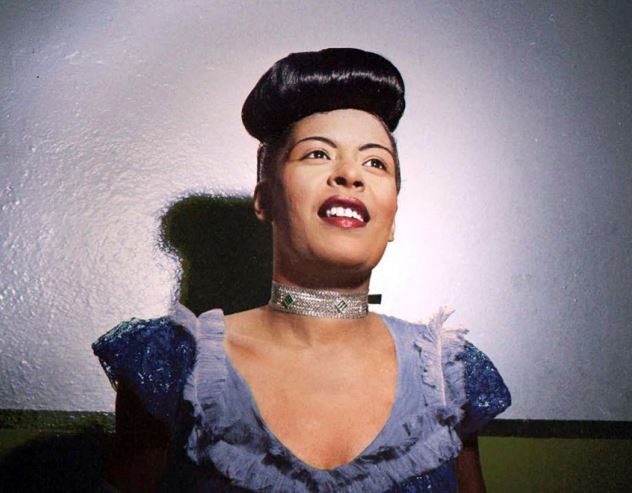
Billie Holiday was an African-American singer born in 1915, in the jazzsoaked Baltimore Maryland. Being brought up by a single mother in the early 1920s, Billie had a troubled and rough childhood. She found comfort in singing along to the records of Bessie Smith and Louis Armstrong. In 1929, her mother decided to move to New York in hopes of finding a better job. In New York, Billie claimed to be 21 years old and started working as a prostitute in a brothel. She was only thirteen. After only a few months of working, she and her mother were arrested. Billie was sent to a workplace of nuns where she claims she was left to sleep in a room with a dead body to teach her a lesson. After a turbulent childhood, Billie began singing in night clubs across Harlem. Spectators were amazed by her singing and improvisational skills. On one evening, John Hammond, a famous producer, happened to be there. He was astonished by her vocal ability to improvise on certain songs which were already extemporaneous. At the young age of only 18, Hammond arranged for Holiday to make her recording debut in November 1933 with Benny Goodman.
During the 1930s, Billie Holiday’s singing career really took off. Her most famous song being, Strange Fruit. Strange Fruit is a protest song about the lynching of black people in America. It is a song that goes into depth about the institutional and systemic racism that black people were facing at the time. Billie Holiday wanted to use her platform to spread awareness about the injustices that surrounded all African American people at the time. The lyrics of this deep song were the realities of the cruel, racist world that black people had to live in. This song was named ‘Strange Fruit’ because it signified the dead black bodies that hanged from trees. Instead of seeing normal fruits, you would see dead bodies and you’d think to yourself, “What a strange fruit!”. More than 4,000 AfricanAmericans were brutally lynched in the United States between 1877 and 1950. Lynching was a vicious tool of racial control and its legacy is still heavily felt today. Most states in America have no memorials to these victims and the sites of these lynching remained unmarked.
Strange Fruit was a composition which resonated with the movement of civil rights, and therefore threatened those in positions of power. Holiday’s emotional song made her a target in the eyes of the federal government. However, the song was written by Abel Meeropol from New York who was an activist, poet, and teacher. The American government was always after Billie because of her song, it came to a point that they even threatened to prosecute her for public endangerment. However, Holiday turned a blind eye to them and continued to sing the song. In response to them she said, “Suck my black ass!”. Billie Holiday was also famously known for her drug and alcohol addiction. It was an addiction that imperatively ruled the last years of her life. In 1947, Holiday was arrested on drug charges and ended up spending several months in jail for possession of Heroin. Only two years later, she was arrested once again due to being in possession of Heroin. However, Billie had always been a constant target for federal officers because of her protest song Strange Fruit. The federal government was constantly trying to find ways to prosecute her and ‘keep her quiet’ as they knew that she was starting to get people to think, she was raising awareness and would therefore pose a threat to the racist and outdated constitution which ruled the country and thus, the society.
Despite all the strenuous problems she faced, in the very depths of substance abuse, she was quite simply a free soul and enjoyed life to the fullest. While her health was slowly deteriorating, her voice was still very much alive and present. On May 25, 1959, Billie Holiday gave her last and final performance in New York City where she performed her very own pure, heart-felt and emotional last Strange Fruit. In July 1959, Billie’s chronic drinking and smoking really took a toll on her health. While in court, on trial for drug possession, she collapsed. She was rushed to Harlem’s Metropolitan Hospital where she was diagnosed with cirrhosis of the liver. Finally, on July 17, 1959, Billie lost her battle. While police officers looked over her, and her hands in handcuffs, she took her final breath. Despite Billie being severely ill, she was placed under arrest and was denied access to vital medical treatment. Nor her friends or family were allowed to see her. In other words, Billie Holiday was denied a peaceful death by the Federal Bureau of Narcotics. “Don’t be in such a hurry” were the last words of the great and unfor- gettable Billie Holiday.
Conclusion
As a climate activist, there are days when I wake up and feel overwhelmed by the problems that surround us, humans. I feel as though nothing is achievable, powerless, and helpless. But then, I remind myself of these four extraordinary women, and I think to myself, if they were able to overcome what they overcame, then so can I. It’s not easy waking up every single morning with climate anxiety, with a fear that simply eats you up. But the only way to deal with that anxiety is to act; just as I protest every Friday and as they sung every evening. We all have one characteristic in common and that is to evoke change.
Publicité
Publicité
Les plus récents