Publicité
Africa: let the borders fall
Par

Partager cet article
Africa: let the borders fall
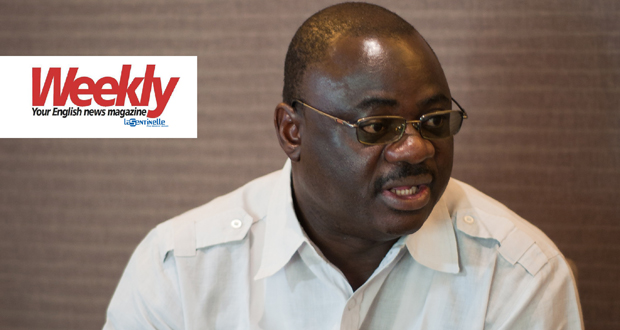

One of the major aspirations of pan-Africanism is to create an integrated and prosperous Africa, where diversity and multiculturalism thrive, and the citizens can live and move around the continent. This was why Kwame Nkrumah made the famous but passionate remark that the freedom of Ghana will be meaningless, if the other countries on the continent were not free.
The dream of the likes of Kwame Nkrumah and Julius Nyerere has not changed; the Constitutive Act of the African Union and Agenda 2063 reinforce this. Agenda 2063 notes, “We rededicated ourselves to the enduring Pan African vision of ‘an integrated, prosperous and peaceful Africa, driven by its own citizens and representing a dynamic force in the global arena’.” Agenda 2063 seeks to create a continent of citizens and not states, where the people will be the agency of development .
The liberation struggles, especially in Southern Africa, created a borderless world for the liberation fighters in spite of the walls erected by the colonisers. Liberation movements criss-crossing the region, were bound by a spirit of organic solidarity, lived in and were issued passports by their host countries, and many of them were educated far away from home at the pleasure of other African countries. If we could deconstruct borders to liberate ourselves, why is it difficult now to open up our borders for our citizens to move, trade, interact and support the process of regional integration in Africa in the post-independence era? We aided, supported and rallied around ourselves when there was scarcity and the environment was hostile. Why is it that this is difficult now, if not impossible?
The counter-narrative on the free movement of people on the continent, which governments buy into, is a regime of fear and phobia anchored on the triple elements of security, social anomie and economic disequilibrium. The first argument is that if you open up your doors, others will swamp you; you will neither be able to manage your country, nor plan for its development. In addition, migrants are perceived as security risks – they infest “innocent societies” with crimes, violence, drugs, prostitution and invariably compromise the peace and security of the country. In socio-economic terms, they are “job snatchers”, limit economic opportunities for the locals, exert unplanned and unnecessary pressure on socio-economic infrastructure and national budgets, and are pure liabilities for their host countries.
The narrative does not recognise that there is a growing band of middle class in Africa, who are cultivating a leisure lifestyle, with disposal income to spend on holidays across the continent. Because this class is not welcome on their own continent, with a hectic visa regime, they prefer to go to Europe, America and Asia to enjoy their holidays. In spite of this challenge, available data suggests that Africans constitute a large percentage of the tourism figure in South Africa. With an easier visa system or no visa at all, what then are we likely to see?
Even migrants who move to live and work outside their home countries in Africa often add to the economic pool, and those in the informal sector deploy innovation, creativity and hard work to break the harsh barriers they confront in their host countries.
In addition, experience does not suggest that once borders are opened or visa regime relaxed, such countries will be swamped by migrants from other African countries. The Economic Community of West African States (ECOWAS) has a common passport regime with freedom of movement by citizens across borders but this has not created population, economic or social disequilibrium for any country in West Africa, in spite of the recent conflicts in countries like Liberia, Sierra Leone, Cote D’ivoire and Mali. People move in times of need, but move back when things settle back at home. Also, for countries like Rwanda, Mauritius, Ghana and recently reported Nigeria, which have adopted a visa on arrival policy for all Africans, there is no information or data to suggest that they have witnessed serious population inflow from other African countries.
The counter-narrative on free movement and migration in Africa is part of the perverse mythology of identity construction, of a neo-colonial nature, in which Africans perceive each other in a negative sense, and see and believe in every other person or thing, other than themselves. Every non-African that enters our countries is viewed as a tourist or “technical expert”, even if they have no money or skills. On the other hand, every African is seen as a “criminal”, or “job snatcher” who is a risk to our collective existence. If Africans criminalise themselves, where would they get dignity, respect and recognition from?
The issues of security, economic and social challenges may be real but they have to be seen as completely separate issues and dealt with as such. They cannot constitute an excuse for closing our borders. We could argue for example that if migrants and African visitors were shut out from our borders, will those problems disappear from our countries? Is the EU with its free movement policy insulated from those challenges? If not, why have they not reneged on the free movement policy? Scapegoatism and living in denial are used to cover up our weak governance and security systems.
Let me share with you some bizarre but agonising experiences of three Africans. A journalist friend went to an African country for a meeting. He has dual citizenship of an African country and the UK. He presented his African passport at the immigration counter but was denied entry and hours of his time wasted, but experiencing such pain, he brought out his British passport and he was allowed in immediately, with good smiles. One passport criminalises him, but the other (a foreign) passport gives him dignity and respect. What a continent!
In the second instance, a female, well-educated African with a PhD in Economics was invited for a meeting in another African country and had assurances from the organisers that she would get visa on arrival. To her utmost surprise, she was not only denied entry, but the immigration officer was very tough, harsh, rude, and unfriendly. He threatened to give her letter of rejection of entry, and send her back immediately. If not for the intervention of senior government officials, this promising African scholar would have been thoroughly humiliated on her continent, where non-Africans go in freely.
In the third case, a wealthy but famous African businessman had a plan to invest in a number of African countries. He was to visit one of those countries on a scoping mission, but was denied entry at the airport. He returned home, angry and humiliated, and the business was never done in that country. The country lost out in revenue, jobs and economic growth.
Breaking down the borders is at the heart of the Pan-African project. It is about reclaiming our dignity, decency and narrative. It is both good economics and good politics. Regional economic integration cannot happen when our citizens are “quarantined” and their opportunities limited. If non-Africans can enter our countries freely, why not the owners of the land? This issue requires urgent attention at the level of policy and practice on the continent. The AU decision on a common African passport and visa on arrival must assume a regional campaign issue. Civil society must be part of the campaign. The borders must fall so that Africans can be free on their continent.
*Prof. Said Adejumobi lives in Lusaka, Zambia and writes in his personal capacity.
For more views and in-depth analysis of current issues, Weekly magazine (Price: Rs 25) or subscribe to Weekly for Rs110 a month. (Free delivery to your doorstep). Email us on: [email protected]
Publicité
Publicité
Les plus récents