Publicité
United States: Pence reaffirms trans-Atlantic alliance while in Europe
Par

Partager cet article
United States: Pence reaffirms trans-Atlantic alliance while in Europe
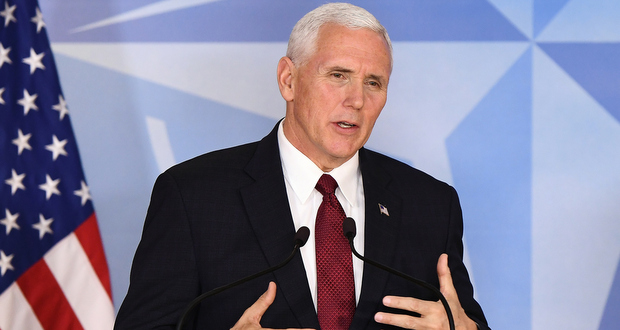
Pence’s mission in Brussels and Munich was to try and undo damage to US-European relations caused by comments from President Donald Trump about NATO and the EU. The American Vice President also sought to clarify Trump’s foreign policy vision and reassure European allies that the US remains committed to the strategic partnership. Pence seemingly sounded the right notes in his meetings and speeches in front of America’s allies across the Atlantic, but European officials reportedly remain uncertain whether Pence spoke for himself or on behalf of the entire Trump administration, considering recent mixed messages from US leaders.
Commitment to NATO
Vice President Pence met with foreign diplomats and security officials at the Munich Security Conference. He delivered greetings from President Trump to European leaders and made clear that US commitment to NATO is “unwavering.” President Trump not long ago however said he viewed NATO as “obsolete” and Sec. of Defense James Mattis cautioned just last week that the US might “moderate its commitment” to NATO if alliance members fail to meet expected defense expenditures.
During his speech to the conference, Pence mentioned Trump’s name 19 times in a span of 20 minutes according to several fact-checking websites, leaving some to wonder whether he was sent to repair the new US administration’s reputation in Europe or to genuinely re-affirm the American security guarantee for the continent.
During his stay in southern Germany, Vice President Pence also met with Ukraine President Petro Poroshenko and vowed US support for Ukraine’s territorial integrity. He reiterated that Washington would not recognize Russia’s annexation of Crimea. The American Vice President also met with the Presidents of Estonia, Latvia and Lithuania among other leaders and promised US commitment to the security of the Baltic States. After his meetings, Pence visited the former Nazi concentration camp of Dachau with his family, in a seemingly symbolic nod to the disastrous consequences that can occur when Europe is divided and threatened by war.
Mixed signals
Following Munich, Pence moved on to Brussels for talks with European Commission President Jean-Claude Juncker, NATO Secretary General Jens Stoltenberg, and the President of the European Council Donald Tusk. Pence, America’s second highest-ranking public official, pledged America “strong commitment” to the EU and told them the US remains “your greatest ally.” These uplifting words though came on the heels of a controversy causing Trump tweet about immigrant crime in Sweden and his previous remarks in support of Brexit, characterization of the EU as primarily a vehicle for German economic interests and description of Brussels as “a hellhole.” Also, US media reported that just days before Pence arrived in Europe, President Donald Trump’s key advisor Steve Bannon told the German ambassador to the US that the EU is a flawed concept. Vice President Pence’s call for engagement with European allies and partners and his emphasis on the need to “deepen and strengthen the trans-Atlantic alliance” may have soothed some concerns, but left others wondering if the US President believes the same.
There was no question that Vice President Pence was articulate and eloquent while addressing America’s allies in Europe this week. He stressed: “The fates of the United States and Europe are intertwined. Your struggles are our struggles. Your success is our success.” Pence also talked about “a common heritage and a common commitment to freedom, to democracy and to the rule of law” between America and Europe.
Whether or not European leaders view that uplifting rhetoric as the true sentiments of the Trump administration, or merely recompense for previous harsh words from the new rulers in Washington, will become clearer as 2017 moves along.
Publicité
Publicité
Les plus récents