Publicité

Let?s not bottle it

<B>By Nicholas RAINER</B>
Let?s not bottle it in ?The Hollow Men?, T. S. Eliot wrote: ?Between the idea and the reality/Between the motion and the act/Lies the shadow.? Despite the recent hullabaloo surrounding the bold and ambitious gambit of turning Mauritius into a sustainable island, the ?Maurice : île durable? project is still in ?the shadow? phase, especially when it comes to convincing our countrymen of its potential benefits, be they environmental, social or economic.
One way to propel the project forward is to democratize information. One can?t help but feel that such a vast undertaking necessitates a bottom-up approach rather than top-down one.
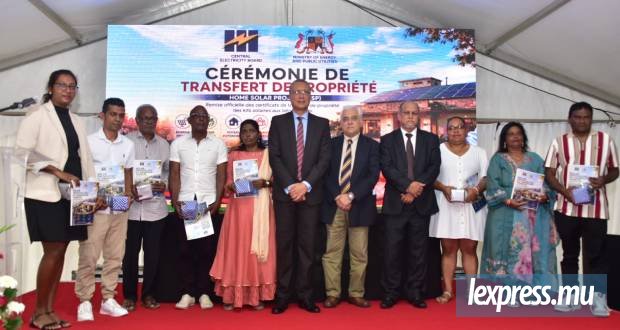
For example, giving grants for solar-water heaters is a timely initiative, yet its usefulness will be greatly hindered if the public is unaware or unconvinced of their worth. One of the big advantages of being a small country is that a lot of information travels by word of mouth. Once a core group of people has adopted solar-water heaters its members will be sure to share their satisfaction with their neighbours, friends and relatives. The latter might thus be persuaded to try the heaters out in their houses. They, in turn, will convince their acquaintances and so on and so forth.
Information is thus off the essence. This is all the more true for the Mauritius Land-Based Oceanic Industry (MLBOI). The country is ideally placed to capitalize on a little-known yet abundant asset: the sea. Mauritius has traditionally sought to exploit its land and human resources. Although this has suited the country well in the past, it is fast becoming evident that other sectors will have to be developed if the country is to keep its head above the choppy waters of globalization. Mauritius is surrounded by the Indian Ocean, the cleanest of the five oceans. This might not seem like much to us but to consumers in Japan and the US, it?s a very valuable fact.
A memorandum of information submitted by consultants explains the land-based oceanic industry?s potential gains. ?With the MLBOI, the government of Mauritius is embarking on a transition from green agro-industry based activities to blue activities where value is generated from deep ocean water. For comparison, the land-based oceanic industry developed in Hawaii has evolved into a multi-million dollar with strong upstream and downstream economic activities, growing demand for derived products in existing US and Japanese markets and latent markets in Europe and South East Asia.?
Mauritius is ideally located to tap into several billion-dollar markets, such as high-quality bottled water and on-shore aquaculture, as well an endless source of clean power for air conditioning.
The authorities should make sure that all Mauritians are aware of the project and encourage them to gain from it.
Publicité
Publicité
Les plus récents