Publicité

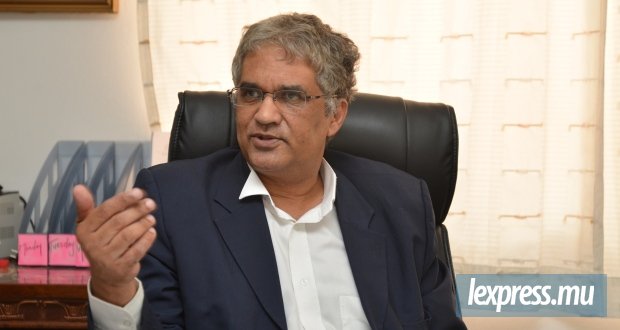
Vijay Naraidoo quotidiens pluriels

Il est terrible le gargouillis de l?homme qui a faim. Il est intense le désarroi de l?homme forcé de démissionner. Qui, pour se consoler, sombre dans l?alcool. Il est puissant l?agacement du spectateur qui n?en peut plus d?attendre qu?un tour de chant commence.
Temps fort de l?existence humaine. Avec pour arrière-plan, un Maurice que «les moins de 20 ans ne peuvent pas connaître», pour paraphraser la chanson. N?allez pas croire que les nouvelles de Vijay Naraidoo sont dépassées. Publiées une à une au début des années 90, elles gardent indéniablement la saveur des décennies passées. Sans pour autant être passéistes. Vijay Naraidoo publie ? en toute discretion - In the lap of the gods and other short stories chez Yusi Edition.
Des nouvelles parues dans l?express ? pour certaines d?entre-elles ? que l?auteur choisit de rassembler dans un recueil qui «should encourage the new generation of students to go back to reading as a firts step to mastering the English language», comme l?écrit Surendra Bissoondoyal en avant-propos.
Car au-delà de langueurs pour ce qui n?existe plus, Vijay Naraidoo a fait un vrai choix. Celui de transcrire son ressenti dans une langue qui n?a rien de maternelle. Dans une langue qui touche moins de lecteurs. Dans une langue qui compte moins de locuteurs, ici à Maurice.
Alors comment s?en sortir ? Comment toucher sans se briser soi ?même contre un écueil qui pour beaucoup semble insurmontable ? la barrière de la langue ? certes Vijay Naraidoo reste très académique, classique, pour ne pas dire figé et même scolaire dans sa maîtrise de la langue. Mais ce n?est pas là le plus important.
L?essentiel est ailleurs. Il est plus nécessaire d?alimenter la production littéraire en langue anglaise que de disputer sur la qualité relative des textes. Surtout dans un contexte où les auteurs ? ils sont nombreux à pouvoir témoigner ? s?entendent dire par les éditeurs, que ce n?est pas rentable de publier en anglais. Que cela n?attire qu?un public restreint.
Dans pareil contexte, seul l?effort compte. Surtout quand elle accouche de quelques descriptions saisissantes. Dans Octave, la description parle d?elle-même : «His friendship extended more towards the mixed Indian families than to the Kreols. As long as he moved in the company of Sawad, Biwa and Small Bala he behaved and very often he obtained more attention from these people than the others. However, whenever he happened to be alone, Octave, it seemed, got his forgotten instincts, absented himself from work, stayed in Ah-Voon?s shop?» si l?auteur se laisse emporté par un élan pour la caricature, n?empêche que le trait, grossi à l?extrême reste reconnaissable. Et agréable.
Après avoir été Adviser on information matters en 1995/6 et de 2000 à 2005, Vijay Naraidoo est maintenant Liaison officer au ministère de l?Education.
 |
EXTRAIT
>Lakhan
Earlier I had known Hitler?s famous moustache either from magazines or from Charlie Chaplin?s movies. A second moustache as famous to me was a thick white one stretching out as far as the center of both cheeks belonged to the village oldest and most respectable Dada Kotoye.
As for beards, live ones for that matter, they were in fact rare or non-existent in my village. Everybody shaved. News came that a public demonstration was going to be held to protect against the presence of a representative of the royal family. It was reported that the demonstrators were young graduates fresh from European universities, unemployed, self-employed or students from prestigious institutions. Except for the students, they were all bearded and one out of three was wearing a bush-shirt. Two of the prominent demonstrators wore spectacles and they seemed to be very resourceful and intelligent. They too, were shouting ?Down with monarchy!?
At that time ours was a sugar village and all active men were plantation workers. They had formerly been members of a trade union whose chairman was now a member of parliament, in the ruling party. The union?s weakness lay in that check-off did not exist and so members? monthly contributions were quite irregular.
Dada Kotoye had a grandson by the name of Lakhan. Lakhan had been to college. Unfortunately because he had failed the School certificate examinations thrice he had joined the rank of labourers. His schooling had been irregular because of financial problems but he was himself a disciplined lad. He was aware of the events occurring in the outside world, the next-door village, the town and even fart away Vietnam.
Lakhan discovered that he had the qualities of a leader; he could lead as much his cousin Bidianand was doing on a sugar estate in the north. He soon contacted the demonstrators. He knew they were intellectuals, teachers who were ready to fight for a noble cause, more specially that of field workers.
The first meeting took place on the village football ground. It had earlier been reported that police was not happy about the gathering (?)
Everybody applauded. Lakhan did not. He kept silent and listened. He asked two ?intelligent? questions which the comrade from outside noted (?)
In one hour, the intelligent man had created a branch, mounted a team and made nine ?ordinary? persons nine militants of whose future actions, history would take note.
Publicité
Publicité
Les plus récents