Publicité
Education must help achieve better response to needs of labour market
Par

Partager cet article
Education must help achieve better response to needs of labour market

“The decision to work on such a plan was aimed mainly at fighting the inadequacy on the employment market. There has hardly been any link between school and the world of work so far,” the minister of Education, Dharam Gokhool, acknowledged at the launching of the National Human Resource Development Plan (NHRDP) last week. It is true that the school system does not take the economic needs of the country into account and therefore does not prepare students for the world of work. The Human Resource Development Council worked on a report for two years to try and propose a solution to the education sector in order to better meet the employment needs of the country. This will inevitably involve training and education policies.
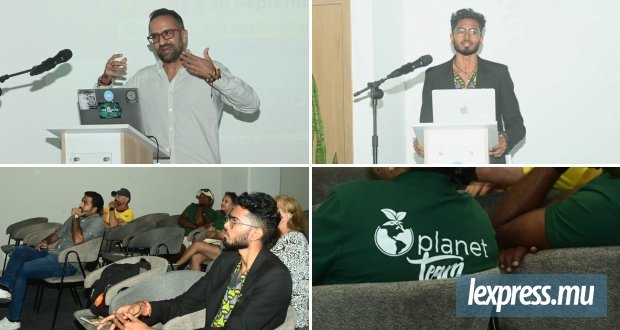
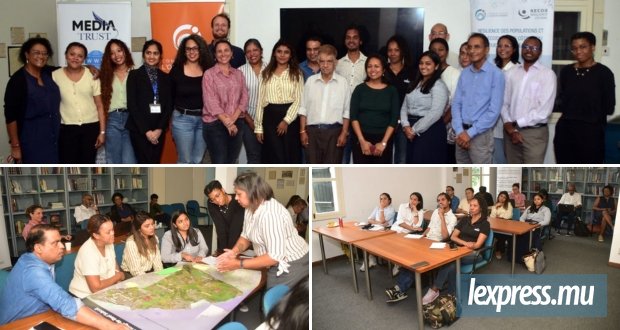
“The pathway to employment begins in school. Schools have a key role to play in laying the foundation for our young people to successfully make the transition to working life thereby providing the Mauritian economy with an educated and productive work force. That is to say that our present cohort of students will be at the heart of our future success,” stated Permanent Secretary of the Ministry of Education, Swaminaden Ragen, when the report was presented to students at the Mahatma Gandhi Institute last Thursday.
Greater prominence for tertiary education</B>
At a time when Mauritius is aiming to become a knowledge hub, special effort should be made to train and educate the people – “our most valuable assets,” according to the PS. “The aim is to promote the knowledge hub agenda in which tertiary education would be given greater prominence especially in the fields of Science and Technology, Information and Communication Technologies, Skills Development and in Research and Development in Applied Sciences,” states the report. In view of present difficulties, the knowledge hub is seen as one of the future pillars of the economy even though no major initiatives have been taken to achieve this yet. It is seen as a way of “repositioning Mauritius to meet the needs of an increasingly competitive knowledge-based and globalised economy”.
For educationalist Surendra Bissoondoyal, “We have now reached a point where we will have to transform our society into a knowledge society to spearhead the next stage of our development. We have no option but to invest massively in tertiary education”. The former director of the Mauritius Examinations Syndicate (MES) recommends that “we end our obsession with the CPE and focus our attention on tertiary education. Parents will save the money they would have spent on private tuition for their children in primary education and use it for tertiary education”. At the same time, he advocates the abolition of the CPE and points at the impossibility of“continuing to insist on free tertiary education” while giving facilities of payment to all those interested.
The NHRDP makes a certain number of recommendations to promote education and make sure students make the most of the existing institutions. It points at the need to “increase the intake capacity of tertiary institutions to more than 10,000 students”. Surendra Bissoondoyal goes in the same direction when he suggests “expanding the existing institutions and setting up an open university which will provide a flexible mode of learning to school leavers as well as people at work”. Last year, minister Gokhool announced the government’s intention of setting up a third university specialising in distance courses but there were no further references to this.
However, tertiary education is not only provided by universities and professional and vocational education should also be put forward to provide the employment market with skilled people. Such fields are intended to increase opportunities for students. This is why the report recommends “upgrading the level and quality of education and promoting international recognition of technical and professional studies”.
The process should however not start at tertiary level but as from the years at secondary school. According to the NHRDP, a “new system of post ‘O’ level polytechnic education is being planned for students who, after the completion of 11 years of schooling, would rather opt for a different type of education that is closer to the world of work”.
A complete review of what is being taught at school should occur with more initiatives by teachers and pupils to choose subjects like Tourism Studies at ‘O’ and ‘A’ level. The report also makes it a point to encourage learning of ICT at all levels vith a view to enabling all students to better adapt to the world of work.
It is important that there is equality of opportunity in education at all levels and the system should make sure that pupils are being empowered through education to face a whole new world after completing their secondary or tertiary studies. It is the school’s duty to “inculcate useful knowledge, reasoning ability, skills and values” into all children. The stakeholders of the education sector should make careful use of this report to better prepare pupils for work, especially at a time when the ministry is working on a major reform of the sector. The economy of Mauritius would be the main winner.
 |
TRAINING
The role of teachers</B>
■ There is no chance of promoting education without teachers’ training. There is a need to review the teaching-learning process by placing more emphasis on teachers’ training. The tendency to neglect non-examinable subjects should disappear and overall development of the pupil should be achieved. Rote learning and memorisation of facts, as described by the report, must be replaced by a more critical approach aiming at building a capacity for independent reflection. Career guidance is also seen as a focal point in the new approach.
The report makes it clear that “the government will also support the upgrading and training of personal supervisors, teachers and high cadres who participate in programming, policy dialogue and development in the context of the knowledge hub.
Publicité
Publicité
Les plus récents