Publicité
Government fights tooth and nail and… scores!
Par

Partager cet article
Government fights tooth and nail and… scores!

There we are! The 2006-07 budget was voted on Friday after long days of debates. The government would not give in: it had no other choice than to introduce a budget that will bring major changes in the economic system. Despite criticisms by opposition MPs during the debates, they did not make any fuss when the budget was to be voted… But everything had not been so easy for the government with discussions in Parliament during the past two weeks.
The minister of Finance agreed with opposition member, Paul Bérenger, on at least one issue: this budget includes abrupt change. But when the Mauritian Militant Movement (MMM) leader asserted that the government could have found other ways of getting out of these difficult times, Rama Sithanen made it clear that “if we kept the same trend, the country would have undergone a major catastrophe in the next three or four years”.
Mauritius has always benefited from a number of preferences on international markets especially in the sugar and textile sectors. Now that those preferences are being gradually withdrawn, the country has to reinvent the way it has always worked and done business. Its economic model is out of date and changes have to be brought before it is too late. “The time of privileges is definitely over. We have to stand on our own feet,” highlighted the prime minister, Navin Ramgoolam.
Even though certain measures may appear tough, the government asserts that this is the only way of ensuring more social justice through the reduction of unemployment, a rise in the growth rate and wealth creation.
However, the minister of Finance accepted to make a few compromises to prevent the whole reform from suffering major compromise. Following the criticisms from opposition MPs in Parliament as well as trade unionists – who considered the budget too capitalist with no room for social measures – the government accepted to go back on taxes on retirement gratuities as well as subsidies on exam fees for the needy.
Thus someone from the public or private sector obtaining a lump sum at retirement of less than Rs 1 million will not pay any tax on this amount. The minister also reviewed the subsidies on exam fees: any household earning less than Rs 7,500 will benefit from full financial aid (100%) towards exam fees for the School Certificate (SC) and the Higher School Certificate (HSC).
Rama Sithanen made it clear that he had accepted to review these measures only because the budget was starting to be plagued by emotion. And he couldn’t take the risk that the main objectives of the budget – boosting investment and creating jobs – be forgotten at the expense of a few decisions that will not affect the economic reform on the whole.
<I>The prime minister is adamant that he cares for the people - “I do not need any lessons on socialism” but he does not want the population to be passive. He wants them to take their future in their hands.</I>
The new economic model will have to be competitive in a world context of globalisation. The prime minister is adamant that he cares for the people – “I do not need any lessons on socialism” – but he doesn’t want the population to be completely passive. He wants them to take their future in their hands; the government is there only to give them the means to achieve their goals.
And these means are, in the government’s opinion, flexibility and competence. This is why it has decided to open the country to foreigners bringing in competence and financial investment that can be only be positive for the future, according to the prime minister. He took the example of Ireland “that chose to open its economy to foreigners, provided more flexibility on the labour market, one of the lowest corporate taxes and it did not take emotional factors into consideration when taking some decisions”.
While Paul Bérenger was blaming the government for a budget aimed at satisfying the private sector and that puts an end to the welfare state - with the end of subsidies on rice and flour for instance - the minister of Finance explained that it is the best way of ensuring the system remains viable in the long-term by reducing wastage.
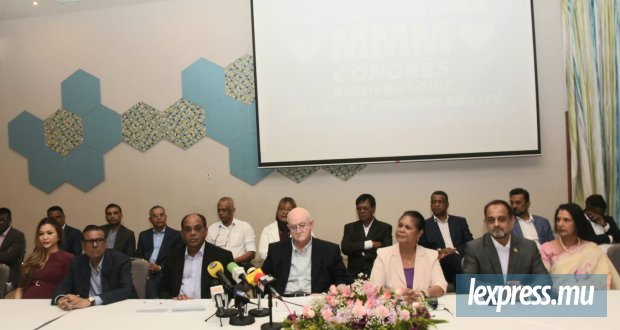
But the MMM leader, who was the last one to express himself on the budget, stated his disappointment with this “ultra-liberal” budget that goes against the promises made before the elections. “The population feels betrayed,” he said. And the only “alternative to this is the MMM and my friend Ashok Jugnauth and his party… as well as all those putting Mauritius first,” he claimed in Parliament.
Publicité
Publicité
Les plus récents