Publicité
Complicated proposal to satisfy the majority
Par

Partager cet article
Complicated proposal to satisfy the majority

The Bureau of Catholic Education (BCE) has finally made public a formula for the allocation of its 740 reserved seats in Form I for January 2005. Though it looks a bit complicated, the formula has nevertheless the merit of satisfying most stakeholders. Parents and teachers seem to agree on this difficult issue after the lengthy debates following the Privy Council’s verdict making illegal the use of the religious criterion for the allocation of these seats.
Schools will be given more freedom in the admission mode though BCE director Hervé de St Pern has stated the three main criteria for admission in a catholic college. The new formula “includes the concept of mixed abilities, the social criterion and the zoning element at the same time,” comments Denis Grandport, president of one of the PTA federations.
The first criterion concerns the academic level. To be eligible, a child must have an aggregate of between 15 and 20 units. Places for the six aggregates (15-16-17-18-19-20), will have to be shared equally between the children. However, each college is allowed some flexibility. For instance, if there are not enough children in one group, a school can decide to favour children from another group.
The BCE has also striven to make it possible for children from all over the country to apply for a place in a catholic college. “There should be no rat race or star school anymore,” the BCE director explains. Hence, the country has been divided into four large regions, which are then subdivided. There should be some fifty places available in each college according to the new formula.
Information campaign soon
Where candidates have the same aggregate, the results in English and Mathematics will decide. The BCE also seems to have made the social criterion fundamental in the new system. Each college will thus have to ensure that half its seats are allocated to “hardship cases.” Staff wards will still be admitted as long as they answer the other criteria.
The panel is still on the agenda: if there are too many candidates for a reduced number of places in a college, the Board of Management is free to set up a panel of stakeholders – teachers, parents, NGOs… which will decide how to allocate its seats (exam, interview, etc).
The BCE director admits that the new formula is not simple though he is confident that it will work. Hervé de St Pern is aware that no formula will be greeted with unanimity. He has made it clear that these criteria will be applied for 2005 but they can be subject to changes in the coming years. “In the light of experience, the formula could well be modified and improved afterwards.”
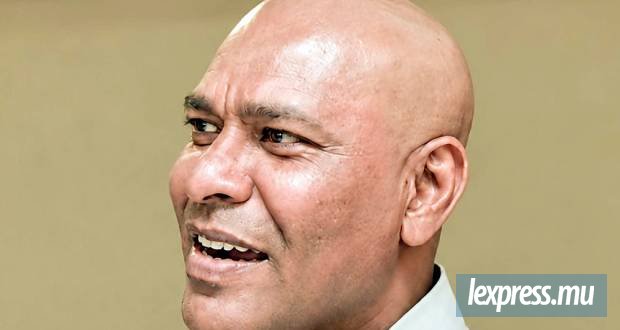
The only discordant voice has so far come from the president of the Government Hindu Teachers’ Union (GHTU). Sutthydeo Tengur considers that it is only “a mix of several ideas where nothing is really defined.”
Meanwhile, the formula has been submitted to the minister of Education, Steven Obeegadoo, who has not commented on it so far. But, here again, the BCE director is adamant: he does not see why the government should reject this proposal as it abides by every criterion needed.
The time has come to integrate all these new criteria to to make a success of the recruitment for next year. An information campaign will be launched in colleges and with parents next month to give more explanations on this complicated – but seemingly satisfying – formula…
Publicité
Publicité
Les plus récents