Publicité
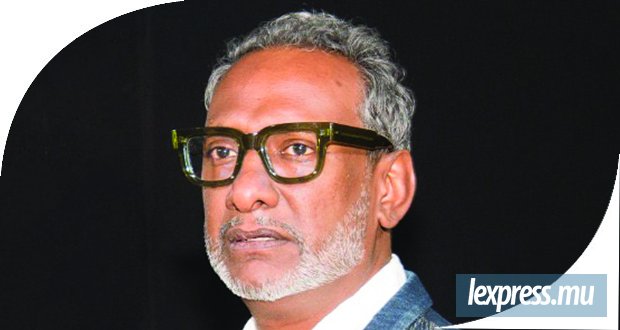
Anand Mulloo on the realities of the Indian diaspora
Par

Partager cet article
Anand Mulloo on the realities of the Indian diaspora

History is often viewed as a reflection of the past. But historian Anand Mulloo serves up more than just history in his study entitled Voices of the Diaspora**. Clearly, this is an ambitious effort. There is the past for sure; there is also a tantalizing vision of what the future is all about. That?s why this is potent material; a labour of love from a visionary of the resurgent Indian diaspora.
Reading Mulloo is like drinking deep from the wisdom of thinkers like Edward Said, Frantz Fanon, Swami Vivekananda and Gandhi. By drawing from the story of slavery and indentured labour to NRIs (Non-Resident Indians) and PIOs (Persons of Indian Origin) and the rise of GOPIO (Global Organisation of People of Indian Origin) and the Pravasi Bharatiya Divas, the book is a great tribute to the Indian diaspora from this academic, poet, and activist.
All of this comes from an insider?s perspective. Spread over a wide canvas, but focused on the Indian diaspora, Mulloo attempts a diasporic perspective by using the interdisciplinary tools of history, economics, politics and sociology to narrate the story of overseas Indians. Secondly, he makes an important departure by taking a self-confident, Indo-centric view of a resurgent India ? but from a self-critical, realistic and optimistic perspective. Thirdly, Mulloo?s analysis of NRIs and PIOs provides the intellectual framework for a deeper, critical understanding of the Indian diaspora ? that global family of 20 million in over 125 countries. Finally, he positions the Indian diaspora, with its estimated combined income of $160 billion, as a huge asset in the creation of a global network and the building of economic bridges to assist both India and the host countries.
Written in an easy readable style and shorn of academic jargon, Voices of the Diaspora is a contemporary effort at understanding overseas Indians. It is honest, thought-provoking and substantial.
When I met him at the 2005 Indian Diaspora conference in Hyderabad, Mulloo came across as an energetic and convincing supporter of GOPIO, an organization founded 15 years ago to bring the Indian diaspora under a common platform. The first impression Mulloo conveys is that of a jovial, witty, and engaging educator with a heart that beats for Mother India and her diasporic children. Mulloo?s critical and incisive analysis is a great tribute to the Indian diaspora. Where Mulloo excels is in his ability to thrash out a pragmatic role for the NRIs and PIOs.
This is what he recommends: India has to be forward looking. It has to give up its past third-world mentality and start assuming the garb of the prospective superpower and all the responsibility that goes with this new status. In other words India can no longer remain a pigmy; it has to become a giant, ?a global dynamo?. But for that to happen the mindset of the people must change - precisely what President A.P.J Kalam has been advocating.
According to Mulloo, India can win the global race if it changes its third-world mentality and shifts from amateurism to professionalism, from craftsmanship to high technology, from the self defeating ?chalega? attitude to a can-do management method. This can only be achieved when India decides to improve the quality, the finish, the design, the package, and the marketing of its products.
Success of Indians abroad
Mulloo quotes US Amba-ssador David Mulford: ?If India is to build an Indian century... it will be because India reaches out, opens up and engages to become a leader in today?s globalized world.? More importantly, he says, ?our great cultural values, vested in the Vedas, contain within themselves the seeds of all the greatest thoughts ever conceived and reformulated by other civilizations and religions.?
Mulloo dissects the Indian diaspora in Fiji, Mauritius, South Africa, UK, US, Canada, Guyana, Trinidad, Malaysia and Singapore. His analysis sparkles with wisdom. There is an undercurrent of pride in India and the achievements of diasporic Indians against insurmountable odds. He expounds on why Indians in some countries have succeeded while they stagnate in others. Here are some important points raised by Mulloo:
Indians do not feel secure in Fiji, Mauritius, Malaysia, South Africa, East Africa Guyana and Trinidad, because of economic, social and racial issues and suggests that India should do more diplomatically to help the PIOs. The NRIs and their children in the West may have attained material wealth and professional status but their spiritual knowledge has not evolved correspondingly.
The West?s claim of a monopoly on scientific knowledge underscores the contributions of India, China, Islamic, African and Mayan civilizations. Indians overseas have a price to pay for their success; they tend to become one-sided ? work, work, and more work unrelieved by sports except for Indian music and entertainment.
The western-educated Hindus, equipped with deep academic or technical knowledge, are not balanced by spiritual knowledge. Their understanding of Hindu culture and philosophy is shockingly superficial and sometimes erroneous.
What explains the superior achievements of NRIs and their children? Mulloo sees the answer in their Indian heritage, which puts great emphasis on learning and attaining the highest levels of excellence, along with their strong family solidarity. Once the Indians crossed the Kalapani, observes Mulloo, ?they were jolted out of the complacency and comfort zone of joint family life; they saw themselves as adventurers and pioneers who had thrown overboard the baggage of taboos, restrictions and superstitions that had previously held them back in feudal fetters.?
That?s how the PIO and NRIs were magically transformed into new independent enterprising persons. ?All the pent-up potential, and energy arising from a great culture and civilization, enriched after its encounter with the west, blossomed to enable them to use their own enterprise to convert this cultural capital into wealth accumulation.?
Along with Dipak Chummun, of the Standard Chartered Bank, Mulloo believes that NRIs will rule as the professional class globally before the end of this century. Indians, he says, are fast acquiring the breadth and depth of international experience to enable them to compete globally. Moreover, the West will be overwhelmed with the yearly output of Indian graduates and postgraduates. He cautions that it won?t happen with sheer numbers. Thus, he says, ?the quality of education must reach world- class standards and be made accessible to every Indian child.?
Mulloo is also quick to note that the success of the Indian diaspora takes place only in societies already developed by the West. ?This is the major failing of Indians. They don?t add much to the basic infrastructure, particularly tools, rails, airports, or safe water, electricity, schools and health centers.?
Cultural shock of dire poverty
Though he believes that the competitive edge held by India lies in the volume and quality of Indian graduates, he acknowledges that the Chinese have raced faster than the Indians and the gap seems to be increasing. In contrast to the Indians, the Chinese had the foresight to build modern infrastructure on the western model. They also recognized early the strategic importance of their overseas communities. Thus Mulloo urges India to earn the trust of its NRIs with consistent and bold policy reforms to ensure that the sub-continent is seen as a highly profitable investment destination free from bureaucratic hassles.
Mulloo observes that the feeling of every successful PIO on visiting India is one of cultural shock at the dire poverty when he lands in his ancestral village. Then he falls on his knees and thanks his stars that his immigrant forefathers had the foresight to leave the gangetic plains to try their luck overseas, though under trying conditions.
Mulloo?s understanding of and love for India?s great civilizational heritage is the recurrent theme of this book. But it does not prevent Mulloo from recognizing India?s weaknesses and suggesting practical means to overcome them. He calls for a stronger India, which will lead to a stronger diaspora. And for this to happen, he recommends networking, use of media power and living Indian values.
Mulloo compares Indians with the Chinese and Westerners using six criteria: leadership, vision, work culture, family, social values and education. He notes that the education of the Indian is academic, bookish, abstract, parrot-learning, leaving little room for acquisition of other social skills, like sports, the arts and practical entrepreneurial skills, self-development and independent living.
The picture that emerges is of two kinds ? the more prosperous NRIs established in western societies and the PIOs still having to struggle in their host countries against numerous odds. Perhaps this is why there is the increased tendency of the new generation of PIOs to move to Australia, North America and Europe.
He visualizes India as a global player beyond 2025. Naturally he has high hopes for the role that GOPIO can play in uniting the disparate Indian diaspora. But the GOPIO itself is riddled with breakaway politics and dissension that seem to be the bane of organizations inside and outside India. As Mulloo observes: diasporic Indians ?bleed themselves to death through self-inflicted wounds and tear themselves apart through their internal divisions. They treat one another as different and disunited people.?
In the end, says Mulloo, what matters is whether you have a vision and whether you are pursuing your dream. That?s what gives a society its energy, drive and dynamism. That is precisely what energizes Mulloo: his dream, his energy, his dynamism ? and his humor. Mulloo recalls a Vedic aphorism, that there are a hundred cures for a disease but there is only one cure for a hundred diseases - laughter.
Born and raised in Mauritius, Anand Mulloo, former head of the History department of John Kennedy College, has published a novel (Watch Them Go Down, 1967), a collection of poems (Dust of Time, 1968), and two works of non -fiction: Father of the Nation (2000) and How your Child can be a Winner (2003).
Francis C. ASSISI [email protected] Voices of the Diaspora can be obtained from Imagepoint Publications, 44 Desroches St., Port louis, Mauritius, or by contacting Mulloo at: [email protected]
Publicité
Publicité
Les plus récents