Publicité
The Talent Required for an AI-Dominant Future
Par

Partager cet article
The Talent Required for an AI-Dominant Future
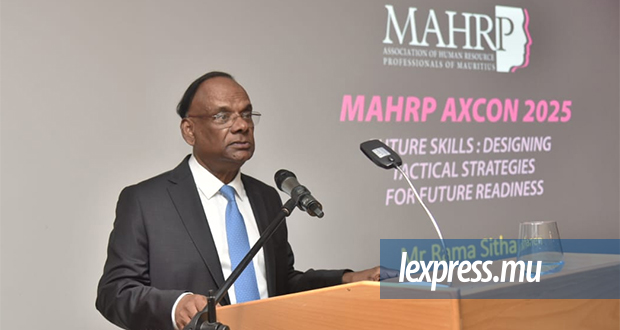
I have been requested to share my views and perspectives on the Talent required for an AI-dominant future.
The world is witnessing extraordinary advances in the field of AI. We stand today at the crossroads of accelerated transformation, driven by the convergence of groundbreaking technologies and the evolving landscape of human capital necessary for an AI-dominated future.
AI is no longer a distant concept. It is here, now, and accelerating. It is already reshaping how we work, how we recruit, and how we learn. Indeed, AI is redefining talent, the workplace, and our role as human beings. It will redefine our economy, our institutions, and the very fabric of our society—and it will develop at an unprecedented pace.
AI could be a paradigm shift akin to the invention of the internal combustion engine, the development of the steam engine, the introduction of electricity, and the ICT revolution, with the potential to significantly transform our economies in the long run. AI can be applied to a wide spectrum of activities, from routine and repetitive tasks to knowledge-based and creative work. Previous “general purpose tech” revolutions have generally had a net positive effect on labor markets, leading to new, higher-paying jobs and a direct boost to employment.
As automation and AI pick up speed, professionals, businesses, universities, and indeed the entire nation face a critical issue: what skills do people need to thrive, survive, or adapt in an AI-driven world?
We should understand the talent our country must nurture to remain agile, relevant, and competitive in a future dominated by artificial intelligence, blockchain, and other disruptive technologies. In that journey, HR professionals will play a vital and transformative role in preparing the talent pool the country will require.
So, what does this mean for future AI skill and talent development within the workforce? What are the key competencies, the new KPIs, and the organizational structures that will shape the future of AI in the medium and long term?
AI—particularly generative AI tools—has raised concerns about future job losses and displacement across industries. While it may be difficult to automate or replace some jobs entirely, AI can significantly improve many roles. It is also generating entirely new ones, while shifting the nature of work in ways we have not yet fully understood.
We must ask five critical and connected questions with respect to the future of work in an AI-driven economy:
1. Which jobs are likely to be replaced by generative AI?
Repetitive tasks such as those performed by customer service representatives, receptionists, accountants, bookkeepers, salespeople, researchers, data entry clerks, warehouse workers, insurance underwriters, and retail staff can be easily automated by AI and robotics.
2. Which jobs will require human-AI complementarity?
Humans will still be needed to oversee AI tools, creating increased demand for workers with AI-related skills. The winners in the job market will not only understand AI but know how to use it to enhance their abilities, solve problems, and think strategically.
3. Which jobs can humans do best?
AI cannot replace leadership, influence, creativity, and conflict resolution. Professions such as lawyers, judges, CEOs, HR managers, psychologists, teachers, and surgeons will remain resilient.
4. Which jobs will be displaced?
Some careers will diminish, but new ones will emerge. A McKinsey study estimates that by 2030, 14% of employees globally may need to change careers due to digitization, robotics, and AI. Upskilling will be vital.
5. Which new jobs will be created?
AI is fueling innovation, spawning entirely new categories such as AI trainers, ethics consultants, and emotion-recognition specialists, alongside expanded opportunities in software, finance, health care, education, cybersecurity, and creative industries.
The remainder of the speech continues with:
• Key skill areas: leadership, communication, emotional intelligence, critical and creative thinking, judgment, adaptability, and agility.
• Education reform: integrating AI across all disciplines, fostering university-business partnerships, and embedding lifelong learning.
• Organizational change: cross-functional teams, new AI-related roles, and restructuring departments.
• Ethical safeguards: ensuring privacy, security, regulatory compliance, and trust in AI systems.
• Central banking applications: from credit assessments to CBDCs and fintech ecosystems.
Sithanen concluded by stressing that while technology is advancing rapidly, human capital remains the driving force of innovation. “The best time to start building an adaptive, ethical, responsible, and future-ready workforce for AI was yesterday,” he said. “The next best time is today.”
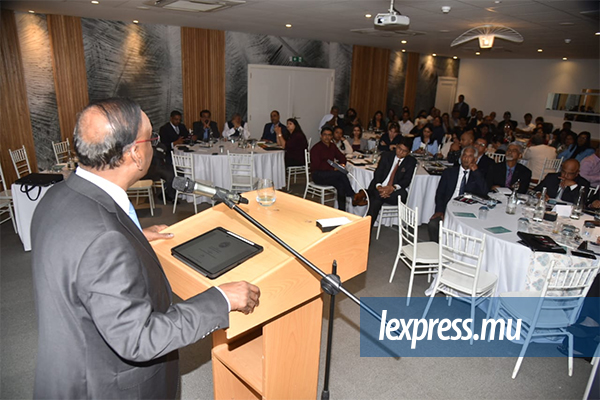
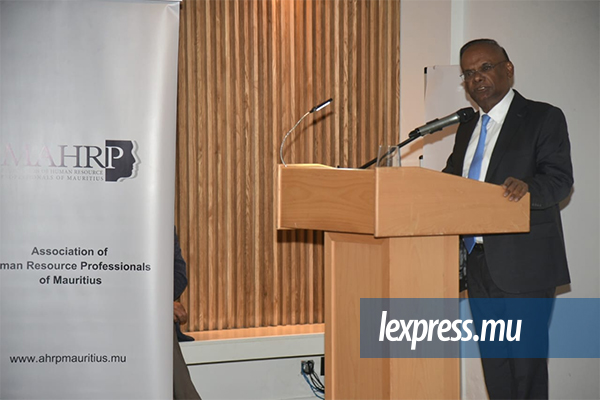
(Speech delivered at the Annual Meeting of the Association of Human Resource Professionals of Mauritius, Le Preskil, Beau Vallon – 22 August 2025)

Publicité
Publicité
Les plus récents