Publicité
Portrait
Meiya Gujjalu: From a “moonshot” to Berkeley – and now Columbia
Par
Partager cet article
Portrait
Meiya Gujjalu: From a “moonshot” to Berkeley – and now Columbia
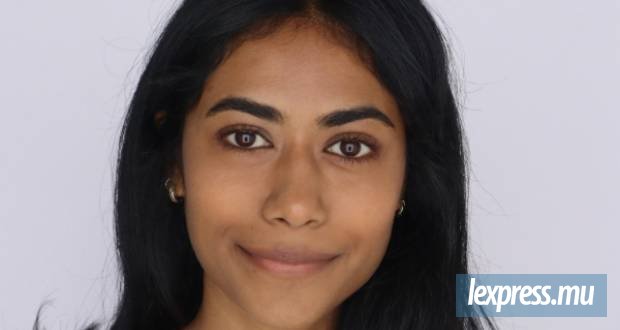
Mauritian student and aspiring ecologist, Meiya Gujjalu is preparing to begin a new chapter at Columbia University. From an unexpected change of direction at 17 to research in Madagascar and the United States, she is building a path driven by curiosity, resilience and a desire to contribute to conservation in Mauritius.
Curious, determined and not afraid to admit that she is still figuring things out, Meiya Gujjalu has taken a rather unconventional route into ecology. The Mauritian recently graduated from the University of California at Berkeley in Conservation and Resource Studies and is now preparing to move to New York for a Master’s in Ecology, Evolution and Environmental Biology at Columbia University, working in partnership with the American Museum of Natural History.
Her interests are particularly focused on bird ecology and on how genetics and modelling can contribute to conservation in Mauritius. Yet ecology was not always part of the plan.
At 17, Meiya imagined herself studying law in the United Kingdom. It was the path she knew best and one she could easily explain when asked about her future. Her decision to apply to universities in the United States was more of a “moonshot”. The application process itself forced her to think about questions she had never really considered: who she was, what made her happy and what she cared about. “I was 17. I had absolutely no idea!” Supported by her parents, she nevertheless took the chance. She was eventually awarded the Regents’ and Chancellor’s Scholarship to attend UC Berkeley, an opportunity that opened the door to experiences far beyond the classroom. Meiya initially studied political science before taking a biology class at the encouragement of her college roommate. That class changed her direction.
Growing up in Mauritius had already exposed her to environmental changes. The disappearance of the dodo and the loss of more than 99% of the forests it once inhabited are difficult realities for an islander to overlook. Studying ecology, however, gave her a different way of understanding them.
She also discovered another side of Mauritius through conservation. The Mauritius kestrel, once reduced to just four known birds in the wild, and the pink pigeon, which also reached extremely low numbers, demonstrate to her that conservation can succeed. Mauritius, she believes, should therefore be recognised not only for its environmental challenges, but also for the expertise developed to address them.
Her education has since taken her into research laboratories, fieldwork in Madagascar and eventually to Colossal Biosciences, a biotechnology company involved in de-extinction and conservation projects. Fieldwork in Madagascar proved particularly formative. The reality was far removed from the romantic image of field research she had imagined from documentaries and stories about scientists such as Jane Goodall. There was no clean water or electricity, heavy rain, difficult terrain and, at one point, a fall into a mud pond.
Rather than discouraging her, the experience taught her about uncertainty and humility. Fieldwork, she says, requires accepting that plans do not always work: the weather changes, equipment fails and animals do not necessarily appear when expected.
It also made her more conscious of the importance of local knowledge. Her field guide knew the forest in ways she could not, recognising sounds and navigating terrain that seemed identical to her. For Meiya, research depends on many people whose contribution may not always be visible.
Among her strongest memories is holding a mouse lemur for the first time. The tiny primate fitted into her hand, its fingers wrapping around hers. The encounter made the science feel tangible and reinforced her belief that even the smallest species has a role and a history within an ecosystem.
Today, Meiya sees conservation as an understanding of interconnectedness. Humans, she stresses, are not separate from nature but part of the same system. Her ambitions reflect that philosophy. Beyond her immediate academic plans, she hopes to help create stronger partnerships between Mauritius and universities, museums and research institutions abroad. Joint research, internships, funding and greater opportunities for local expertise are among the possibilities she would like to see develop.
For Meiya, going abroad does not mean turning away from Mauritius. It is an opportunity to learn, establish connections and, eventually, bring some of those connections back home. She is still open about not having every step of her future mapped out. But one thing has become increasingly clear: wherever her career takes her, Mauritius and its natural heritage will remain an important part of the journey.
Publicité
Publicité
Les plus récents