Publicité
L'Oréal: AI-Powered, Not Artificial
Par

Partager cet article
L'Oréal: AI-Powered, Not Artificial
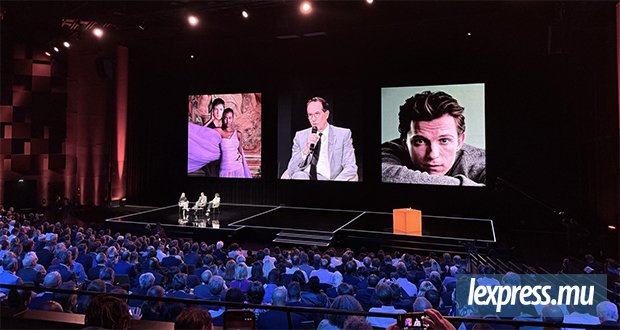
Nicolas Hieronimus, CEO of L’Oréal, in conversation with Christel Heydemann, CEO of Orange, at the Orange Leaders Meeting in Paris.
I was in Paris last week for the Orange Leaders Meeting. One of the sessions I did not expect to stay with me was a fireside conversation with the CEO of L’Oréal, who had come to talk about the transformation his company is going through.
I went in thinking of L’Oréal as a beauty company. I came out thinking about trust. What surprised me most was not the scale of what they are building with AI, but the discipline about where they have decided not to use it. Afterwards I went and read their annual reports and partner announcements, and pulled the whole thing into a case study for myself. This is the field note version of what I found.
The advisor is no longer a person
The CEO’s opening observation was simple, and he said it with genuine surprise. People are increasingly asking large language models for beauty advice.
That sounds small until you sit with it. Beauty is a high-consideration category. People have always sought advice before they buy. The source of that advice has shifted several times over a century, from the counter, to the magazine, to the celebrity, and most recently to the influencer. The CEO’s point was that the advisor is now, more and more, an LLM. It is conversational, always on, and it does not work for the brand.
He also said something I keep returning to. He no longer sees the rise of the influencer as a break from the past. The supermodel, the film star, the creator, the model’s answer in a chat window are all the same thing wearing different clothes: a trusted intermediary standing between the company and the customer. The only question that matters is who owns that relationship.
Why this company is the interesting test case
L’Oréal is a useful case precisely because it is not one brand. It is roughly forty brands across four divisions, from mass-market to luxury to dermatology to professional, and it did over €44 billion in sales in 2025 with more than thirty percent of that online. That structure means the same AI capability can be reused many times over, but the real advantage comes from combining things most companies hold separately: brand memory, product knowledge, consumer behaviour and decades of research data.
Their response is layered, and it is worth seeing the whole shape of it rather than any single tool.
On the consumer side they built Beauty Genius, a GenAI assistant that diagnoses needs and recommends routines. The strategic read is defensive: own the advice layer before a general-purpose model intermediates it. On the creative side they built CreAItech, a content lab that lets marketers generate on-brand images and video at scale. And underneath it all sits the part they guard most closely, a formulation foundation model being developed with IBM, trained on more than 1.8 million formulas. One detail from the room that stuck with me, and which I would treat as a meeting observation rather than a published fact, is that they keep the sensitive molecule and formula research on-premise. The content layer can live with partners. The crown jewels do not leave the building.
The most important decision is a refusal
Here is the part that made this worth a field note.
The single clearest line L’Oréal has drawn is what it will not do. No AI-generated lifelike face, body, hair or skin to support or enhance a product benefit in external communications. No fake humans.
This is not a company being timid about AI. It is a company that understands what it sells. Beauty runs on aspiration, and aspiration collapses the moment a customer feels deceived. A synthetic face that promised a real result would be a short-term saving and a permanent withdrawal from the only account that matters. They were explicit that the goal is to preserve trust.
I find this the most quietly radical idea in the whole transformation. Most AI strategy is a list of things a company will now be able to do. The maturity here was in the inverse: knowing where AI should accelerate, where it should only advise, where it should stay invisible, and where it should not be used at all. The CEO’s own phrase for it was that the work is AI-powered, but not artificial.
AI as a CEO agenda
The other thing that came through is who owns this. The CEO described himself, only half-joking, as the company’s chief AI officer, and said he had created a Transformative AI Office reporting directly to him. Internally, a secure tool the company built is already used by tens of thousands of employees.
The signal is deliberate. AI here is not an IT programme delegated downward. It is being run as a question about brand, trust, speed, data and talent, and those are decisions that belong at the top. He also talked about the shift his teams are making from optimising to be found by search engines to being understood and recommended by AI systems, from being ranked to being cited. For a company whose products are the answer to long, personal, advice-shaped questions, that is not a marketing channel change. It is a change in what it means to be trusted.
Why I am keeping this note
I sat in that room expecting a talk about beauty and got a clearer articulation of the trust problem than I have heard from most technology companies.
Every trusted incumbent now faces the same fork. You either let AI intermediaries own the customer relationship, or you build trusted domain intelligence around the assets only you have. L’Oréal has beauty science, formulation data and a century of brand trust. A telco has the network, identity, security and the customer relationship. The lesson travels. The companies that come through this well will be the ones that push AI deep into their operations while drawing a few simple, public lines they refuse to cross, and then keep them.
AI-powered, not artificial. It is a good phrase because it is not a slogan. It is a boundary. And the boundary, more than the capability, is what tells you whether a company can be trusted with what comes next.
Publicité
Publicité
Les plus récents