Publicité
Interview of…
John Lyons : “President Trump is the most combative president I’ve seen”
Par
Partager cet article
Interview of…
John Lyons : “President Trump is the most combative president I’ve seen”
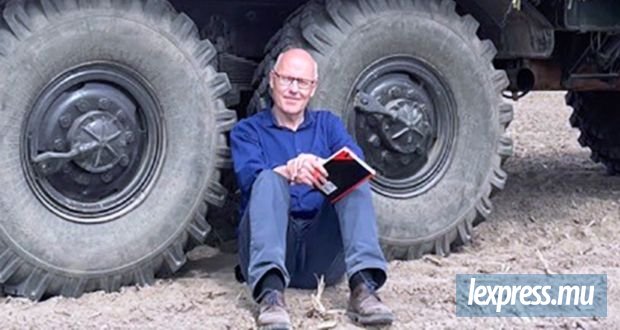
John Lyons, Correspondent and Bureau Chief of ABC in Washington DC/White House.
Australian Broadcasting Corporation (ABC) America’s Editor John Lyons has spent decades covering wars, world leaders and U.S. politics. In this interview with l’express, the veteran Australian journalist reflects on his tense exchange with President Donald Trump, the importance of asking respectful but uncompromising questions, and why journalism’s greatest asset remains public trust...
⚫ What was going through your mind when President Donald Trump recently singled you out after learning you were an Australian journalist? Did you anticipate that the exchange would escalate the way it did?
I think it’s so important that we ask people in power the questions that the average person would like to ask if they had the chance. Whenever I get the chance to ask people in power questions I try to work out what would the average person would ask. I have the same philosophy whether I’m asking questions of a local mayor or the President of the United States. That was my view the day I asked President Trump about his business affairs. It was part of an investigation we did for our flagship investigative program, Four Corners, which examined the increase in the personal wealth of Mr. Trump since he returned to the White House. I asked them respectfully. For example, I think the first two questions I asked - “Mr President, How much wealthier are you now than when you returned to the Oval Office seven months ago?” And “Is it appropriate for a sitting President to be involved in so many business deals?” are questions the average Australian, or Mauritian, would ask if they could. As a journalist I try to ask questions that will draw real information – such as these questions. I try to avoid going for the “gotcha” style of journalism.
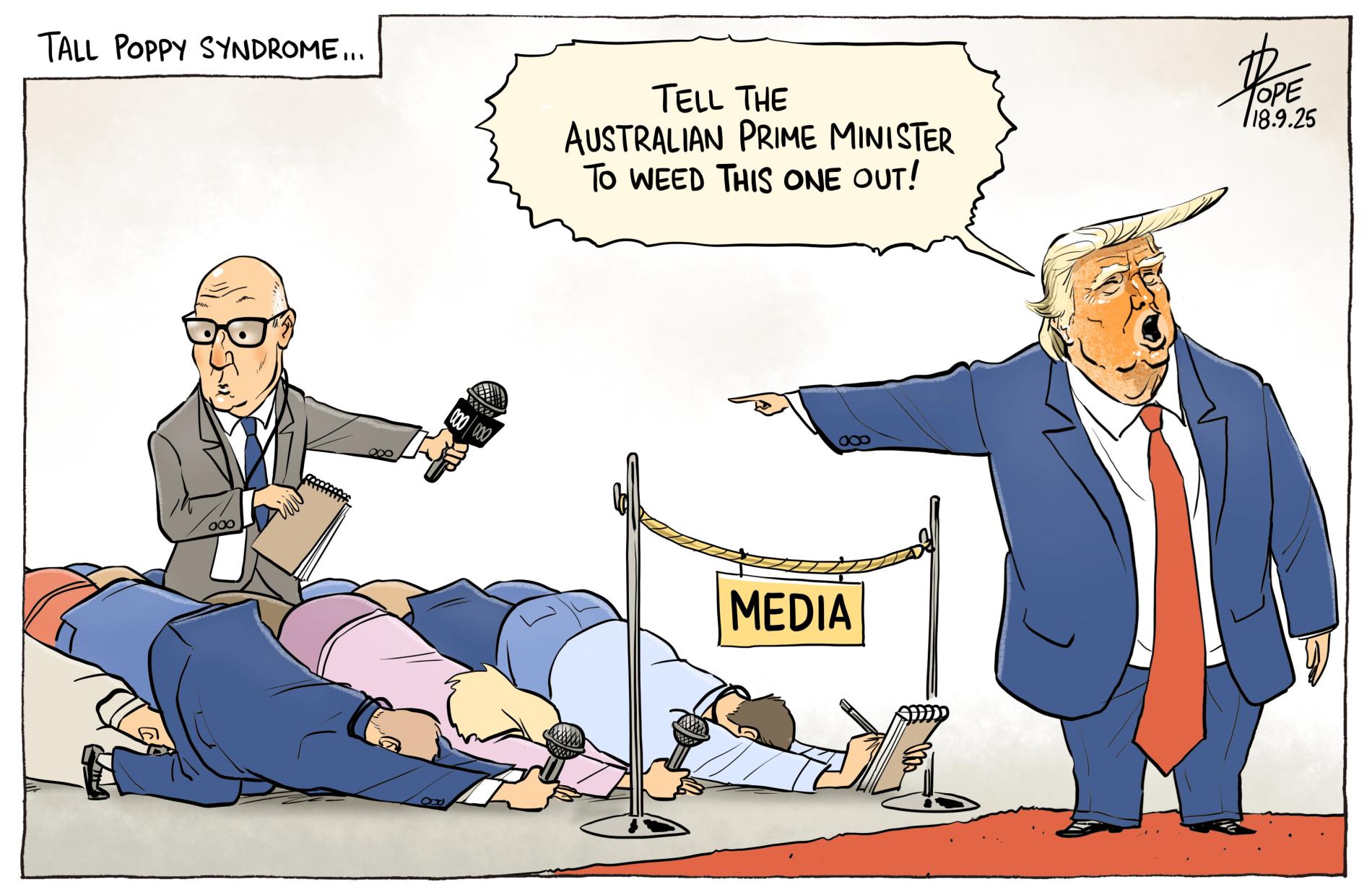
When President Trump escalated the exchange I was careful not to reply in kind. As President he’s entitled to answer questions however he chooses. My role is not to rise to the occasion and match his rhetoric, but rather to try to keep pursuing relevant questions. That’s what I did - I was able to get three questions into Mr Trump, before he pointed his finger at me and told me: “Quiet!” He also told me he would tell on me to the Australian Prime Minister. That’s his right to do, but that is not going to stop me from pursuing the story that I was pursuing. We put the program to air soon after, called “Chasing Trump’s Billions” which people can watch on YouTube. I’m proud of the story. Many people at the time predicted that it wouldn’t get to air because the President was unhappy but the ABC backed me and we broadcast the story which in my view gave a detailed, fair and balanced look at President Trump’s investments, particularly in Crypto currency and Bitcoin.
⚫ What happened after the cameras stopped rolling? How did the White House’s reaction, the public response and the support from colleagues shape your reflections on that episode?
After the cameras stopped rolling the cameraman and I left the White House. There was some concern from some colleagues that my White House press pass would be cancelled, but that did not happen. I continue to visit the White House frequently and to ask questions of White House officials when I can. Support from my colleagues was excellent. I got strong support from both my ABC colleagues and American and foreign reporters who cover the White House.
⚫ You have covered several U.S. presidents. How has Donald Trump changed the relationship between political power and the press?
President Trump is by far the most combative president I’ve seen. He’s also the most accessible. I’ve never seen any president who engages so much with the media. Several times through the day he may engage with journalists in the Oval Office. Having said that, the White House has tried to introduce as many “new media” to the press briefings, who are mostly supportive of President Trump. Many of the older, or legacy media still attend, but President Trump often attacks them as “fake media” and they do not get called on as much as the “new media” to ask questions.
I think if President Trump attacks a reporter it’s important they stay calm and keep focused on the job. Kaitlan Collins from CNN is a good example of this. The President often attacks her as someone who “never smiles”, but Kaitlan makes the point that if she’s asking about serious issues like the Epstein files there is no reason to smile. I think it’s important for journalists to keep focused on the job: that they are not the story and what is important is the questions they are asking.
⚫ Looking beyond that incident, how do you explain Donald Trump’s enduring support despite repeated controversies and his attacks on the media?
Donald Trump is a once-in-a-lifetime politician. I’ve never seen a politician like him. He has an ability to connect with his supporters which few politicians do. His ability to rally a crowd and to tap into underlying frustrations and anger among Americans is unique. He’s an extraordinary communicator, and is able to often deflect the various crises around him. His attacks on the media play to his base - they believe that the media has been part of “the establishment” which has worked against their interests for decades.
⚫ In an era of misinformation and political polarization, how can journalists continue asking tough questions without being dismissed as activists or partisans?
I think it’s all in the way that a question is asked. My view is that almost any question can be asked if it’s asked clearly, calmly and respectfully.
⚫ Journalists in Mauritius, like many around the world, increasingly face political pressure, online harassment and attempts to undermine their credibility. What advice would you give newsrooms determined to safeguard their independence while maintaining the public’s trust?
Journalists all around the world are under pressure. I think this means we have to be clearer than ever in our mission. We have to be fair in our reporting. By that, I mean that if we have a negative story about a person or organization we need to give them amply opportunity to reply. Too many media do ambushes, where they give someone an hour or two to respond. I think that if we approach the subject of a story in good faith, and genuinely give them a chance to reply to allegations or criticisms, then we usually will get a better story than if we approach them an hour before deadline. Reporters need to work with their editors to ensure that the process of journalism is just as clear as the journalism itself. The public craves genuine information, but they also detest journalists who think they’re more important than the story. The story needs to be the focus, not the journalist. But in the end, journalists have to be fearless and they need the backing of their editors and their news outlet.
⚫ Looking ahead, are you optimistic about the future of journalism? What gives you hope that independent reporting will continue to hold power to account?
Yes, I am optimistic about the future of journalism.While journalism is under pressure, there are so many people in all our societies who want real information. We live in a world where social media has flooded the information zone. But so much of it cannot be trusted. When we see a photograph or interview now, how do we know if it’s true? That’s why journalists and publications that are trusted will go from strength to strength. Trust is built up by a journalist or organisation over years or decades. But while it can take years to build up, it can be lost quickly with unethical or dubious behaviour. We need to stay focused on the basics: what has actually happened here? If we report that faithfully, then the public can make their judgements based on facts, not rumour.
*****
Bio-Data
For readers in Mauritius who may not know you well, could you tell us a little about your career, your years covering conflicts and global affairs, and your personal connection to Mauritius through your wife, Sylvie Le Clezio?
I started as a journalist as a cadet in Melbourne when I was 18, and have been a journalist ever since. I still love journalism as much as the day I started. I’ve worked for various media organisations, and enjoyed working for every one of them. I’ve worked for the Melbourne Herald, The Australian, the Nine Network, Fairfax and now the national broadcaster, the Australian Broadcasting Corporation (ABC). At Fairfax I was the Editor of The Sydney Morning Herald. At the ABC, I joined nine years ago as Head of Investigative and In-Depth Journalism, which meant overseeing many of the ABC’s current affairs programs. After that, I was appointed the Global Affairs Editor of the ABC, then chosen for my current job which is the America’s Editor of the ABC, which means being both a correspondent and a bureau chief.
I have a deep connection to Mauritius through my wife, Sylvie Le Clezio. Sylvie grew up in Curepipe, and spent many of her holidays in Grand Baie. We try to go to Mauritius every year or two. I love the country - I find in a world with increasing conflicts and problems, Mauritius is in a wonderful position. Like anywhere, it has its problems, but it also has people who seem to want to live together harmoniously. It is also a stunningly beautiful country. I feel very much at home in Mauritius. However, talking to a range of people across Mauritian society has made me concerned about the situation for journalists – well-connected people tell me about apparent excesses of the government and what appears to be efforts to curtail the freedom of the press. Sylvie, a filmmaker, and I lived and worked in the Middle East for six years. While there we made a documentary called “Stone Cold Justice”. It dealt with Palestinian youths in the Israeli military court. (https:// www.youtube.com/watch?v=cvOSv2fGJ5w), we have also worked on three Books together: “Balcony over Jerusalem”, “Dateline Jerusalem” and “A Bunker in Kyiv”.
Publicité
Publicité
Les plus récents