Publicité
Beachless Mauritius
Imagine!
Par
Partager cet article
Beachless Mauritius
Imagine!
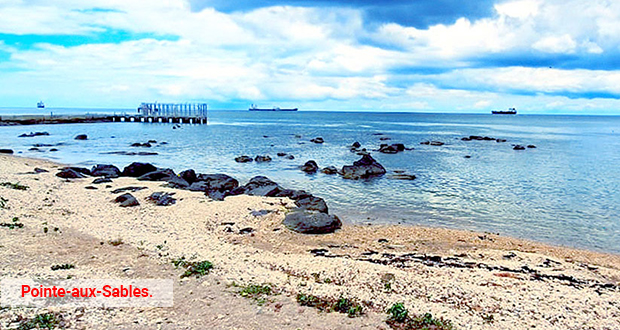
I am penning the present article because I am deeply aghast with the apathy of our quasi one-year old government dealing ineffectively with that issue. I thought that Hon. Rajesh Bhagwan and Hon. Joanna Bérenger will go further and more systematically than Kavy Ramano. Lots of hot air but in reality, we are moving not at a snail’s pace, but at the pace of a starfish!
Do you know that we are losing forever 20 metres of beach? During my inquiry for the present article, I have asked several persons about our receding coastline and the most illuminating answer came from an old Daddi who told me: “Beta, every year we are sitting higher and higher when we go to celebrate Ganga Asnan…” Scientifically, it is true. But are we really aware of what is happening before our eyes? Can we trust those in power? NO! I fear and suspect they do not give a damn! What interests them is how to get a good deal.
Recently, the Secretary-General of the United Nations, António Guterres, raised the red flag following the report of the World Meteorologist Organisation (WMO), which has confirmed that 2024 was the warmest year on record based on six international data sets. In fact, the past 10 years (2015-2024) are clearly the ten warmest years on record. 2024 also saw exceptional land and sea surface temperatures and ocean heat. Guterres said, “Global heating is a cold hard fact.”
The COP Paris Agreement, aimed to limit global warming to 1.5◦C. The Agreement, which is binding, is the first truly universal convention on environment. In fact, we must acknowledge that the world has failed Mother Earth. The COP Parties Agreement also included provisions for supporting developing nations in building a sustainable future through finance and other forms of support. The Agreement, which was welcomed by thunderous joy in 2015, has sadly not achieved the goal set.
The Global Stocktake (GST), a monitoring mechanism built into the Paris Agreement to take stock of its progress, implementation and achievement of longterm goals every five years, has not been followed by the countries as it should be. And what are we witnessing – frequent flash floods, fiercer cyclones, extreme weather from the Northern to the Southern Hemisphere. The recent examples of Sri Lanka, Indonesia and Thailand are mere pointers. Melissa is another example…
Melissa had gusts in the range of 170-185 mph. Melissa intensified within a very short span of time. And we in Mauritius have a lot to lose… We, as a Nation are not alive to the fact that if nothing is done, we are going to lose our coasts. Temperatures rise equals sea rise, which equals to our shores being covered…
Ludicrous absence at COP30
I am baffled by the absence of our two Ministers of Environment at COP30, Brazil. Hon. Paul Bérenger is one of the real ministers who understands the plight of small island states with the rising oceans due to climate change. I had huge expectations that the daughter, Hon. Joanna Bérenger, will be very instrumental to transform Mauritius in a green island. But I did not for one second expect both of our environment ministers to miss COP30. No good excuses have been forwarded. Joanna could have used COP30 to establish a network for Mauritius. She would have come from COP30 emboldened and with a deeper knowledge of green issues and how to achieve them in a green way.
The junior minister could have become the mouthpiece of the small islands and the face to persuade the rich countries that if nothing is done, we are jeopardising the very future of a plethora of states. I am sure that Hon Bérenger has learnt a lot from foxy Bhagwan. But never mind, we can still progress provided we are humble enough to learn from different experiences worldwide, especially how to mitigate the rising of the sea. Without belittling any other ministers who attended the conference, we made a mistake. No, a blunder, by not sending the right person to such an important conference.
Effects of global warming
-
Intensified storms. We know that a warmer atmosphere can hold more moisture, leading to heavier rainfall and more destructive storms, including stronger cyclones and flash floods (e.g.: Pakistan).
-
More droughts for longer periods. Extreme droughts all over the world.
-
Extreme winters. Despite overall warming, climate change is leading to more extreme winter storms in some regions due to factors like atmospheric moisture built up and a potentially weakened polar vortex. We witnessed more powerful anti-cyclones recently.
Our meteorological station has not published any report yet. It is important that it keeps track for researches… The global changes in temperature are also causing the melting of the glaciers and melting sheets. At the same time, water is expanding as it warms, causing sea levels to rise and increasing coastal flooding.
Antarctica melting and its consequences
It is known to everybody who has a little interest in environment issues that the Antarctica ice sheets and some parts of East Antarctica are losing ice at an increasing and alarming rate, which contributes to global sea level rise. The melting is caused by warmer oceans and air temperatures are accelerating and could become irreversible in some areas. What are the consequences of accelerated melting?
The consequences include rising sea levels, which threaten our coastal communities, and changes to ocean currents, which in turn affect weather patterns globally. What happens when ice shelves collapse? Ice shelves act as barriers which hold back the big glaciers behind them. When melting occurs, they no longer act as barriers, thus allowing more ice to flow into the ocean. What about the water glaciers? “Doomsday Glacier” is really a doomsday scenario as it could accelerate the flow of entire West Antarctica ice sheets into the ocean.
Mauritius
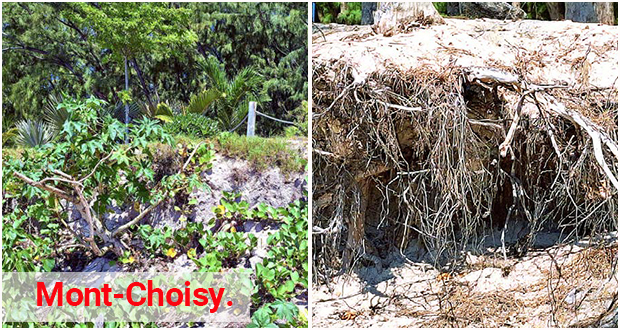
A 1.5-cm sea rise means that we are going to lose all our beaches. Forget about Flic-en-Flac, Blue-Bay, Mont-Choisy and all our northern and eastern beaches. During the last electoral campaign, I was quizzed by a young boy of Stanley about the importance of corals. I explained to him that coral reefs provide an important structure for life under our seas, protect our coastal areas by mitigating the power of waves hitting the coast and also provide an important source of income. There are also thousands of species living on one reef and we are still at an infancy stage in terms of studies about the different species.
Worldwide
Cities that might be under water by 2050 (nonexhaustive list):
⚫ Miami (USA – 2nd most popular city in Florida)
⚫ London
⚫ Venice
⚫ Boston (USA)
⚫ Houston (USA)
⚫ San Francisco (USA)
⚫ Charleston (USA)
⚫ Norfolk (USA)
⚫ New York City (USA)
⚫ New Orleans (USA)
⚫ Honolulu (USA)
⚫ Kolkata (India)
⚫ Osaka (Japan)
⚫ Istanbul (Turkey)
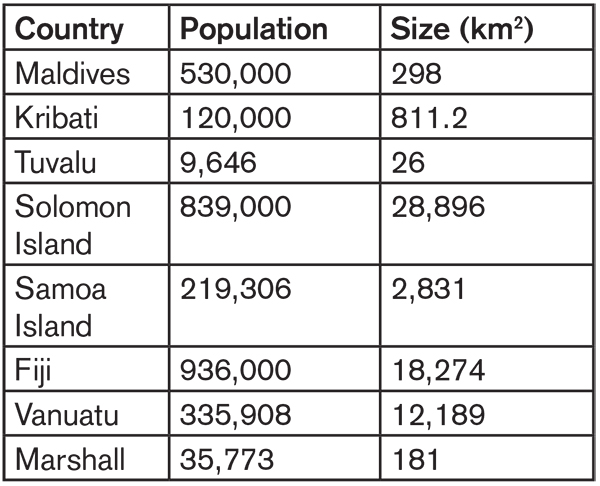
Countries which will disappear by 2030-2050 (Non exhaustive list)
State of coral reefs in Mauritius
Our coral reefs are in a dire state. It is even predicted that certain coral reefs will become extinct between now and 2070. Why is it so? Two main factors. A. Rising sea temperatures is causing coral bleaching and B. Pollution from land-based activities. There is also the factor of overfishing, but it is not as detrimental as the two aforementioned factors. The consequences are highly enormous. We have witnessed in the last years a reduction in live coral cover. Some have even ventured to say a significant loss of more than 60 % between 1997 and 2007. Our beaches are shrinking to the eyes of those who want to see weakened coral ecosystems and if we continue to remain passive, there will be big economic losses and we may lose up to Rs 4 billion by 2060. That is in 30 years’ time. Healthy coral reefs are essential to our economy, especially to our tourism sector.
Sunscreen solar cream
Another cause of pollution is sunscreen solar cream. We throw all sorts of rubbish into our ocean, but we also pollute our sea with the use of non-eco-friendly sunscreen. It is important to know that our oceans are flooded every year with 25 000 tons of sunscreen. A non-stop flow of 48 litres every minute as revealed by the Foundation for Nature and Man. The figures are baffling enough to make us think of our daily actions. Our hotel bosses do not seem to be alive and are even more ignorant than our so-called leaders who are more interested in squabble for cheap political gains.
It is also reported by the Foundation for Nature and Man that nearly a quarter of the sunscreen we generously apply evaporates and mixes with the water just 20 minutes, even if you are applying it to both in hotel pools. In Mauritius I have observed our brothers and sisters who mimic the tourists and use sunscreen lavishly to prove that they are modern and highly protective of their bodies. Studies show that the chemicals contained in some sunscreens are very devastating for our corals. Chemical ingredients like oxybenzone and octinoxate cause coral bleaching, DNA damage, and developmental issues in marine life.
Choose reef safe sunscreens
Choose sunscreens, which use zinc oxide and titanium dioxide – mineral filters – and avoid, yes, avoid sunscreens containing the harmful chemicals. Again, it should be emphasized that even if you do not use sunscreen near coral reefs or close to the sea, it washes off the shower and it makes its way to the oceans from there. More so, no hotel in Mauritius is connected with a wastewater system; it is worthy to note that, like with microplastics, it is very hard to filter out chemicals that sunscreen contains before they can harm our environment, more precisely our reefs.
We should not forget that according to Greenpeace studies, 90% of the coral reefs in the Caribbean have disappeared since the 1980s. Do you know that in May 2018, Hawaii passed a bill banning the sale of oxybenzone and octinoxate containing sunscreens. Also in 2018, the island of Palau banned the sale and use of sunscreen harmful to coral reefs. According to Greenpeace, we must avoid chemical-based sunscreen containing oxybenzone, sometimes labelled as benzophenoxyric and octinoxate. Greenpeace further adds that it is wise to avoid creams containing oxybenzone, homosalate, octocrylene, or octisalate.
Marine life is important to us as scientists have estimated that roughly half of the oxygen produced on earth comes from the ocean, with the majority of this production coming from oceanic plankton, especially one particular species, Prochlorococcus, which is the smallest photosynthetic organism on our blue planet and produces 20% of the oxygen in our entire biosphere. Surprisingly, that is a higher percentage than all the tropical rainforests combined. So it is clear that our coral reefs are also affected by the use of sunscreen.
Impact of global warming on ecosystems and coral reefs
Marine life is affected by warming of oceans and changing oceans are leading to more droughtstressed and dying trees. It is now proven that global warming threatens coral reefs through ocean warming, acidification and sea level rise causing coral bleaching and mortality. Rising water temperature stress corals, which lead them to expel the symbiotic algae that provide food and colour.
The process is known as bleaching. And if it continues, corals can starve and die, which leads to negative impact on the vast marine diversity they support. As we can see, global warming not only causes the sea to rise, but also adds on other factors such as flash floods, cyclones, coral bleaching, and soil erosions, which aggravate the state of our coasts.
Cyclones and coral reefs
The Australian Institute of Marine Science (AIMS) predicted that increases in the intensity of tropical cyclones due to climate change could greatly accelerate coral reef degradation and make it very difficult for coral reefs to bounce back from disturbances. According to research by AIMS, it is said that cyclones can cause damage up to hundreds of thousands of kilometres from their port. Cyclones can tear, yes, tear corals from their footing and turn large sections of the reef to rubble. Coral reefs provide a buffer protecting our coast from strong waves, storms, and floods. Coral reef structure buffers shorelines against waves, storms, and floods which help to prevent loss of life, property, damage, and erosion. We are always concerned after the passage of a cyclone of inland damage, and we are completely oblivious to what happens in the ocean. There are many threats to coral reefs like global climate change and land-based pollution, unsustainable fishing, which are all due to Homo sapiens activities. These threats combine with tropical storms, marine debris, vessel damage and others, thus exacerbating each other.
However, it must be said that heavy rainfall associated with cyclone can reduce to water salinity, increase sediment, and nutrient levels which lead eventually to coral bleaching by altering the temperature of seawater and its chemistry. The most damage is caused by big cyclones. Corals damaged by cyclone Melissa, which moved slowly, will take decades or centuries to recover. We must not forget that climate change may lead to more frequent and intense cyclones, which give reefs less time to recover from disturbances.
For all the other facts and reasons, I fear that we are on the verge of losing our shorelines, beaches, and our island as we know it today. Forget the islets around Mauritius. They will be submerged in less than 10 years. Will we act decisively or waste time with cheap political squabbles for the sake of our eyes? We missed opportunities during COP30. Fortunately, the 2026 United Nations Climate Change Conference COP31, scheduled to be held in Turkey under the stewardship of Australia, will focus on the impact of climate change and on vulnerable ecosystems like coral reefs. Will Mauritius seize the coming opportunity by starting to work with Australia or Turkey?
Does coral have any health benefits for human beings?
Coral is used as calcium supplement to treat multiple sclerosis, treat and prevent cancer, heart diseases, and other chronic health problems. It is also used by surgeons (in Japan and the United States, among others) as a foundation to grow new bones in reconstructive surgery, cosmetic facial surgery, and other physical damages. We also now know that the component of a sponge found in the Caribbean is used to create zidovudine, a medicine used to treat HIV. Corals are animals. They eat plankton and small fish. They can move. Corals support 25% of ocean life.
Coral, being an animal, reproduces once a year following clues from the moon and right temperature of water. When the time is right, entire colonies of coral reefs release their tiny eggs and sperms called gametes into the ocean. Coral reefs cover only 1% of the world’s largest ocean but provide habitat for at least 25% of the world’s marine life.
Mauritius
In Mauritius, our coral reefs are dying. Ask experienced divers and they will tell you how white our corals are compared to years ago. White corals mean death of corals.
How to stop our corals from dying?
Minimum use of fertilizers on land as they permeate into our soil, spread into our rivers and after flash floods or cyclones, they flow into our oceans and harm our reefs. Reduce marine debris. Ban the use of sunscreen creams containing chemical ingredients (oxybenzene and octinoxate), which are harmful to coral reefs. To protect our coral reefs, we must sensitize our population and tourists to use reef safe sunscreens using non-nano particles minerals like zinc oxide and titanium dioxide, or simply cover up with light clothing.
We welcome one million tourists per year, who sure take at least a jump in our ocean. It is estimated by the Americans that 4,000 to 6,000 tons of sunscreen wash off people and into our oceans worldwide every year. Our hotels should also not sell sunscreens with the harmful ingredients to our coral reefs. By not doing anything, our hotels are slowly eating the hands that feed them. By destroying our reefs, the hotels are complicit in the destruction of the reefs which will have the domino effect of eroding our seas.
Coral reefs are guardians of our coastlines. Coral reefs are natural barriers against waves and storms. They reduce the impact of waves, protect our shorelines from erosion and damage caused by storms and floods. Coral reefs provide food, shelter, and breeding grounds for a million aquatic species. Coral reefs also purify water as they act as natural filters by removing pollutants and improve water clarity. They act also as carbon sinks, thus helping to regulate global climate.
Did you know that there are extensive studies, especially in China, Japan, and the United States, where the coral reef organisms are being studied for potential treatment for a plethora of diseases, including cancer, heart diseases, arthritis, Alzheimer’s, and asthma? Important also to know, coral reefs wear away, which create the sand for white beaches and allow in turn other vital ecosystems. The calcium carbonate of coral is also used in bone grafting procedures. Scientists worldwide believe there is a vast adapt potential for medical discoveries within these ecosystems.
Countries that invest heavily in coastal reefs researches and conservation are mainly Australia, China, Japan, the United Kingdom, Germany, France, Canada, and New Zealand. We should learn from their experiences. The countries mentioned cooperate among themselves through international partnerships like Global Fund for Coral Reefs (GFCR). We should stress that South China Sea is home to hundreds of coral species and hundreds of thousands of reefs associated species rivalling the coral triangle diversity and serving as crucial habitat. The coral triangle diversity is located in the western Pacific and contains 76% of the world’s coral species, and 37% of its reef fish species. It is also home to whales, dolphins, and sharks.
Many reports and professional sea divers have said on numerous occasions that our coral reefs are poor and in a degraded state. Why? Rising sea temperatures are the primary threat leading inexorably to bleaching. When seawater temperature rises, corals expel the algae living in their tissues, turn white, and invite death. Runoff from land, especially during cyclonic seasons, agricultural fertilizers, (we use a lot of those, exposing ourselves to cancers), and plastic waste (remember the plastics which flooded the port areas after the floods), increased nutrient levels, and sediment, which choke corals and promote growth by algae.
Blue-Bay, phenomenon of pinkish water
Coral spawning is the release of millions of tiny eggs and sperms into the ocean. The massive number of gametes float on the surface, making the crystal water of Blue-Bay appear pinkish with sunset, even of an orange hue. We know it is temporary or happens only in the month of October. What is its significance? It is an important part of the coral reproduction cycle and is vital for the health and regeneration of the Blue Marine Torque, our largest coral reef area on the island. Did coral spawning happen this year? It happened, I am told, on a low scale, around October 6 to 12. Numerous researches are being conducted worldwide, especially in the United States, China, Japan, and Australia.
The Australian example. The Great Barrier Reef annual mass spawning happens also in Australia in October following the full moons in October and November, and sometimes in December. Coral spawning provides a narrow window of opportunity for recovery on the reefs. Scientists seize that opportunity to understand how reefs can resist and recover from disturbances. It is now known that other aquatic animals like the crown of thorn starfish reproduce around the same time.
It is important to study coral spawning for the following reasons: a. To develop our approach’s quality control of genetic diversity in coral aquaculture; b. cryo-preservation; c. coral hybridization; d. boosting a coral’s resilience with macrological symptoms; e. tracking of coral genetics and inherited traits; f. reef restoration and adaptation programs; and g. coral reef resilience initiatives. If you wish to learn more about Australian Governmentfunded Reef Restoration and Adaptation Program and the Australian Coral Reef Resilience Initiative, please Google it and you will learn more.
The research in Australia is headed by Dr. Mohamed Azmil AbdulWahab, a world-leading expert. I do hope that the Minister of Environment will invite him to Mauritius. I am sure it will be money well spent. Dr. Wahab is presently a senior research scientist from the Australian Institute of Marine Science. Other local researchers, a host of organizers including some international universities, the University of Mauritius, Ecosud, Odysseo Mauritius, and Oceanarium Mauritius are collaborating actively for instance to (a). Characterize the spawning patterns; (b). Gamete collection at Belle-Mare and Blue Bay Marine Park; (c). Larval propagation (Fertilized eggs or reared in controlled laboratory environment and in floating nurseries called coral rearing in situ basins (CRIBS) deployed in the ocean); (d). and transplanting into degraded reef areas.
It is essential for the Ministry of Environment to take the lead and get the necessary financial support for our NGOs and take the projects successfully as we need our reefs. Without reefs, no beaches. Without reefs, we are welcoming flooding on a regular basis. We must also educate our population. Our future lies in the ocean. We must learn from nature to preserve our nature.
This October, there has not been much publicity or articles related to the annual transformation of Blue-Bay into Pinky-Bay. Scientists are now following with great interest that phenomenon. In fact, many ocean lovers around the world are pinning their hopes of saving corals battered by climate change on this natural phenomenon. It was planned that in October last, researchers from Mauritius and abroad were planning to collect millions of larvae from Blue-Bay. Not a single statement from our ministers on that subject. Was it done? If not, why?
Mangroves
⚫ Sensitizing the public about the use of mangroves
The majority of our population do not know much about the usefulness of mangroves. We do not realize that mangroves are a biodiversity-heaven. Mangroves act as nurseries for young fish and also a home for honeybees. But what is very important in an era of global warming is that mangroves stabilize shoreness, prevent erosion, and also protect the land and the people who live around the coast, especially waves.
In 1995, the Ministry of Fisheries launched the laudable initiative of Mangrove Plantation Program, which at that time I supported as founder member of the Groupe Réflexion Emmanuel-Anquetil, the precursor of Mouvement Républicain. The main objective was to replant mangroves in denuded coastal areas and raise public awareness about their usefulness. By 2004, the program managed to plant 200,000 seedlings.
It is opposite here to emphasize the great work accomplished by the Reef Conservation (SOS Mangrove Program), initiated in the wake of Wakashio oil spill. What is interesting with that program is that it focuses on scientific monitoring, community collaboration, and restoration efforts. It also provides for mangrove nursery. The work done by Odysseo, (Varuna Project), is also very important inasmuch as they planted 10,000 mangroves in degraded areas from Le Morne to Case-Noyale. But much remains to be done if we really want to mitigate the inexorable rise of the ocean.
⚫ Forbidding hotels from planting mangroves
Why are hotels forbidden from planting mangroves? Is it ludicrous that hotels or even individuals are not allowed to plant mangroves or even proceed with nurseries for corals? Time to change regulations. I pray that we find a scheme so that hotels are included in the struggle against the rise of the ocean. Every action (be it minor) is important to save the ocean. If we stay put, the hotels will be the first big losers as all our hotels are on the coast. Maybe the solution is to pray…
⚫ What should be done…
The government should, with a sense of urgency, set coral nurseries. We can learn from several experiences worldwide. A revamped SMF, meaning Special Ecological Force (SEF), shall have as duties: to set up coral nurseries, plant corals, and look after the coral plantation; establish special protocols with hotels to set up coral nurseries and coral plantations; enrol in their activities, coral plantations by tourists; and sponsor a coral plant and the money can go to active NGOs in that particular field.
According to American figures, a coral nursery does not cost a lot of money. For instance, a coral tree costs less than 23 USD. A brand new sea saltwater tank costs less than 1,000 USD. The lifespan of a coral can be up to 5 000 years. Coral is known to be the longest living animal. At the initiative of the Albion Fisheries Research Centre, it has launched a communitybased coral project in Mauritius, which is ongoing at four locations, namely Quatre-Soeurs, La Gaulette, Bel-Ombre, and Grand-Gaube.
What is interesting with this project is that the local community is involved through a coral culture training program. The Mauritius Oceanography is collaborating fully with the Albion Fisheries Centre and the Ministry of Blue Economy, Marine Resources, Fisheries, and Shipping. We must continue to sensitize the public, especially the youngsters, on the importance of coral reef ecosystem.
⚫ What should we do as a nation?
We must enrol the SMF, (I have proposed since 1992, to transform the SMF into an SEF), and one of their tasks would be to launch mangroves and set up nurseries around the island and Rodrigues to plant seedlings of mangroves in many areas of the island. All hotels, which are making millions of rupees each year must have modern nurseries of mangroves and corals. The Ministry of Tourism must impress on the hotels that it is in their longterm interest to invest in mangroves and coral nursery programs. It can even encourage tourists to take part in a mangrove planting program.
The government must encourage community organizations to get engaged in planting of mangroves. In every college, the management, with the help of student councils, should set up mangrove clubs. The government should finance the NGOs, which are doing well. They have helped the Association pour le développement durable (ADD) which has planted over 50,000 mangroves seedlings at Le Morne and other nearby areas like Case-Noyale.
They need more help and I eagerly believe that with the State’s help, they can do more. They have know-how, experience, and have proved their efficiency. To that effect, see what they have done at Quatre-Soeurs and Poudre-d’Or. Kudos also to reef conservation, especially after the Wakashio oil spill. We must also revamp the Ministry of Fisheries to go above the objectives set in 1995. They have planted 214,000 seedlings between 1995 and 2004, but now it seems that they are in sleeping mode.
The Ministry of Blue Economy, Marine Resources, Fisheries and Shipping is not doing enough in view of the urgency of the situation. The denuded areas are not catered rapidly, which means that the ministry is failing in its own objectives to increase coastal resilience and enhance fisheries resources. The ministry seems to forget that mangroves help to stabilize, substrate, act as a buffer against flooding, are natural filters, form a rich ecosystem, and are crucial for commercial fisheries by acting as nursery around, and are actively involved in the recycling of nutrients. But the ministry does not encourage their own officials to keep the momentum of planting mangroves on a regular basis.
One year after the general elections, despite all the big promises by so many self-proclaimed eco-warriors, who are now in government, we cannot afford the luxury of losing that war. Mangroves offer unique benefits that are hard to replicate. It is interesting to note that there are 50 to 70 species of mangroves in the world, but in Mauritius we have only two species, both being the Rhizophora mangle family, which is commonly known as red mangrove.
Mutirão”
What to do? Do not worry, it is not a list what we should do, but some modest suggestions for our own benefit. A new word – Mutirão – has been coined, which forms part of all narratives of militants for the environment. What does it mean? The word was coined by President Lula and his Portuguese team for collective effort or community task force. In Mauritius, after cyclones, we see Mutirão. We see everyone making the effort to build, act, clean in a great spirit where egos are momentarily cast aside. We saw it after cyclones Carol and Gervaise. We witnessed it also after the Wakashio oil spill.
But the new government has unconsciously, by the change in pension laws, killed Mutirão, the Mauritian soul. What are the components of Mutirão? Mutirão includes that the whole nation, from kids to senior citizens, will engage actively in civil society, trade unions, the private sector, local government, especially the lower level of village councils, youth club students, student organizations, student councils at the level of schools and universities; investors should be enrolled to sensitize the population on a permanent basis, speak on national TV on a regular basis; and implement programs in a systematic way with ruthless efficiency.
Action agenda
Number two: A specific framework was launched at COP30 with 117 solutions-acceleration plans and 30 key objectives to amplify existing efforts across mitigation, adaptation, and finance. Number three: Accelerated implementation. Focusing on the practical delivery of existing climate commitments such as nationally determined contributions and national adaptations planned rather than solely on negotiating. Number four. Ecoparliament. We must congratulate the present president of the National Assembly who has made the youth parliament a success. We must therefore learn from that success and hold every six months an eco-polyamide in Creole to enrol everybody, which will be televised on national TV so as to galvanise and sensitise the whole population.
Can we stop the ocean from rising? YES, if we act decisively and the time is now. We are not heirs of King Canute, but we can at least act decisively.
Publicité
Publicité
Les plus récents