Publicité
An evening in Paris
Halfway in
Par
Partager cet article
An evening in Paris
Halfway in
It was a peculiar sensation, being Mauritian-American in Paris. French is not foreign to me; I have been reading, writing, and speaking the language since I was six years old. Paris felt like a test of fifteen years of education. Yet, while studying at The Sorbonne for my semester abroad earlier this year, I kept discovering that understanding alone does not create belonging. That gap, unexpectedly, taught me about Mauritius and the United States, two places I call home: sometimes we see a culture most clearly when we are close enough to hear its music, but far enough away not to take it for granted.
Every day, I crossed The Sorbonne’s cobblestoned courtyard among students who seemed perfectly at home with the Haussmannian backdrop, speaking with the coveted French intonation that came naturally to native speakers, and wearing effortlessly stylish vintage clothes (I’m serious, they could wear a bathrobe and make it look cool). Hoping that my carefully curated outfits allowed me to blend in, I sat down for a ninety-minute lecture on metaphysics, transcribing as quickly as I could. More than once I panicked that my French had failed me, only to realize that the professor had switched without warning to a passage in Greek or German. My handwritten exams came back riddled with red cursive, the grading scale an enduring guide to intellectual humility.
Around the city, Paris kept offering the same kaleidoscope of recognition and isolation. I could understand the metro announcements, order dinner, read signs and follow a conversation. But my classroom-honed French only took me so far. My walk home took me past a bar, where I could overhear boisterous conversations. I couldn’t help imagining how I might interject, but I was always too scared to sit down for a drink. I sometimes felt like a child jumping to see through a high window: close enough to catch the scene, never quite tall enough to get the whole picture.
That feeling was familiar. As a Mauritian-American, I am usually the person in the room who has to explain Mauritius. Oddly enough, I still haven’t mastered the elevator pitch for Mauritius. The keywords are usually “tropical,”“Indian Ocean,” “dodo bird.” I do it with pride. But existing in a constant state of explanation can be lonely. I wish I could bring people to the bustling streets of Port-Louis, the quietly lulling sugarcane fields of the North, and the crashing waves on the beaches in the South. Instead, I am caught in translation.
In Paris, I was the one asking for the explanations. In the conversations I rehearsed in my head with the bar-goers, I understood every reference and volleyed back witty remarks with perfect grammar. In reality, I was beginning to feel embarrassed for confusing familiarity with sameness.
It felt almost serendipitous to be reading Nietzsche during this time. For one of my courses, I was studying Le Gai Savoir, a book built from aphorisms, short sections ranging from a single line to several pages. Nietzsche famously wrote that he did not write to be understood; at times, he deliberately obscured his meaning, resisting the expectation that his work should yield itself easily to the reader.
The need for interpretation may be the gift of being halfway in. An outsider notices what insiders have no reason to notice. In Paris, I got to be both a participant and an observer. The position can be lonely, but it can also sharpen attention. I began to understand that the discomfort I sometimes feel as a Mauritian-American abroad is not only absence. It is also a vantage point. Nietzsche writes in §373, «…Combien absurde serait une telle évaluation, «scientifique», de la musique! Qu’y aurait-on saisi, compris, reconnu? Rien, littéralement rien, de ce qui chez elle est de la «musique »!...»
As I reflect on my semester abroad, I keep returning to that thought. A culture cannot be mastered the way coursework can. It is heard in tone, habit, gesture, humor, silence, and the things no one thinks to explain.
I am not French. I may always hesitate between amener and emmener. But I can study Rousseau and Proust in their original language, understand the metro and write a respectable commentaire de texte. I can do all of that with an American driver’s license and a Mauritian NIC in my wallet. Those cards tell part of the story, but not all of it. Carrying both homes with me also means staying curious about other people and cultures. The better I learned to listen to Paris, the more clearly I could hear Mauritius and the United States in myself.
Bio
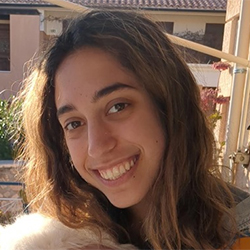
Raina Sohur is a senior at the University of North Carolina at Chapel Hill, where she is a Morehead-Cain Scholar majoring in Mathematics and Philosophy.
Publicité
Publicité
Les plus récents