Publicité
Farage’s Chagos bluff
Big on outrage, short on history
Par

Partager cet article
Farage’s Chagos bluff
Big on outrage, short on history
You might expect a broadcaster to check what was said before hitting the breaking-news button. Nigel Farage appears to prefer the reverse. Mauritius asked Britain for a clear roadmap by December 2026 for ratifying the Chagos treaty both governments signed in May 2025. Prime Minister, Navin Ramgoolam, warned that Mauritius was prepared to pursue legal action if diplomacy failed. By the time the statement reached Mr Farage’s Facebook page, a deadline for a roadmap had become a deadline for handing over the islands. The siren emojis certainly got through.
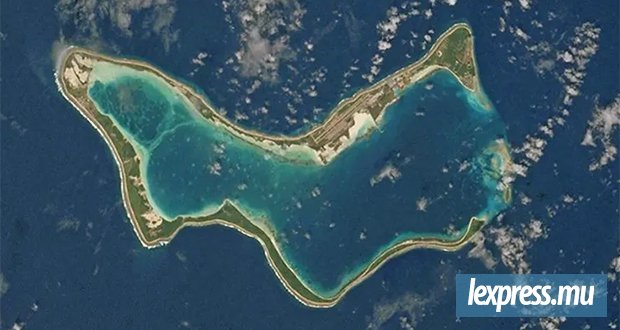
Mr Farage then declared that Mauritius “has never owned the Chagos Islands and never should”. In 1965, Britain detached the Chagos Archi- pelago from Mauritius, three years before Mauritian independence. That little word “from” rather spoils the story. If Chagos had never been part of Mauritius, what exactly did Britain detach it from?
In its 2019 advisory opinion, the International Court of Justice concluded, by 13 votes to one, that Mauritius’ deco- lonisation had been unlawfully left incomplete and that Britain was under an obligation to end its administration of Chagos as rapidly as possible. The Court published its reasoning. Mr Farage gave us two uses of the word “never”.
The International Tribunal for the Law of the Sea evidently missed the memo too. In 2021, its Special Chamber rejected the Maldives’ sovereignty-related objection by eight votes to one and concluded that Mauritius could be treated as the coastal state in respect of Chagos for the purpose of delimiting the maritime boundary. In 2023, the Chamber drew that boundary between Mauritius and the Maldives within 200 nautical miles. Mr Farage is welcome to explain where he thinks the judges went wrong. He might even devote a broadcast to it.
There is political mileage in this kind of radicalism. Turn a request for a timetable into a foreign ultimatum, cast Britain as the aggrieved party, then present yourself as the man with the courage to defend it. For a broadcaster, outrage draws an audience. For a politician, it gives that audience someone to blame. With Mr Farage doing both jobs, the story can go from breaking news to campaign material without a change of presenter.
Mr Farage has had some decidedly hostile receptions on the campaign trail. An egg hit him in Nottingham, milks- hakes were thrown at him in Newcastle and Clacton, and a coffee cup was thrown at him in Barnsley. On Chagos, the egg on his face is entirely of his own making. All he had to do was read the statement before sounding the siren.
Justice asks a harder question. What does a country owe to the people who bore the cost of decisions made in its name? Britain forcibly displaced the Chagossians. They hold different views about the treaty and their future. Both governments owe them a direct voice in decisions about resettlement and clear answers about who can return, what support will be available and what redress families can expect. Their rights deserve attention long after the cameras have moved on.
Mr Farage, politicians who want to stand on the right side of history must uphold democracy, respect justice and tell the public the truth, even when the facts are politically inconvenient. On Chagos, that means facing up to what Britain did, listening to the people it displaced and supporting the restoration of Mauritian sovereignty over the archipelago.
The Chagossians deserve justice. Mauritius deserves to regain sovereign- ty over Chagos. Your audience deserves the truth. Stop peddling fake news for political mileage.
Publicité
Publicité
Les plus récents