Publicité

Why China is so Reasonable

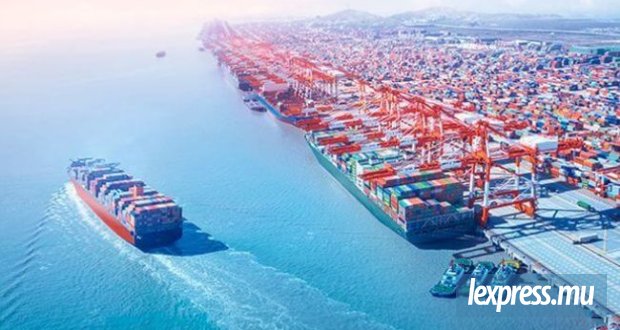
Last month, China’s trade surplus was $13 billion. That’s over $150billion a year. So why does China still keep its head down and go alongwith almost everything that the "international community" proposes ? You can even bomb the Chinese embassy in Belgrade. They just smile and suck it up.
One reason is that China’s trade surplus is big, but it isn’treally all that impressive given the size of the country. $150 billion ayear in a country of 1.3 billion people is an annual trade surplus percapita of about $120. That’s not wealth beyond the dreams of avarice. It’s not even enough to justify giving up the day job. And it really does not threaten to upset the entire global economy, despite what some peoplewill tell you.
Some of the statistics of Chinese growth are very impressive, like the fact that automobile production rose 21.6 percent in China last year while car plants were shutting down because of over-capacity all across the West. What the Chinese leadership sees, however, is an economy in which far too large a share of production and of employment still depends on foreign investment and foreign customers. The domestic consumer market that would finally make the Chinese economic miracle self-sustaining and irreversible is gradually coming into existence, but it will probably be fifteen year before it becomes the main source of demand for Chinese goods.
So in the meantime, China must not do anything that would disrupt the flow of inward investment and outbound goods. They talk in Beijing of the "fifteen-year window" that is China’s one shot at becoming a fully developed country, and keeping that window open requires a tranquil international environment. It requires, above all, good relations with the United States and Japan, so China bends over backwards to avoid confrontations.
There are a few red lines for China, as for any country : formal independence for Taiwan, for example. But Beijing isn’t going to bring down the US economy by dumping the mountain of US dollars it holds, because it needs American consumers to go on buying Chinese goods. And it isn’t going to use its growing wealth to expand militarily, despite all the excited talk about the Chinese "military build-up" in the United States.
And what about the fabled exchange rate, the under-valued Chinese currency which allegedly lets China steal jobs from the older industrialised countries ? The renminbi really is under-valued, probably by as much as forty percent, but it isn’t the main reason for China’s success, nor is Beijing going to be forced to revalue it. We have been here before. Back in the mid-1980s, it was Japan that was allegedly going to take over the planet. The Japanese economy had been growing at around ten percent a year for three decades, and the Japanese were starting to buy up significant chunks of American industry and real estate, and various pundits were predicting that the heavens would shortly fall. The Japanese yen was seriously undervalued, too, and the experts decided that that was the problem.
So they fixed it. The finance ministers of the major industrialised powers got together in New York and said that the US dollar was too high. Their declared lack of faith in the dollar was a self-fulfilling prophecy : it duly fell against the yen, Japanese exports became less competitive -- and Japan went into fifteen-year period of low or no growth.
But that isn’t going to happen because an under-valued currency is only a small part of China’s competitive advantage. China’s real edge is a relatively well-educated workforce that will work for about one-tenth of American wages. You could revalue the renminbi by forty percent tomorrow, and foreign investments in China would still make money. Things are likely to continue down the present track for quite a while yet.
Publicité
Publicité
Les plus récents