Publicité
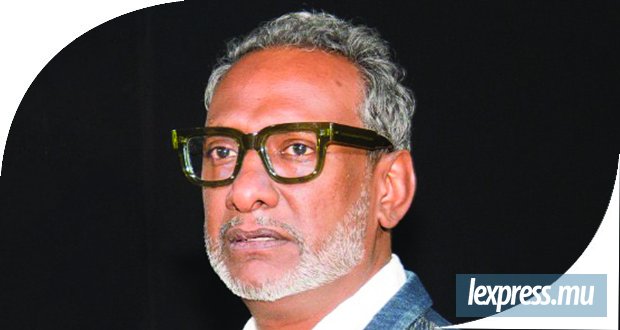
Sunil Banymandhub ,Director of CIM Finance
Par

Partager cet article
Sunil Banymandhub ,Director of CIM Finance

<B>“No rote-learning with Robert!“</B>
“If I had to make a choice about the teacher who impressed me or influenced me the most in my life, I would automatically say: Robert d’Unienville. He was my mathematics teacher when I was in form 3 up to when I was doing my HSC at the Royal College of Curepipe. But our relationship grew particularly after my University years.
What was very special about Robert was that if ever we had a mathematics problem that we could not solve, he would never give us the answer. In fact, he would often start with “Quelle est la couleur de la queue du cheval blanc de Napoleon?” Obviously we were expected to say ‘white’. After having ascertained that we had a certain power of deduction at a very elementary level, he would then ask a very simple maths question, related to the problem but at a very elementary level. Again, the answer was obvious most of the time. Then, he would amend the question a bit, and once again the answer would be obvious.
Finally, after four or five questions like this, we would discover that we had in fact solved the problem ! In practice, he never gave you the answer, but he simply and skillfully drew it from all of us. He was effectively breaking down the main problem into its component parts, which were generally simple individual problems, and then making a synthesis. The beauty of this was that he taught us how to think from first principles.
Robert was not the kind of teacher who would make us learn solutions by heart or do things by rote learning. He rather taught a method of problem-solving. Hence, when we had to sit for an exam such as the SC or HSC, we were very confident that whenever we were facing problems that we had never seen before in our lives, we knew how to analyze them in the same manner, into their component parts, create the building blocks, and finally arrive at the solution.
We were all very lucky to have a teacher like him. On the other hand, it did take more than one or two years to absorb his techniques and his pedagogical approach, because he was teaching you to think. The one thing I remember was that in those days, students, as well as some teachers, would often confuse units of mass, weight, and force. Robert was very strict about this. If ever one of the students was making such a fundamental mistake of principle, he would look sternly and say “don’t swear”, and you would know that you had transgressed some golden rule.
Luckily enough, our relationship continued even when I came back from studies. This is actually when I really started to get to know him. He was a world-class bridge player. He played for England when he was at Oxford, and it is generally agreed that if he had stayed in Europe or the US, he would have been amongst the top few players of his day. I started playing serious bridge when I came back. In those days, the best national players were Robert, Paul Derblay, and Imran Doomun. There were many others who were reasonably good. One day he said to me : “I feel you could play a decent game, and I would be happy to teach you”. I would not have dared ask him to play with me, as I was not in the same league, in fact, not even close. Thus began many years of partnership, which taught me everything that I subsequently learnt about the game. The bridge sessions were often followed by dinner, with five or ten of us adjourning to some restaurant in Quatre Bornes. We would talk about bridge, music, reading, everything.
Over the years, he became like a surrogate father. He introduced me to western classical music, although he was probably dismayed that I did not take to Bach, who was his clear favourite, preferring the romantics, like Beethoven, who remains my idol.
Although I had always read as a hobby, he introduced me to his favourite authors, amongst them John Steinbeck, and G.K. Chesterton. He also liked Georges Simenon and Graham Greene. He tried to teach me to play golf, again, alas, without great success. My golf score still looks like a telephone number. Whenever we were travelling together to some international bridge tournament, we would do crossword puzzles. But again he was in a different league. I could manage cryptic ones at the level of the Daily Telegraph series, whilst he was in the class of Mephisto or Azed. I will never forget pondering over a clue once, on the way to Bombay, and he said : “Give me one”. I shot back : “Is this how the brave shows off his achievement?”, the solution being four words with 7,2,3,3 letters. It took him hardly two or three seconds to come out with “feather in his cap”, the word “brave”, having here of course, the meaning of “red Indian”.
Robert was a very talented person. He was one of the very few people I have ever met who could be called “brilliant”. He allied the sharpest mind I have ever come across with a wide range of interests, and you got the feeling that whatever he set his mind to, he could excel at it. An exceptional man indeed.“
Publicité
Publicité
Les plus récents