Publicité

Students parachuted into

Most students do not go to university after secondary school. Those who do still constitute the minority while the majority look for a job. Some who will be lucky enough to start in the ?right field? are probably the ones who had the opportunity of being properly informed. But what about the others? It seems young people can?t rely on schools to prepare them for the world of work!
The core problem of the education system in Mauritius ? this will never be said often enough ? is its exam-oriented approach. By dint of insisting on results, the system does not consider the future of pupils at all. Their creativity or capacity for reflection has not been developed and some pupils feel totally lost as soon as they leave the school cocoon.
In fact, many do not have the slightest idea of what they want to do because they were never offered any career guidance during their school years. There were just left to themselves if their parents did not take things in hand.
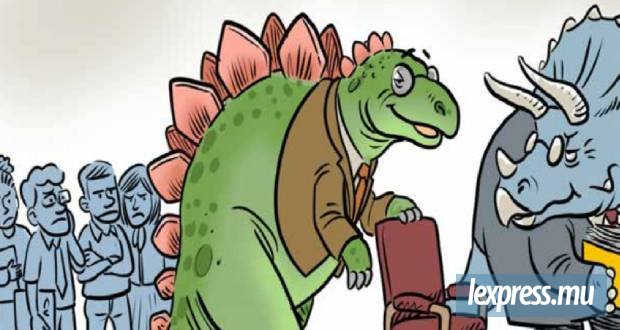
However, there is hope for the future, as the Mauritius Examinations Syndicate (MES) is now working on the introduction of a professional Higher School Certificate (HSC) with the support of the Cambridge International Examinations (CIE). ?The HSC no longer meets the expectations of the country. It offers mainly academic training for access to university and does not prepare young people for immediate employment. However, many pupils go onto the labour market as soon as they obtain their HSC or even their SC, as they do not consider it necessary to continue. As the SC and HSC do not prepare young people for work, they cannot fulfil the country?s needs,? MES director, Lucien Finette, acknowledges.
?Internships are the best possible way of preparing children for their future. Such an experience would put them in touch with a world completely unknown to them. Moreover, they would allow students to be more aware of their preferences.?
He went even further a few weeks ago when l?express questioned him about the weaknesses of the system. ?The HSC is a pre-university diploma. It does not really prepare the child for the labour market although we are starting to bring in some changes and add some vocational subjects to the syllabus.? So, the authorities have realised that the system does not meet the country?s needs and they are about to bring in some changes to improve it.
In the new system ? to be implemented in 2008 ? pupils will have to choose between the traditional HSC and the new version. The initiative is indeed laudable and it was high time that the educational system adapted itself to a more modern world.
However, such a change may also be important at an earlier stage. In France, for instance, there are discussions at the moment about implementing compulsory internship - where pupils go on a work placement - for all pupils in Form IV. This is only one of the many examples that could be used to make children more aware of the realities of the labour market at quite an early stage.
Internships are the best possible way of preparing children for their future. Such an experience would put them in touch with a world completely unknown to them. Moreover, they would allow students to be more aware of their preferences and of the jobs they would like to do after school (or, at least, the jobs they do not want to do). If the internship is done at the end of Form VI, it might even lead to a full-time job. But introducing internships within the school system may require much time and the authorities would have to make sure that companies are ready to take such young people on board for a period of time.
Careers guidance
Other initiatives ? requesting less time and effort ? could be taken to offer broader perspectives to pupils. Some teachers could be trained to guide pupils in their choices or there could be one ?careers adviser? for several schools. In the nineties, some lecturers from Napier University were paid by the Mauritian government to train about 20 Mauritian teachers in careers guidance. But there was no follow-up and the trained teachers went back to their schools where their new competences were not really used. The careers guidance service, under the aegis of the ministry of Education, is still there but very few students know about it.
At the moment, only private initiatives such as the career guidance fairs organised by the Rotary Club or CIFOD seem to reach large numbers of students.
These, however, deal mainly with university prospects rather than employment.
Likewise, outings or site visits could be made an integral part of the school programme so that pupils get a glimpse of the world outside school. The system should make sure that pupils are not totally cut off from the real world to make their shift easier when they join the labour market.
 |
AINNOVATION
French-system schools set the example
Private French-system schools in Mauritius have started taking care of this problem. As they must have realised that many pupils are lost when they have to start thinking about a career, these schools have set up a system where pupils have a contact with professionals. Their "forum des métiers" (careers? workshop), held once a year, gives the opportunity to pupils in their last years at school, to meet professionals from various sectors and ask them questions about their jobs. Moreover, these schools already have a stream which is quite similar to the professional HSC with the Tertiary Science and Technologies Baccalaureate.
Publicité
Publicité
Les plus récents