Publicité
Rethinking tertiary education for the 21st century
Par

Partager cet article
Rethinking tertiary education for the 21st century

Mauritius is experiencing an uncontrolled expansion of post-secondary education. The variety of institutions offering further studies/courses is increasing and the choices are both exciting and confusing for parents and students. Such institutions offer a huge range of courses with unknown standards. Worrying advertising such as ‘quality education from UK at an affordable price’ has more commercial emphasis than quality standards. When education is so openly linked to affordability, red lights begin to flash that standards will be tailored to what the student can afford and not what is required. This is bound to affect the outcome of courses, the level of skills and inconsistent meanings to diplomas or degrees.
Education is big business. Mauritians are keen to educate their children for better occupational and social status. This makes them a vulnerable group. The Tertiary Education Com-mission (TEC) bears a heavy responsibility to safeguard our children who are aspiring to better educational achievement. Many Mauritians are complaining about agencies, which took them to the UK at substantial costs and abandoned them after two weeks in colleges in Croydon.
What is tertiary education? Who is responsible for regulating standards? Do institutions have qualified teachers? Are ambitious parents and students left to the mercy of suspect institutions?
Although under the aegis of the Ministry of Education, tertiary education is managed by the TEC with an independent Board. The stakeholders are varied and it is not known how Board members are chosen. Sceptics might immediately challenge the independence of the Board. The TEC website proposes admirable aims and objectives and the significant work undertaken. However, it fails to define the parameters of tertiary education. It only lists some tertiary education institutions (TEI) such as the University of Mauritius, the MGI, and the University of Technology... IVTB is not even featured. This is a serious flaw in its interpretation of what tertiary education is.
Tertiary education is and should be all post-secondary education locally or overseas. The TEC should regulate the academic standards of all courses in collaboration with the Mauritius Quality Authority. It appears that TEIs are offering courses spanning from Foun-dation to Doctorate level. What should be the criteria for each course stage to ensure quality?
The TEC has failed to define the academic standards for such levels: What is a Certificate level course? What criteria govern it? What is a Diploma level course? What academic specifications distinguish a certificate from a diploma course? What are the key skills that show progression from certificate to diploma level?
What is a Degree level course? What level of materials should be provided? What are the key outcomes of a degree programme? How do students progress from year 1 to year 2 and year 3 of a programme?
What should be the structure of post-graduate programmes from Certificate to Master/ Doctorate degree? What levels of theoretical and practical skills demonstrate achievement at Master Level? There should be agreed frameworks of what TEC expects a post-graduate programme to be. Having taught from Certificate to Doctorate levels, I am certain this strategy would make substantial difference to educational courses. Or Mauritius will end up with various standards of Master level courses tailored by affordability.
To demonstrate that Mauritius can manage quality education and sustain it, TEC must set up mechanisms to enable institutions to monitor and improve quality. Each institution must have a Curriculum Board, which regulates the structure and approval of all curricula. Its framework should be guided by TEC’s policies, national and international requirements.
<B>Strategic management</B>
TEC should be the sole regulatory body in Mauritius. The Board should have at least one member, who has a Master or Doctorate in Education. This will ensure that courses are structured on sound pedagogic approaches and proper educational principles. UK medical schools had been dictated for years by subject specialists and consultants. Now modern curricula are structured by educationalists with the help of medical consultants. New doctors are thus better educated to deal with people and factual medicine.
There should be annual reviews of each subject. This should be the responsibility of the subject leader with the curriculum planning team. Informal and formal evaluations of taught material, teaching processes, progression of students and outcomes achieved must be assessed regularly and referred to the Institutional Curriculum Board. This material is reviewed and the Board can invite students to articulate their experiences and make suggestions. The Board can then instruct the subject curriculum planning team to adjust, improve and energise the curriculum to keep a subject vibrant.
TEC must ensure that institutions have Field Leaders. A field leader is responsible for the quality of education across a variety of subjects. For example, a Field Leader in Health could be responsible for quality in nursing, medical, physiotherapy, occupational therapy and mental health studies. This approach ensures better discussion across study fields and sharing of educational approaches. Having been a Field Leader at university level, I think such an approach will significantly enhance the quality of education.
The Field Leader is a barometer of quality. He/she advises curriculum teams on how to improve education. He/she must have at least a Master or a Doctorate in Education with substantial teaching experience. He/she is an executive member of the Curriculum Board and offers strategic quality improvement advice.
All post-secondary institutions must encourage teachers to research their subjects and pedagogy. A teacher not engaged in research is like an engine without petrol. It cannot fire at its maximum capacity and ensure quality. TEC must work in collaboration with TEIs to make research and publication of papers part of a teacher’s job description. The quality of teachers’ performance is increased when they put their subject and teaching under the microscope. Institutions must be prepared to give time and help to teachers for research activities.
TEC has a major responsibility in developing tertiary education. The skills learnt by students must be related to the real world. TEC should have a national development plan linking quality education to employment. There is an urgent need for this approach so that Mauritius is not swamped with degree and diploma holders only good enough to sell shirts in Ralph Lauren shops.
<B>Need for national development plan</B>
This is why institutions such as IVTB must be more central within the tertiary education umbrella. A UK experiment showed that a civil engineer through the IVTB type route was managing a 2.3 million pound project after qualification while his University route counterpart was deficient in the practical world. Thus TEC must have a strategic policy to take tertiary education to the practical world and not deny further/higher education to those who may have not entered earlier studies because of poverty and personal problems. Higher education is no longer the domain of those who complete the traditional SC/HSC route.
The TEC Board is managed by industrialists and the MEF enjoys membership. It’s time for them to turn tertiary education on its head. Education must have relevance to the industrial and employment world. TEC must not allow commercialisation of tertiary education. It must ruthlessly drive quality through the tertiary sector and institute mechanisms for regular review and reporting on quality educational process. A national professional development plan is needed to take tertiary education to the practical world and not confine it to budding academics.
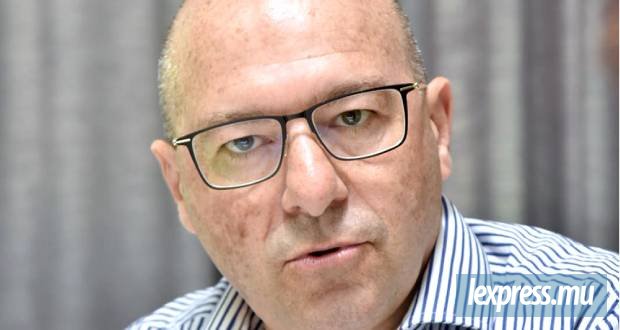
<B>Dr Taleb Durgahee
Email: [email protected]</B>
Publicité
Publicité
Les plus récents