Publicité

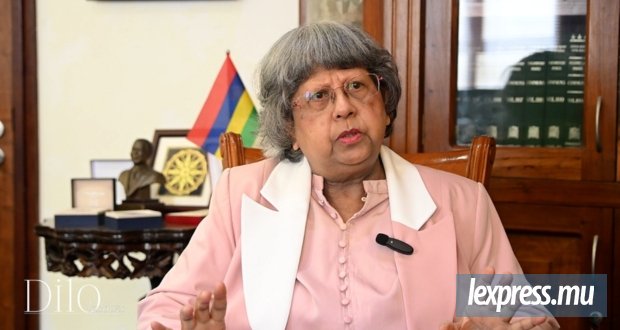
Rajendra Coomar Reedha

<B><I>Chairman of Terre de Paix and regional coordinator of Pre-Scool Trust Fund</B></I>
What are the latest developments related to children’s rights?
The UN committee that studied the Mauritian report in January has highlighted three important issues. The main one concerns violence against children The next one is the use of children’s mother tongue, how to include it in school and then move on to other languages. Finally the report mentions that child offenders should not be considered as criminals. The UN experts recommend that “children beyond control” - children who have behavioural problems – should not be sent to punitive institutions. A remedial approach should be adopted to help them.
What is your evaluation of children’s rights in Mauritius?</B>
Compared to the African continent, we should be proud that Mauritius has positioned itself as far as children’s rights are concerned. We have a quite high percentage of children attending school compared to other African countries. But they still have many problems regarding the convention. They do not have real freedom of expression as stated in the convention on children’s rights. Parents impose on children. They rarely make decisions by themselves. Regarding schoolchildren, everything is imposed by parents. I wondering if “student councils” function properly in schools. When it comes to politics, children have to wait until they are 18! The attorney general has mentioned a Parliament for children. It is still not in existence. I wish children could participate in decision-making for both the family and the state!
What are the weaknesses of the mechanism for children’s rights?</B>
There are lots of organizations that fight for children such as the office of the Ombudsperson, the National Children’s Council, the CDU of the ministry de Family welfare, the ministry de Education and many world associations, but they work separately when they should work together. The child would then benefit from this synergy.
<B> What should be done to fight those weaknesses?</B>
Those institutions should work on a common platform. People involved with children should be given special training on children’s rights. And finally the office for children in Beau-Bassin should try to move to other areas where children are subjected to violence.
Do you think children’s rights are respected at school?</B>
In terms of accessibility, Mauritius is in line with the convention. But when it comes to an education based on children’s wishes and rights, a lot has be done. There should be changes in the school curriculum. The right to enjoy, the right to express themselves, the right to talk in their mother tongue or even the right to think are not respected. In fact, there are a lot of reforms needed in the pedagogical orientation in schools.
What should be done to increase people’s awareness about children’s rights?</B>
The child’s rights should not be taught as literature is taught at school. They should be taught to raise people’s awareness using all media and institutions. Tertiary institutions should ensure training via social centres, village councils, municipalities and all institutions. Municipalities and district councils should review their policies about hobbies and means of expression for children. Setting up a small library or small garden is not enough! The schools and student councils should be reviewed to make sure children participate in decision-making! The parliament to be created for children should be decentralized! Each village council and municipality should set up its children’s council to allow children to participate in debates! Finally we should reflect on the role of the child within the family.
Publicité
Publicité
Les plus récents