Publicité

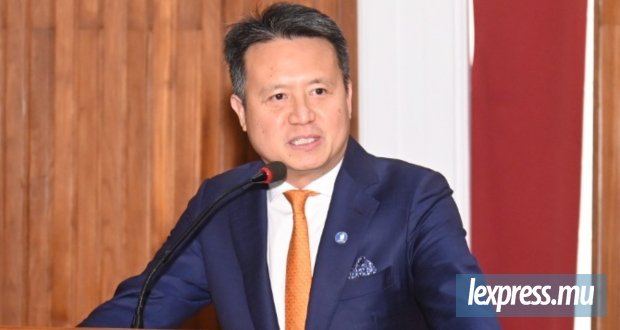
Professor Alain Senteni

<B>Director of the Virtual Centre for Innovative Learning Technologies</B>
<B> What is the role of the Virtual Centre for Innovative Learning Technologies (VCILT)?</B>
The first objectives of the VCILT, created in 2001 by the University of Mauritius (UOM), were to increase the intake of students and develop new pedagogical approaches to teaching and learning using ICT to enhance the level of education. I think the VCILT has gone beyond those objectives by proposing innovative approaches to empower people through technology.
Can you tell us about the recent agreement between the UOM and the Mauritius Broadcasting Cooperation (MBC)? </B>
First, the agreement is not restricted to the UOM but concerns all tertiary education institutions, namely the Mauritius College of the Air and the Mauritius Institute of Education. So this gives all of them powerful delivery channels. To benefit from this opening, we now have to be creative in proposing approaches where this type of delivery is integrated in full programs. The agreement is new and is just an agreement of principle. Now we have to work it out and build up on this policy decision.
What are the objective(s) of this agreement? </B>
The objectives can be two-fold. First, creating an education channel with interactive capabilities just as with Digital terrestrial television. This new technology now available means that opening an educational channel on television is an excellent initiative. It will allow us to join several networks such as French-speaking or English-speaking networks. Some already exist, such as Discovery Channel. This will be a way to open up to the world. On the other hand, in-house programs will also provide opportunities towards innovative approaches in Mauritius. Hence, excellent educational content could enter into Mauritian houses, which is an excellent thing.
What kind of programs and courses could be developed through this agreement? </B>
Well, there can be general purpose programs and those focused on culture and education. This could come through programs from foreign countries. Within Mauritius this is something that can help to train more people in areas where there is a demand for training, namely in the cybercity.
When did the project really start?</B>
We started on Thursday but it will be a gradual process. When there is a conference at the University by some famous foreign academic, instead of keeping it within the walls of the University, it will be broadcast on that channel. Therefore, everyone in Mauritius will be able to watch it. But if we want to have one of those sophisticated programs and to build up some kind of interaction using delivery channels, then there is much more work to be done.
How will this agreement integrate into the present operations and plans of the UOM?</B>
Actually, this agreement forms part of the strategic objectives of the university for the next few years and it is an excellent way of developing lifelong learning. It is about increasing the visibility of the UOM and of its programs within the country.
Publicité
Publicité
Les plus récents