Publicité

Perspectives on human nature: wisdom

<I>“It is human nature to think wisely and act foolishly” </I> (Anatole France)</B>
<B>New lines or reflections</B>
Social wisdom. The idea of “disability”, of “beauty”, of “good looks” are linked to artificial “norms of perfection” which must be challenged in order to improve our understanding of humanity. For none of the infinite variations in man’s appearance (all on the one and same theme of human) are inherently better or more valuable or more beautiful than another. Wisdom is to accept that these minor differences are all in the “eye of the beholder”, all artificial criteria that very often have no scientific basis at all. For example tiny variations in skin colour, size of entire individual or of any one part such as face, hair, nose, toes, external appearances, sounds and signs emitted and hieroglyphs utilised during communication (i.e. verbal and written language) are, in the light of the whole human genome(refer to the next article) biologically and socially insignificant. It is thus foolish to build any society on such trifling differences but alas, some politicians in search of power/seeking to keep power regularly do so.
Current and future developments in biomedical, genetic, and artificial-intelligence research, as well as globalisation, instant access to information, new and freer life-styles and the immense leap in daily-life enabling technologies, over the past 60 years, have had an impact on how we understand what it is to be human.
Political wisdom is a “new” subject, combining knowledge, leadership, intuitive intelligence and the desire to serve. In the brilliant demonstration of open political debate that France gave to the world, it was clear that Sarkozy was and indeed is politically wiser than Segolene. Of what that wisdom was made cannot be summarised in a few lines. One example of such “astuteness” is contained in this saying from US Rep. John Murtha “Let me tell you, the only people who want us (i.e. the USA) in Iraq are Iran and al-Qaeda. Also China wants us there. Why? Because we’re depleting our resources, our troop resources and our fiscal resources.” That saying also aptly defines “political foolishness” if one looks at those who in the first place decided to go into Iraq.
Environmental wisdom. It’s taken me and my generation of ecologists over 35 years (1972-2007) to barely start achieving such wisdom. And yet, the aborigines of Australia, the Amerindians of the Amazon, the Bushmen of the Kalahari (to mention but a few) possessed it hundreds of years before us, due to their extraordinary proximity to nature. Reviewing how the industrial revolution was conducted (in particularly the release into the atmosphere, within 250 years, of all the carbon accumulated as coal, oil and gas over several million years) one is bound to see much truth in this most severe criticism of humanity: “We’re terrible animals. I think that the Earth’s immune system is trying to get rid of us, as well it should”. Equally drastic corrective measures are now imperative.
<B>What is wisdom?</B>
In this second article we shall ask 2 other basic questions: what is wisdom? and what constitutes foolishness?
Could there be universal criteria for these or are the definitions to a large extent culture-based?
A historian wrote that “ the philosophers of the past have taken on the subject with great seriousness, unfortunately the topic of wisdom has not received much treatment in the contemporary philosophical literature”.
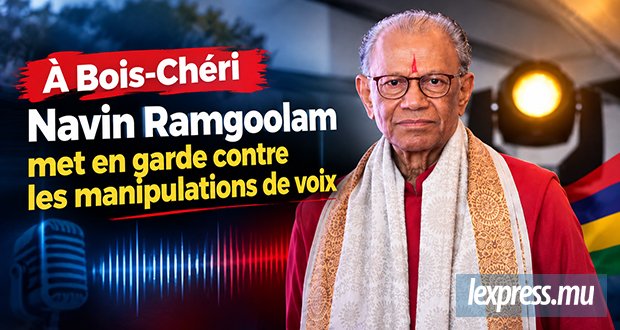
Wisdom is the ability, developed through experience, intuition and reflection to discern truth and exercise good judgment(Dictionary definition).For example, listening to the 1st of May speeches, can we say in what way the respective wisdoms of Navin Ramgoolam, of Pravind Jugnauth and of Paul Berenger differ? More importantly which one’s wise thoughts and subsequent actions are to impinge positively on the Mauritian and world environment and on our lives here? And which, however attractively uttered, have little or no relationship with reality and how the universe operates and thus when applied will have no impact. In that narrow field of human affairs called economics,whose wisdom is most likely to bring us survival, if not prosperity? Berenger’s, Luchmeenaraidoo’s, Bunwaree’s, Pravind Jugnauth’s or Sitanen’s?
Who of Bush, Blair, Putin, Castro, Chirac, Moi, Nkrumah, Mao, Nehru, Kennedy, SSR or Waldheim, Ghali and Annan had the wisdom to bring peace in the world? How will the new generation of politicians fare, Merkel, Sarkozy, Brown, Ahmadejedin, Bachelet or Ban ki-Moon?
Is the wisdom taught by the great world religions convergent, i.e. the same in their essentials or do their teachings differ widely? From what I know and read, I am convinced of the fact of full convergence of all religions. For example, how Christianity, Islam, Buddhism and Hinduism all advocate the search for peace and peaceful living with others. How, in depth, they all advise living in harmony with nature, which if followed would not have landed the planet in this environmental mess it is in today.
For many years, people used IQ tests to try and determine someone’s intelligence and tested in particular the linguistico-mathematical intelligences. But today, through research, we know that IQ tests do not take into account the fact that different people might think in different ways, have different strengths and weaknesses and that the other forms of intelligences(especially emotional and intuitive intelligences) are MAJOR attributes of wisdom and wise behaviour. Foolishness, the opposite of wisdom, is thus easily defined as the thinking process that omits known facts and factors in pursuit of pre thought-out conclusion(s) As Shakespeare rightly said “fools rush where angels fear to tread”. Does this not remind you of the decisions of someone you know?
<B>Wisdom from meditation
Wisdom from loving guidance
Wisdom from nature</B>
Do you have the tendency towards Exclusive Thinking (the mind working in closed borders, strict separation of subject and object and of objects amongst each other) or for Inclusive Thinking (the mind working in open borders, integrating subject and object, allowing for overlapping areas).While both types of thinking may have a role in life, wisdom may not be achieved without a good dose of Inclusive Thinking. As a rough estimate, it appears that “political wisdom” in Mauritius is dominated by such restricted Exclusive Thinking (“noubanism”). The truth is that such a frame of mind can hardly be qualified as wisdom at all.
Dr. Michael ATCHIA.</B> [email protected]</I>
Publicité
Publicité
Les plus récents