Publicité
Food for thought?food for health?food for free?
Par

Partager cet article
Food for thought?food for health?food for free?
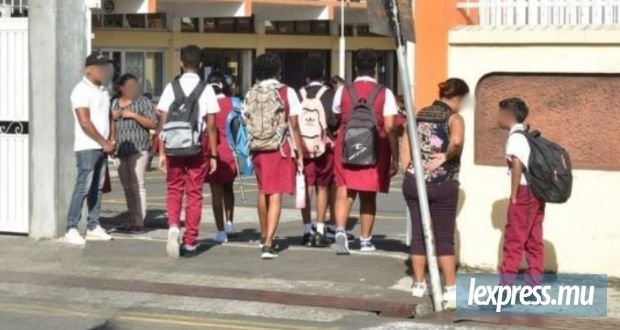
I refer to the open letter of Cassam Uteem to Finance minister, Rama Sithanen (l?express, 16th May 2008), concerning the introduction of a free hot lunch in primary schools. Indeed I appreciate this symbolic gesture and truly heartfelt intention of the former President of the Republic. This issue should possibly be addressed to help both children (who cannot perform due to inadequate food) and families living under the poverty threshold. With the increasing cost of living, most of us would want to save money and a free meal for our children would be most welcome. Researchers have established the direct relationship between improvement in academic achievement and school attendance when provided with free meals. This article is reminiscent of my childhood days. I come from a rather poor family with my mum working as labourer for the sugar estate. I never knew about ?home-made packed lunch?. I relied on the bread, slice of Danish cheese, milk (sometimes flavoured with cocoa) and at times dried fruits provided for free at school. Those memories remind me of waiting patiently in the queue to appease my growling stomach. Cheese and milk were my only source of protein because my parents struggled for a living with a lot of kids.
What Cassam Uteem mentioned about academic success and the difference a school meal makes for poor students holds true. I was one of those who were awarded prizes by eminent personalities in Sir Harilal Vaghjee Memorial Hall for our performance in CPE and perhaps the kiss I received from Lady Sarojini Jugnauth motivated and inspired me to excel. I graduated with a BSc Honours (First Class and 2 Gold medals) from the University of Mauritius and got a PhD from a prestigious university abroad. My humble respect again to the former president for his suggestion and emphasis on its importance for a child?s intellectual development. My heart is in deep agony while writing this, as it might be true that many children are not getting what they need to achieve in life. While not deprived of education, they might never get the most out of it. I feel a deep sense of belonging to my country and thank the political regime that provided me, and many others, with one basic life necessity, when we most needed it (1980s).?You reap what you sow?. I am a product of that investment. Can our nation produce better fruits with better investment? I would never take ?No? for an answer. My humble respect to Cassam Uteem, a man of vision, for thinking about students from poor families. Having said this, however, there are deep controversial issues as to whether such a scheme is feasible on a national scale. I will highlight potential problems that could jeopardise the integrity of such a food program.
● <B>Logistics</B>
In the 1980s we were given bread, cheese and milk, and dried fruits, which can be easily acquired, delivered, managed, stored, retrieved and distributed. Apart from bread, they were mostly non-perishable foods. Milk was easily prepared and bread obtained from a nearby bakery. But the logistics to provide a hot lunch is not as simple. Will it include rice, meat or fish, vegetables, soup and a fruit? Or just a tuna sandwich? Think about the number of schools. This can be labour-intensive and would involve close cooperation between staff, school administration, cooks and outsiders. How will this scheme be implemented and what will be the roles of each one? A single error along the line and who pays for it - our hungry students waiting for their meal!
● <B>Nutrition </B>
Will kids be eating healthy at schools if providing meals becomes a profit-making business run by companies or food factories? Are we heading towards a fast-food nation that will, at the expense of children?s health, provide cheap packaged and processed foods with additives and high levels of fat, salt, sugar, oily and deep-fried foods? We might be putting our kids in serious health problems (diabetes, obesity, high cholesterol?). Should we, as parents, politicians and citizens compromise free food with the health of our children, the future leaders of this country. Do we want to see a ?crippled young generation??
Primary school students are really innocent and don?t have any notion about how to eat healthy. If hungry and under peer influence, they will just consume anything and enjoy unhealthy food because it tastes good. For example, ask them to choose between a can of Coke and a glass of fresh lemon juice, full of Vitamin C. They should first be taught about a balanced diet and how to change their eating habits. How many teachers provide guidance on this? Will there be nutritionists to devise children?s meal plans or will they be given whatever is available and convenient? If not, then I feel sorry to say that the government and the parents will undoubtedly have to spend much more on medical fees later on.
● <B>Social structure</B>
In a school, students come from different social levels (family background, race, socio-economic status, and religion). Parents, who for a lifetime, have adhered to some principles will have no control on what their children are consuming. Sooner or later, vegetarians may turn into meat-eaters and those who eat meat according to some rituals or have strict restriction on some meats may be totally unaware of what they are consuming. ?One man?s meat is another man?s poison?. There will not be many choices and no consultation between pupils, parents and food providers over food content. Those allergic to some food types - beware! When children come home, parents often ask ?What have you done today? Imagine another scenario: ?WHAT have you eaten today?? The worst one would be if the child falls sick after school. You may guess to whom and to what your fingers will be pointing and your resolution the next day. Undoubtedly, an aggressive one.
● <B>Cost</B>
Funding is one fundamental criterion to determine how quickly we can make changes in a developing country. The successful implementation of a food program will be a massive investment, especially at this time of food crisis and price hikes in consumable goods. Any short-term strategies or investment solely for political gain will have dire consequences on our fragile economy. We are not wealthy and without natural resources, our economy will be hit very hard in the next 5-10 years. We are just having an ?avant-gout? of the hardships associated with the global food crisis in other developing and underdeveloped countries. Further economic problems loom ahead and the government will face all kinds of economic and social crises. Sooner or later, we might end up in unpredictable events like those of ?free transport? for students. The long-term implications of this commitment were never evaluated. To compensate for this free transport, the government have had to find other sources of revenue. Who ends up paying?... food for thought?.
Were I a student, I would enjoy travelling for free but as a responsible member of a nation, I would have asked myself what my priorities would be : free transport or free food; free transport or better education to nurture students; free transport or recruitment and training of more teachers; free transport or better school infrastructure with emerging technology; free transport or efficient, reliable and convenient transport; free transportation or assistance to poor students who need basic materials; free transport or subsidies for examinations fees. Free transport is an excellent example so that we don?t end up in a crisis with ?free food?. What was the motive behind ?free transport? I have seen research regarding a positive relationship between school infrastructure, food availability and professional teachers on student?s intellectual and physical development. I can?t think of any link between ?free transport? and academic success. In our small country, I doubt if there would be a marked increase in school absenteeism without ?free transport?. We, Mauritians, would never let our children at home because we value education but, in many cases, we fail to get its real value at school. Implementation of any long-term project should be a matter of evolution rather than revolution in the political arena. The public will never get a clear picture about how money will be spent in each school and whether all facilities provided will be fully utilised. Well, no matter what, let?s hope the government does not squander tax payers? money.
● <B>Food safety and wastage</B>
Food safety is my prime concern. Spread of food-borne diseases, due to poor sanitation or preparation often results in serious complications. Safety measures should be taken to ensure students don?t become casualties and health inspectors should conduct regular visits before lunch time. Students and staff handling food should be trained to maintain proper hygiene. Schools should be able to respond quickly in case a disease has been detected. The government should have a response plan in case of any outbreak. In many cases, by the time we identify the culprit (pathogen), it has already reaped havoc. There have been public outcries concerning food poisoning in schools. Many would think twice about allowing children to eat at school. People who can afford would tell their children: ?Take this lunch box. Eat what I have prepared if you don?t like the food at school.? It?s their choice. Can we force children to eat school meals or consume everything on their plate to avoid wastage? In the past, I had to eat everything on my plate or I was given what I could and would eat. Now it?s common practice to walk away with at least one-third left over. With increasing food prices, we could adopt a ?waste not, want not? approach.
● <B>Recommendations</B>
I wish you could have thought about this wonderful idea when you were president of the Republic. It could have been easier and possibly a remarkable political feat. If this proposal was not approved last year, it?s very unlikely to go through this year, given the government?s financial constraints. However, if it does, I would recommend some of the following:
Widespread consultation of the public and school administration.
A calculated cost of the financial implications and sustainability of the scheme.
Strict control over food hygiene, quality and quantity. Persuade children to consume all food items. ?waste not, want not? approach.
Long term planning with objectives and regular assessment.
?Watch out before you leap?. A pilot study and experiment its feasibility in schools in rural and urban areas for six months with evaluation and public report before any action.
Regular and appropriate surveys to ensure food is not below standard, safe and healthy.
Consider students? religious background and meet special dietary needs.
Restrict the use of plastic or paper [teach to be environmentally friendly. The 3 Rs (Reduce, Reuse, and Recycle). I add one R: Refuse].
Ban soft drinks and advise hawkers to sell healthy snacks.
Provide reasonable eating spaces and minimise long queues during food distribution.
Investigate on factors related to food refusal by students.
Display a weekly meal plan to inform parents.
Educate the young about healthy eating via extra curricular activities.
● <B>Conclusion</B>
Mr Uteem, I respect your efforts to alleviate poverty and help poor children of this nation to a bright future. I have pointed out some problems and if we scrutinize them, the solutions are there. I am NOT attempting to reject your meaningful proposal but by addressing potential pitfalls, I wish for solutions if we are face to face with real-life scenarios.
First? food for Thought? second? food for health? and last but not least? food for free?
<B>By Dr Rajesh JEEWON</B> <I>University of Hong Kong</I>
Publicité
Publicité
Les plus récents