Publicité

Dishing the dirt on the Empire

Ken Loach’s new film, The wind that shakes the barley, the Palme d’or winner at Cannes Festival has caused much chatter in Britain. Set during Ireland’s war of independence and the subsequent civil war, it quite accurately portrays the brutality of the British Empire in suppressing the uprising. Repression served only to strengthen the resolve of the colonised.
However, it was the sheer brutality of the British forces that scarred the population, despite the Irish Republican Army (IRA) responding in kind against informers and alleged collaborators. The British, in an example of counter-insurgency that mirrored that deployed in Kenya some 40 years later, set up two groups to fight the rebels. The Black and Tans were mainly recruited from the ranks of ex-soldiers demobilised after WWI. Brought in to assist the Royal Irish Constabulary (RIC), the beleaguered domestic police, they behaved more like a bunch of mercenaries. This paramilitary group would leave a legacy of murder, terror and ill-discipline. IRA’s terrorism was matched by British terrorism. Another group joined the Black and Tans to bring the IRA and the general population to its knees: the Auxiliaries. 1,400 in number, they were slightly more disciplined than the Black and Tans, but no less brutal. After the murder of 14 of their members by the IRA, they decided to drive with armoured vehicles during a Gaelic game and fire at random at the crowds, an event which came to be known as the first Bloody Sunday.
Thus, Loach sought to portray the British Empire at its ‘finest’, killing and murdering innocent civilians on a conquered territory. His aim was to contrast this period of history with contemporary events, particularly in Iraq, where atrocities are being committed. In his acceptance speech, he said: “Our film is about a little step, a very little step, in the British confronting their imperialist history and, if we tell the truth about the past, maybe we [can] tell the truth about the present.”
However, neither the plot of the film, nor Loach’s reference to Iraq, pleased some of Her Majesty’s subjects, especially those in the right-wing media. Simon Heffer, writing in the Daily Telegraph, reserved a caustic attack for the soft-spoken Loach: “Talking of hypocrisy, has there been any more nauseating lately than that of the bigoted Marxist film director Ken Loach on winning the Palme d’or at Cannes, for a poisonous film about the war between the IRA and the inevitably wicked British in the early 1920s? In true Marxist style, there was our Ken on the red carpet on the Riviera, looking très soigné in his black tie, and cosying up to Emmanuelle Béart - well, it’s an ugly job, but somebody’s got to do it, and nothing’s too good for the workers. This, though, is not the worst of this parasite’s hypocrisies… He hates this country, yet leeches off it, using public funds to make his repulsive films. And no, I haven’t seen it, any more than I need to read Mein Kampf to know what a louse Hitler was.”
In the other bastion of right-wingers, crypto-imperialists and apologists for colonisation, the Daily Mail, they wheeled in Ruth Dudley Edwards, an Irish writer, whose only line of argument revolves around bashing her country’s revolutionary past. Her article was titled: “Why does Ken Loach loathe his country so much?” This echoes the current conservative line of attack, which equates any criticism of the US government with anti-Americanism. She went on to make a silly analysis of Loach’s career in cinema, dismissing most of his films for being the work of a Marxist propagandist. The facts got lost among her weasel words. One does not have to agree with his political slant to appreciate the sheer beauty of his cinema.
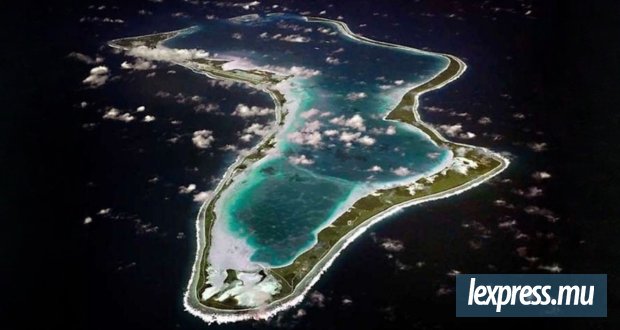
This episode is a reminder that Britain is very unwilling to confront its colonial past. This intellectual amnesia currently allows Britain to deny ‘rights to return’ to the Chagossians. Such silence over ‘crimes against humanity’, which they are, gave Britain the opportunity to ‘cleanse’ the archipelago of its people to set up a hi-tech military base, from which more people can be bombarded. The hysteria over The wind that shakes the barley shows that Britain cannot face its bloody past in its closest colony. Hence, it beggars the question if Britain can face its bloody past in distant lands, involving people of different colours. After all, imperialism and colonisation have always been maintained through a degree of racial superiority. A former prime minister of Britain, Lloyd George, was once famously quoted, when referring to his country’s diplomatic achievement of retaining the right to bomb civilians: “We insisted on reserving the right to bomb niggers.”
As Loach pointed out, an understanding of the past helps us to understand the present situation. Hence, why so much resistance from some quarters of the English media? One explanation is that much like the new law in France, forcing schools to teach the “positive” aspects of colonisation, some wish for a greater emphasis on the good that Britain brought to the ‘savages.’ Thus, in Ruth Dudley Edwards’s idiotic mind, “with all its deficiencies, it [the British Empire] brought much of value to most of the countries it occupied.” Well, try telling that to Kenyans, Palestinians, and others, including Mauritians and Chagossians.
Publicité
Publicité
Les plus récents