Publicité
Changes to the legal framework of NGOs to make them more effective?
Par

Partager cet article
Changes to the legal framework of NGOs to make them more effective?

● It is your third visit in Mauritius. What are the objectives of your regular visits?
I have been invited on behalf of the International Centre for Non-Profit Law (ICNL) to assess the legal framework of non-governmental organisations (NGOs) in Mauritius. It is a joint programme with Antoine Domaingue to bring changes to the legal framework. I assist by assessing how law can comply best with international good practices. We are making recommendations to improve this legal framework.
● Is there a direct correlation between the state of the legal framework and the strength and viability of civil society?
In any country, law definitely has an impact on the strength and viability of NGOs and the way they are perceived by the public. However, there are some countries where there is a repressive legal system but an effective civil society. On the contrary, other countries have quite a soft legal framework but civil society is quite weak. So I think it is not an easy equation. However, in most cases, there is an interaction between the legal framework and the efficiency of civil society and we are just hopeful that, through changes we will bring here, Mauritius will benefit from a stronger sector.
● Have you been called because there was a lack of efficiency in the sector?
The process of law reform is an ongoing one in any country. The fact that I have been invited here says a lot about the government that has acknowledged the need to review the laws of the sector. We have been brought to look at the weaknesses and positive points of the sector and to see how civil society can play a more effective role. But Mauritius is not alone in this initiative; even countries with a vibrant civil society go through this process of reform.
● How do you see the civil society sector in Mauritius?
It is a very relative question depending on the starting point. I believe that the civil sector is quite strong but it has a few weaknesses. From what I understood, the NGOs here are quite strong in their role to deliver public services. This area is definitely more developed than the watchdog role for instance.
● Do you believe civil society should work in partnership with government?
Civil society defends a diverse range of interests and organisations. The way an individual organisation interacts with the government basically depends on its mission. Some will definitely have to work in partnership ? particularly organisations providing social service ? while others will not necessarily have to ? especially those supposed to play the role of watchdog. So, in some way, some have a critical partnership role but others are responsive of certain specific interests that the government does not necessarily recognise ? this is the case of consumer protection associations for instance. The government and the civil sector are filling in gaps for the good of society. They should pursue interests collectively.
● What has been the response of the government and NGOs during your visits here?
The process, which started in March last year, was very much a listening one. They told us their concerns, problems and main issues and we are trying to see how we can best address them. We met members of government, NGOs and academics to mention only a few of them. After my second visit in November last year, we made a preliminary assessment report. Now that we have made some recommendations, Antoine Domaingue will be responsible for preparing the legislation amendments by looking into the most appropriate changes for the country. I will now have a supportive role through the ICNL.
● When will the new legislation come into force?
On our side, we will try to finalise the new legislation by the end of the year. However, the follow-up will depend a lot on local stakeholders, as it will have to go through Parliament. Stakeholders appeared quite happy with our recommendations but these will now have to been seen in more details. What I can say is that we have received very good support for the reform recommendations from the ministries we have met.
 |
TOWARDS A MORE PROFESSIONAL NGO SECTOR
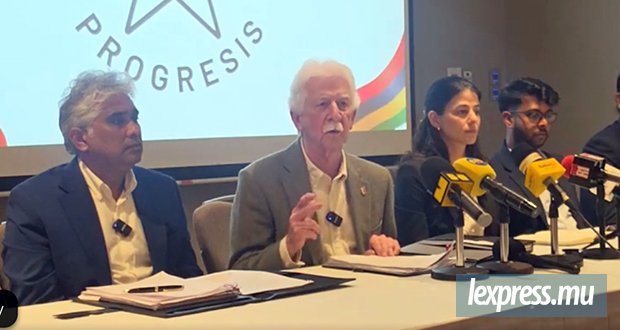
■ David Moore?s visit within the framework of a broader project entitled ?Strengthening of the NGO Sector in Mauritius? led by the United Nations Development Programme (UNDP). There are several other components of this project, which are still in progress including a mapping of civil society using the Civil Society Index tool, a complete review of the Mauritius Council of Social Services (MACOSS), a review of Corporate Social Responsibility (CSR) policies in local companies and a review of the government?s policy concerning NGOs. ?This whole action tends to reinforce values and concepts such as transparency, good governance and professionalism of NGOs,? said Carlo Merla, the UNDP project manager.
Publicité
Publicité
Les plus récents