Publicité
Catholic authorities keep cool despite Tengur’s criticisms
Par

Partager cet article
Catholic authorities keep cool despite Tengur’s criticisms

The catholic authorities hardly had time to release the new criteria for admission in Form I in their schools before Sutthydeo Tengur expressed his dissatisfaction. The president of the Government Hindi Teachers’ Unions (GHTU) has already decided that the criteria of the Bureau of Catholic Education (BCE) are “too vague” or “too complicated”.
The bishop of Port-Louis, Mgr Maurice Piat, has made it clear he does not wish to engage in controversy with Tengur. “Mr. Tengur has his own opinion and has the right to criticise us. But I believe that we have tried to give a reasonable and honest answer to a very complex and difficult situation through our new criteria.” The more so, since Sutthydeo Tengur does not seem to offer concrete arguments to defend his stand – or has not expressed them publicly so far.
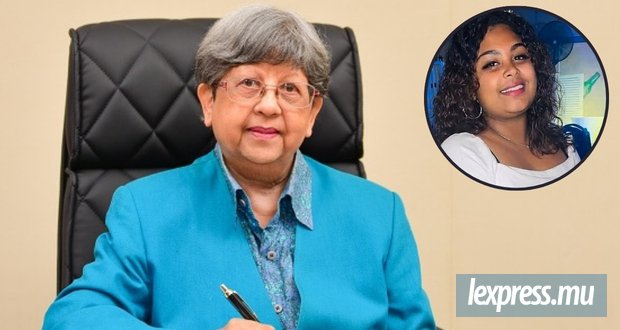
In addition, he has found a new “victim” in the Ombudsperson for children, Shirin Aumeeruddy-Cziffra, because of “her absence of action” and the fact that “she is on the BCE’s side.”
Shirin Aumeeruddy-Cziffra expressed her surprise that the trade unionist did not come to see her directly after his disparaging comment that her office is “a waste of public money”.
Why should Sutthydeo Tengur be the one to dispute every single decision the catholic authorities make? According to him, the BCE criteria should be rejected “in toto.” As usual, he advocates the children’s interests, “I will soon go and discuss with whom it may concern to make sure that children’s rights and interests are respected.”
Mr Tengur seems to think that he is the “sole specialist in education” who holds the truth and has children’s interest at heart. The religious criterion was unconstitutional. He has been proved right on this issue. Fair enough. But why should he think he has a crusade to wage against catholic education?
Does he know that there are 90 colleges apart from catholic ones that benefit from State funds and recruit 50% of their students according to their own criteria? Some are just as popular as catholic colleges and are managed by religious bodies, which have already expressed their willingness to issue their admission criteria.
Mgr Maurice Piat makes it clear that catholic colleges should no longer be considered as “star” colleges. “We are not necessarily and have never been the best schools of the country. We guarantee a good level of education but we are not perfect and we surely have flaws (...) We have been given a sort of over-evaluation, which weighs a lot on our shoulders.”
<B>Criteria to suit pedagogic pupose</B>
The Private Secondary Schools Authority has also explained that it cannot impose any criteria on schools except that the student admitted must have passed the CPE and be under 13. The ministry of Education has the duty to make sure children’s rights are respected. The minister is taking his time to study the BCE proposal to ensure that the criteria are constitutional.
Furthermore, the very essence of the Ombudsman’s task is to look after children’s rights. Why should Mrs Cziffra go against these principles? She may have received complaints but it is up to her to enquire into these cases and put things right if necessary.
The catholic authorities are striving to find ways of making sure that their new criteria suit their pedagogic purpose. They have taken the time to study all the implications and reviewed their admission criteria. If the proposal is complex, it is because the situation is just as complex. “I am conscious that parents are completely confused by these criteria. This is why our rectors and their staff will meet parents to listen to them and explain the situation in a very undestanding way.” The main issue with the new proposal is that rectors will have more power to decide in admission to their schools. But they must take three main criteria into account: the region where children live, the aggregate (between 15 and 20) and the social aspect.
The catholic authorities have been pioneers in education and have always supported the government in its task of educating all Mauritian children. Although the Privy Council’s decision was a sharp blow for them, they have accepted to review their stand to be able to continue what they consider is their pedagogical mission. This effort should indeed be put to their credit.
Mr Tengur has already gone far in questioning their use of public funds in their schools. For that matter, the BCE is suing him for damages in Court. Mr Tengur may think he has the right to question everybody and everything from the “mixed abilities” issue, the ministry’s educational reform and the Ombudsperson’s integrity but there is a time when he should realise that enough is enough… If it is not harassment, it is beginning to look like it.
Publicité
Publicité
Les plus récents