
Publicité
Food security and health
Plant-based diet: rethinking what’s on our plates
Par


Partager cet article
Food security and health
Plant-based diet: rethinking what’s on our plates
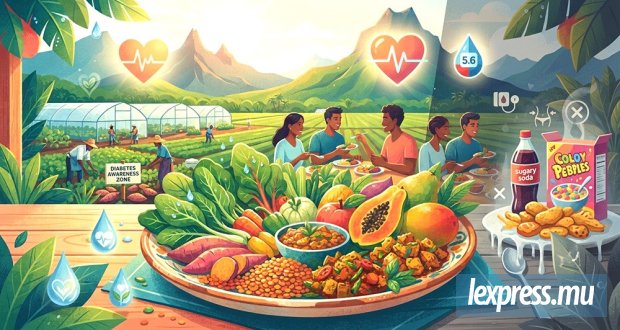
From a national health alarm to a better-informed public and a planet under pressure, plant-based eating has moved from the fringes to the mainstream. Across Mauritius, rising lifestyle diseases and climate realities are reshaping daily meals. Households, farmers, and chefs are rethinking what belongs on our plates – shifting away from ultra-processed foods toward fresh, locally grown, nutrient-dense ingredients.
Something is changing on the Mauritian plate. Supermarket shelves stock more plant-based products, cafés list vegan dishes beside traditional favourites, and households are asking sharper questions about what goes into their food. Attitudes toward nutrition and wellness are shifting away from restrictive dieting toward a balanced variety of nutrient-dense whole grains, plant proteins, healthy fats, fresh fruits, and vegetables, leaving less room for ultra-processed products, refined sugar, and excess sodium. In a society where poor dietary habits carry a heavy price, understanding what makes a meal wholesome has become essential to long-term health.
An undeniable health alarm
The strongest driver, locally and abroad, is the steady rise of diet-related non-communicable diseases (NCDs). Obesity, type 2 diabetes, hypertension, and cardiovascular disease strain health systems worldwide. The World Health Organization (WHO) estimates that NCDs kill 41 million people annually – 74% of all global deaths – including 17million before age 70, and attributes roughly 8 million deaths directly to unhealthy diets.
Mauritius knows this burden intimately. According to the Mauritius NCD Survey 2021, standardised diabetes prevalence among adults aged 25to74 stood at19.9% (21.6% among men and 18.5% among women). While easing slightly from a 2015 peak of 22.9%, it remains sharply higher than 1987’s14.3%. The survey also revealed that over a third of adults are overweight or obese, and diabetes affects nearly half of adults aged 50 and above, ranking Mauritius 12th globally for diabetes burden.
The International Diabetes Federation underscores the urgency: roughly 218,000 Mauritians aged 20 to 79 live with diabetes – 28% unaware of their condition – a figure which is projected to hit 247,500 by 2050. Consequently, nutrition and lifestyle reform sit squarely at the heart of national public health campaigns.
Don’t let disease rule your life
Dietary change cannot rest on willpower alone; medical guidance matters. Jonathan S., a charge nurse at a regional hospital’s cardiac unit, witnesses daily the toll of cardiovascular complications. “A well-planned vegan diet rich in fibre, vitamins, and antioxidants from fruit, vegetables, whole grains, legumes, nuts, and seeds can lower bad cholesterol, regulate blood pressure, and reduce heart disease risks,” he explains. However, eliminating animal products does not automatically guarantee wellness. “Individuals must watch for deficiencies in vitamin B12, iron, calcium, vitamin D, and omega-3 fatty acids,” he cautions. In Mauritius, incorporating traditional staples like lentils, beans, and pulses alongside fresh vegetables builds healthier habits, especially when paired with cutting back on excess salt, oil, processed foods, and fatty meats. Jonathan advises transitioning gradually, prioritising whole foods over heavily processed vegan substitutes, and seeking professional dietary advice.
Public infrastructure supports this shift. The Ministry of Health’s 19 Area Health Centres (AHCs) and 9 Mediclinics operate dedicated NCD departments offering free treatment, screenings, and preventive counselling. Brenda L., now in her late 70s, has relied on her local AHC since retiring. Carrying a heavy family history of diabetes and heart disease – having lost two younger siblings before age 70 – she was diagnosed prediabetic at 50 and diabetic at 63. Worried about treatment costs draining her modest pension, she turned to her local AHC when her blood sugar spiked. “Receiving biannual blood tests, medication, specialist referrals, and nutritional advice empowered me to take control of my life. While not strictly vegan, I’ve gradually adopted a cleaner, plant-forward diet aided by tastier modern market options.”
The label-reading generation
Today’s consumers are better informed. With nutritional science a few taps away, shoppers flip packets to scrutinise ingredients, rejecting artificial additives in favour of “clean label” products with short, recognisable lists. This mindfulness drives consumers away from calorie-dense convenience foods toward minimally processed ingredients that sustain energy and immunity.
Lifelong vegetarian Vrishni W. grew up following her parents’ ethos of compassion and non-violence toward animals. Navigating childhood in Mauritius was not always seamless – often skipping egg-laden cakes at birthday parties and finding restaurant menus limited to Indian fare, fried rice, or noodles. Since the 1990s, supermarket offerings and restaurant menus have slowly diversified, though she believes Mauritius still has room to grow.
To those wondering how she thrives without meat, she calls cooking “kitchen alchemy” – combining plant ingredients and experimenting with spices. Reading labels and eating mindfully are second nature. Travelling exposed her to rich vegetarian traditions across European, Asian, Middle Eastern, and African cuisines, such as Ethiopia’s traditional Wednesday and Friday meat-free fasting days. “You do not have to be vegetarian to appreciate plant-based food,” she notes. “Being vegetarian is not about restriction; it is about making conscious choices.”
More than cutting out meat
For Mélanie D., transitioning to veganism nine years ago came with a steep learning curve. Relying initially on ultraprocessed meat substitutes triggered nutritional deficiencies. “Working with a dietitian, I relearned how to cook using whole, local ingredients – vegetables, legumes, beans, and nuts. That journey inspired me to launch ‘Et Mé Créa’ in 2021, crafting artisanal vegetable steaks, falafels, spreads, and desserts focused on flavour and nutrition.” She estimates that roughly 90% of her customers are neither vegan nor vegetarian; they are everyday Mauritians looking to eat healthier, cut down on meat, or lower their environmental footprint. While artisanal quality makes pricing and restaurant availability ongoing hurdles, Mélanie hopes her creations prove that plant-based eating can be vibrant and deeply satisfying.
Beyond personal health, ecological conscience fuels this dietary evolution. A large 2023 University of Oxford study in Nature Food, analysing the real-world diets ofof about 55,000 people in the UK, revealed that vegan diets generate just a quarter of the greenhouse gas emissions of high-meat diets (over 100g daily). Plant-based eating also slashed land use by 75%, water consumption by 54%, biodiversity loss by 66%, and methane emissions by 93%.
Securing cleaner local produce
As Mauritius pivots toward plant-forward diets to combat NCDs and bolster domestic food self-sufficiency, vibrant local greens, roots, and tropical fruits are moving to centre stage. Yet rising demand brings sharper scrutiny over how crops are cultivated, sparking a quiet transformation across the island’s agricultural supply chain. SKC Safer, a certification launched in 2017 by local produce giant SKC Surat, enforces international food safety and sustainability benchmarks. Produce is traced from farm to shelf, processed in HACCP-certified facilities, transported via cold chain, and vetted by accredited laboratories to minimise chemical residues and preserve nutrients.
This model modernises grassroots farming through technical training, harvest planning, and strict agrochemical oversight. Planters adopt precision and ‘smart’ farming techniques – an approach acclaimed by Agro-Industry and Food Security Minister Arvin Boolell as ‘vital for climate resilience’, last week, at SKC Safer Awards ceremony celebrating the company’s ten-year commitment to promote healthier food in Mauritius.
Progress also thrives where local food artisans partner with forward-thinking eateries. At Fresco Salad Bar in Bagatelle Mall, founder Antoine T. teamed up with Et Mé Créa last September to introduce four plant-based dishes, including a red bean patty wrap, vegan burrito, and falafel bowls. “The response exceeded expectations,” he shares adding, “Sales of plantbased dishes rose by 40% in four months, winning over regular meat-eaters.” When nutritious, locally crafted food becomes accessible and delicious, it normalises healthy choices, and could help reduce reliance on imported processed goods, and strengthens the domestic economy.
The way forward
Plant-forward eating is no longer a passing trend; it is an urgent public health and environmental imperative. By connecting conscientious local growers and artisanal food producers with everyday kitchens and cafés, Mauritius can curb the tide of NCDs, protect its fragile island ecosystem, and build a resilient, nourishing food culture. Backing local food innovators remains the cornerstone of a healthier, selfsustaining future.
Publicité
Publicité
Les plus récents