Publicité
European Union media conference in Brussels
La Sentinelle director of publications to discuss AI and journalism integrity
Par

Partager cet article
European Union media conference in Brussels
La Sentinelle director of publications to discuss AI and journalism integrity
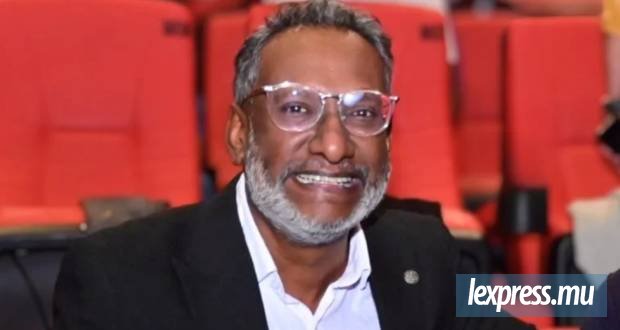
Nad Sivaramen (picture), director of publications of La Sentinelle Ltd (LSL), who also serves as editor-in-chief of l’express, will share his experience integrating artificial intelligence into newsroom operations while upholding journalistic integrity at an international media conference in Brussels this week. Over the past two years, AI has become an increasingly important component of LSL’s editorial strategy, reflecting the media group’s efforts to embrace technological innovation without compromising editorial independence, accuracy or public trust.
The sixth edition of Connecting Media Communities (CMC), organized by the European External Action Service (EEAS), will bring together about 80 journalists, factcheckers, media organizations, content creators and other experts on Oct. 29–30 under the theme “Who Shapes What We Believe?”
The conference will examine how audiences access and assess information, how technology is reshaping public debate, and how independent journalism can respond to foreign information manipulation and interference, or FIMI.
Sivaramen, a journalist with more than three decades of experience in media and international affairs, will offer a perspective shaped by the challenges facing newsrooms in the southwest Indian Ocean. His career includes reporting from Washington, D.C., and serving as a writer and editor at the Africa Center for Strategic Studies, in Washington, D.C. He will address how news organizations can use AI tools for research, transcription, translation and fact-checking without compromising editorial independence or public trust. “The risk is not that AI will replace journalists, but that newsrooms may sacrifice verification, depth and original reporting for speed, volume and lower costs,” Sivaramen said in remarks submitted to conference organizers. He has also highlighted the vulnerability of smaller media markets such as Mauritius, where financial pressures can weaken already fragile newsrooms and amplify misinformation. «L’Express», published by La Sentinelle, has repeatedly been targeted by impersonation and fake-news campaigns that misuse its logo, visual identity and page templates to make fabricated content appear authentic. Sivaramen will share documented cases and newsroom lessons, including ways to strengthen verification and respond to coordinated information manipulation.
From Pristina to Brussels
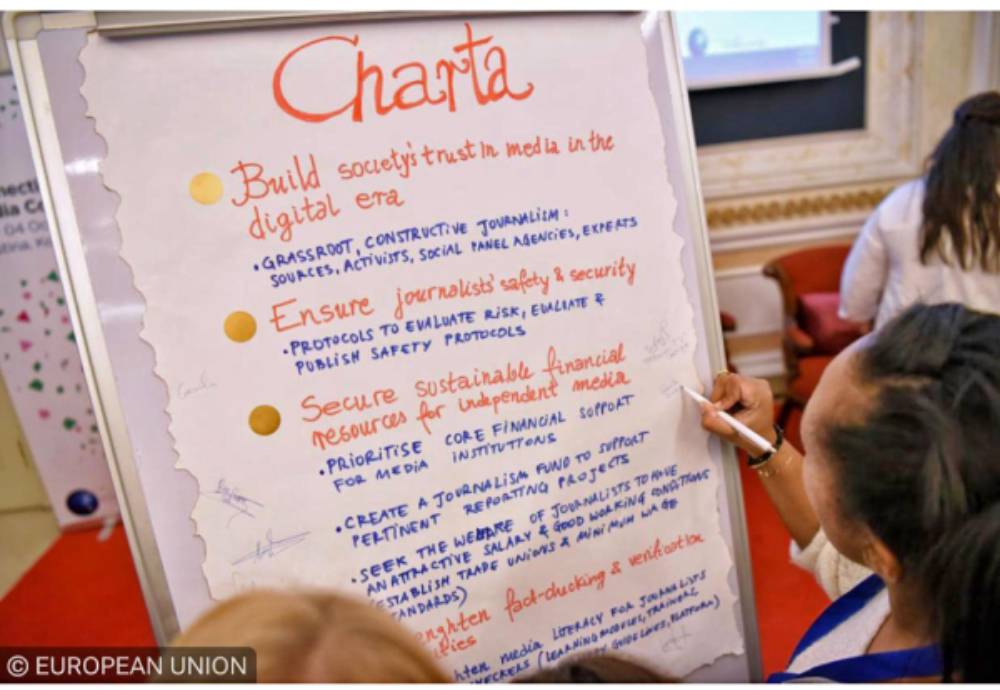
The conference will also address audience trust, platform accountability, media literacy, sustainable funding and cross-border cooperation. Participants will exchange practical approaches to identifying manipulation, protecting credible reporting and building professional networks. The initiative builds on previous CMC gatherings, including the 2024 edition in Pristina, Kosovo, which brought together journalists and media professionals to address disinformation and explore the responsible use of AI. That meeting also produced a Charta for Journalists emphasizing public trust, journalist safety, sustainable funding and stronger verification capabilities. For Sivaramen, the central challenge is to harness AI without surrendering the human judgment and editorial responsibility that underpin journalism.
As synthetic content becomes harder to distinguish from authentic material, the conference will provide an opportunity to share newsroom experience across borders and explore how collaboration can help protect the integrity of public information.
******
The Charta for Journalists : Rebuilding trust in an age of disinformation
Adopted by media professionals at the Connecting Media Communities (CMC) conference in Pristina, Kosovo, in October 2024, the Charta for Journalists emerged from an international gathering focused on the growing threat of foreign information manipulation and interference (FIMI). Organized by the European External Action Service (EEAS), the conference brought together more than 100 journalists, fact-checkers and media professionals to exchange expertise and strengthen their ability to counter disinformation.
The Charta, co-authored by conference participants, articulated four central priorities: building societal trust in media, ensuring journalists’ safety and security, securing sustainable financial resources for independent media, and strengthening fact-checking and verification capabilities. These commitments reflect a recognition that the information crisis cannot be resolved through technology alone. It also requires resilient institutions, protected journalists and a public able to distinguish credible reporting from deliberate manipulation.
The first commitment–building societal trust in media–addresses a fundamental challenge for independent journalism. False narratives, fabricated content and coordinated campaigns can blur the distinction between verified reporting and political or ideological manipulation.
 Trust cannot be demanded of audiences; it must be earned through accuracy, transparency, fairness and accountability. News organizations must explain how they verify information, correct errors promptly and distinguish fact from opinion. In an environment increasingly saturated with synthetic audio, video and images, these responsibilities become more consequential.
Protecting journalists and their independence
The Charta’s emphasis on journalists’ safety and security recognizes that information manipulation can extend beyond the publication of falsehoods. Journalists may face online harassment, intimidation, threats and attempts to compromise their sources or data. Protection must therefore encompass both physical and digital security. Newsrooms need effective safeguards, appropriate training and procedures for responding to coordinated attacks. Governments and other institutions also have a responsibility to ensure that journalists can investigate matters of public interest without intimidation or retaliation.
The commitment to securing sustainable financial resources for independent media highlights the economic foundations of press freedom. Journalism requires investment in reporters, editors, investigative work, verification systems and legal protection. When revenues decline, newsrooms may be forced to reduce original reporting, rely excessively on inexpensive content or become more vulnerable to pressure from political and commercial interests. Financial sustainability is therefore not merely a business concern; it is closely linked to editorial independence and the public’s access to reliable information.
Verification in the age of artificial intelligence
The fourth priority, strengthening fact-checking and verification capabilities, addresses an information environment transformed by artificial intelligence. AI can help journalists analyze data, identify patterns and detect manipulated material. It can also generate convincing fabrications at scale.
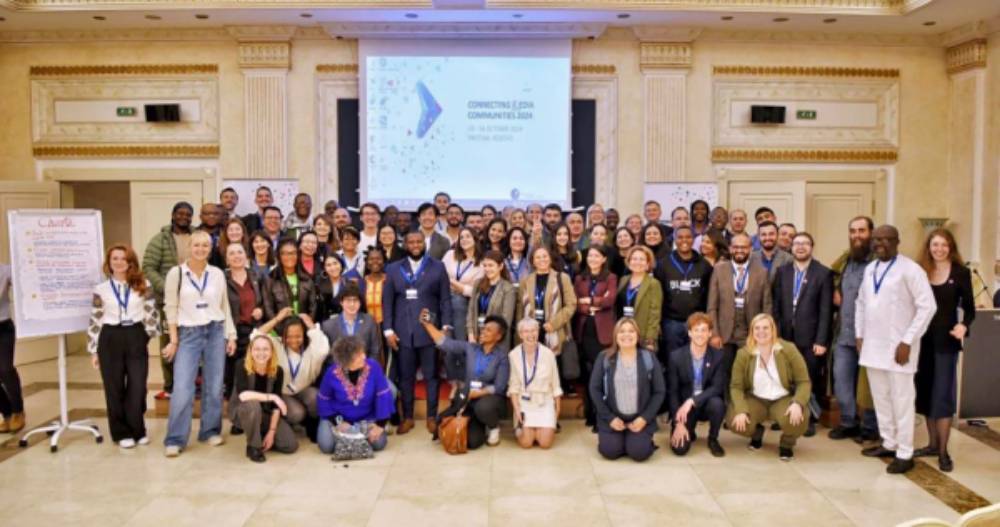
 ■ Participants take part in a panel discussion on “The Future of Journalism in the Age of Disinformation” during the Connecting Media Communities conference, organized by the European External Action Service in Pristina, Kosovo, in October 2024. © European Union
The challenge is to use new tools without abandoning human judgment, independent verification and editorial responsibility. Technology should strengthen journalism’s capacity to establish facts, not become a substitute for doing so.
From principles to practice
The Charta’s significance lies in bringing media professionals together around shared responsibilities that cross national borders. Its four priorities are mutually reinforcing: trust depends on verification; verification requires resources; and independent reporting depends on journalists being able to work safely.
The lasting test will be whether these commitments translate into practical cooperation, stronger newsrooms and more resilient audiences. In an era when the manipulation of information threatens public debate, defending journalism requires not only exposing falsehoods but also sustaining the institutions capable of establishing the truth.
Source: European External Action Service
Publicité
Publicité