Publicité
[In focus] International day of older persons
Living longer, living together: Bridging the generational divide
Par

Partager cet article
[In focus] International day of older persons
Living longer, living together: Bridging the generational divide
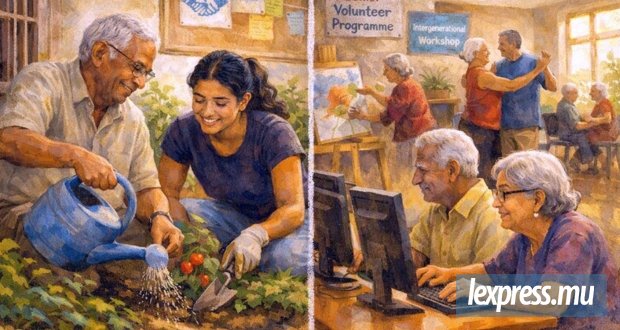
(Photos : © AI-Generated)
The Ministry of Social Integration, Social Security and National Solidarity is marking the 36ᵗʰ International Day of Older Persons with a national event at the J&J Auditorium, Phoenix, on Thursday 1 October 2026. It will be an opportunity to recognise older citizens’ contribution to society and launch intergenerational solidarity dialogues and activities bringing together seniors, youth, students and NGOs.
The demographic shift
Mauritius is undergoing a profound demographic transition that is reshaping both the age structure of the population and the way generations relate to one another. Today, around 276,000 Mauritians are aged 60 and above, and those aged 65 and over represent nearly 15% of the population. Life expectancy has risen sharply over the past decades – from about 60 years in the mid-20th century to between 76 and 78 years today – reflecting major advances in health and living conditions.
Longer lives are a national achievement, but they also require society to rethink how people live, work, move and care for one another across the life course. The challenge is no longer simply extending lifespan, but ensuring that added years are lived with dignity, independence, purpose and connection. As family structures evolve and daily routines become more fragmented, the risk is that generations drift further apart.
Moreover, ageism affects people of all ages and can weaken the social fabric by reinforcing stereotypes. Intergenerational contact is one of the most effective ways to counter these attitudes and rebuild solidarity. For Mauritius, the ageing debate is therefore not only about pensions or healthcare. The theme of the 2026 International Day of Older Persons, “The Age of Longevity: Rethinking Systems for Longer Lives”, puts this transformation in the spotlight.
The extended family myth
For generations, the Mauritian extended family was seen as the natural cradle of intergenerational exchange. Grandparents, parents and children often lived close together, sometimes under the same roof, allowing knowledge to pass effortlessly from one generation to the next – a recipe learned by watching a grandmother cook, a story shared by a grandfather about village life or past hardships. But this familiar image no longer reflects everyday reality.
During the recent workshop on older persons, Junior Minister Kugan Parapen noted that the past two to three decades have brought a marked shift towards smaller, nuclear households. Migration, work pressures and faster lifestyles mean families are more dispersed, and spontaneous interaction between generations is no longer guaranteed.
This shift also intersects with a growing concern: loneliness. Older people living alone may face social isolation, while younger Mauritians – despite constant digital connectivity – increasingly report feeling disconnected. Estimates suggest that up to 70% of Generation Z experience loneliness. The contrast is striking: two generations surrounded by technology, yet both searching for meaningful human connection.
Policy and proposals
Mauritius is entering a period where ageing policy must be reimagined, not only to support older persons but to strengthen the social fabric across generations. The Ministry of Social Integration, Social Security and National Solidarity is steering this shift through measures designed to help older Mauritians age with security while ensuring younger generations inherit a cohesive, just and ecologically sustainable nation.
Among the initiatives announced, Minister Ashok Subron highlights the recruitment of 100 young people over three years to visit seniors aged 80 and above – a programme intended to create structured, meaningful human contact rather than occasional symbolic encounters. A Senior Volunteer Executive Programme and the establishment of a Just Transition Commission further aim to keep older citizens active, engaged and represented in national transformation efforts.
Civil society echoes and expands these ambitions. Vijay Naraidoo, President of the Senior Citizens Council, brings a dual perspective as both advocate and participant in government discussions. “Mauritius must move beyond a welfare-based view of ageing towards one grounded in rights, dignity, participation and contribution. Changing family structures should not mean the erosion of intergenerational bonds. Instead, new bridges must be built through schools, libraries, community centres, senior associations and local authorities.”
His proposals are practical and rooted in everyday life. “Older planters could share traditional farming knowledge and retired craftsmen could demonstrate skills. He also champions intergenerational oral-history and mentorship programmes to preserve and transmit intangible heritage, while young people can help older citizens navigate digital tools and artificial intelligence.” For him, the success of national programmes depends on continuity, purpose and genuine exchange, and insists that “Older persons have no expiry date on their human rights, their dignity or their capacity to contribute.”
Rethinking ageing
In her early seventies, Sarah G. (made-up name) brings decades of experience as an educator, author and observer of our society. As such, she comments on future government policy. Longevity is not merely a demographic fact, she says, but an invitation to rethink how societies value the intellectual and emotional labour of older citizens. She argues that Mauritius must shift from viewing ageing as a social-care challenge to recognising older people as active contributors. “An age-friendly Mauritius should ensure accessible healthcare, lifelong learning, appropriate housing, reliable transport and safe public spaces. We are faring reasonably well, but much still needs to be done.”
Central to her vision is reciprocity. “Young people should not be seen merely as volunteers, and seniors not simply as recipients, while community centres could host regular knowledge-exchange sessions – from traditional skills to entrepreneurship, digital literacy to social history.”
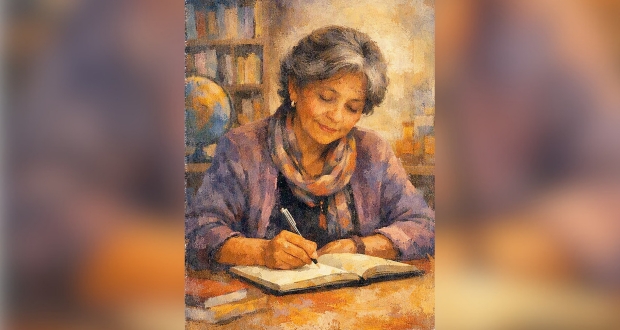
She rejects the notion that ageing equals dependency. “Older citizens possess experience, cultural memory and community networks that can benefit the nation. The decline of the extended household does not mean the decline of intergenerational knowledge – new spaces must be deliberately created.” Ultimately, she frames intergenerational solidarity as a national project: “The goal is to build a Mauritius where experience meets innovation, and care meets participation.”
Beyond 1 October
The International Day of Older Persons is more than a date on the calendar; in Mauritius, it marks the start of a yearlong effort to turn dialogue into action. Initiatives linking youth and seniors, encouraging active ageing and strengthening intergenerational spaces can reshape how the country understands longevity. But lasting solidarity requires families, schools, employers and communities to participate. Mauritius now has the chance to decide whether longer lives will also mean deeper connections across generations.
*****
Meaningful informal mentoring
Mentoring is often described as guidance offered by someone more experienced (mentor) to someone finding their way (mentee). But outside formal programmes and job descriptions, informal mentoring is an organic, self-started connection that develops naturally between individuals. It grows through conversations, shared moments, curiosity and trust. An older person may offer perspective shaped by decades of lived experience, while a younger person brings new tools, ideas and ways of seeing the world. In most cases, it is a mutual choice within their family, social, school or work circles. Informal mentoring thrives on reciprocity, confidentiality, active listening and mutual respect, creating bonds that can evolve into lifetime relationships. In Focus spoke to a young mentee and to a seasoned mentor, who share their experiences and their beliefs about intergenerational relationships.
⚫ Dylan B. (Late 20s)
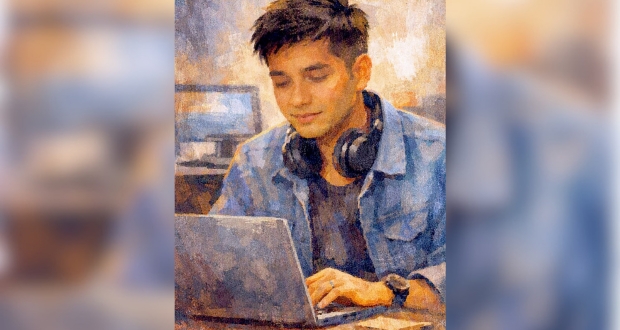
As part of a generation navigating fast-changing digital landscapes, but shaped by multicultural influences in his rural background, Dylan B. (made-up name) works in the media while still studying for a Master’s degree. Thoughtful and observant, he shares how mentorship has helped him find direction in a ruthless world. “Longevity is not just living longer, but also the possibility of building careers and identities with deeper purpose.” Intergenerational exchange is, for him, “a lifeline – a way to anchor ambition in wisdom”, deeply rooted in his childhood. “I’ve always lived within an extended family, surrounded by grandparents, aunts and uncles. My grandfather would pick me up from late tuition classes, while my grandmother contributed towards my personal needs and expenses. These may have seemed like normal gestures at the time, but today I realise how much their presence and support shaped my childhood. They offered time, attention, reassurance and wisdom.”
Dylan started informal mentoring at work a few months ago with a still “active and helpful” woman in her late seventies. This experience, which they started by mutual choice, has reinforced his belief that fulfilling relationships between generations “should be based on mutual respect and exchange”. Older people can share practical knowledge, patience, experience and guidance, while younger people can contribute their energy and technological skills. “With my personal experience since childhood, I would encourage my peers to look for meaningful encounters with older generations.”
⚫ Reuben L. (Late 70s)
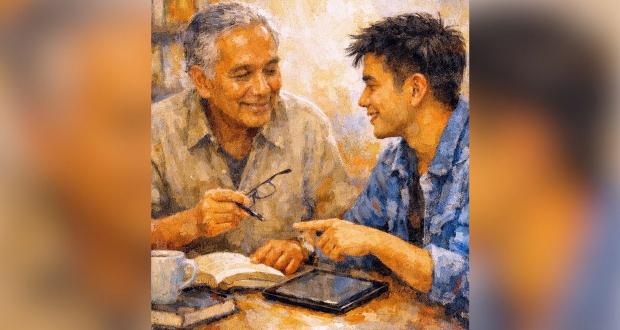
Now in his late seventies, Reuben L. (made-up name) has mentored people for decades – quietly, informally, and with a generosity that has shaped many careers and personal journeys. “My own experiences of being mentored have given me a broad sense of belonging and an instinct for bridging differences.” Born the first child and first grandchild of the extended family, doted on by two pairs of grandparents and some fifteen unmarried aunts and uncles in an urban setting, he quotes the African proverb,“It takes a village to raise a child.” “My upbringing was a collective effort. I was surrounded by young adults who shared their experience and strong values, and who financed my schooling. They were my first mentors.”
After secondary school, he started teaching to support his family, while waiting for scholarships to a university abroad, which he obtained just after independence. Coming back in the mid-70s, he would teach until his retirement. “I had teachers and then university tutors who inspired me to always give my best. I decided it was my mission to do the same. I never gave private tuition, but was always ready to help all my students.” Outside school hours, he would also engage in social and pastoral work, inspired by religious mentors who had instilled the need to transmit values and experience.
Though retired from formal roles, Reuben keeps sharing knowledge and values with younger generations. “I enjoy offering perspective, patience and encouragement that come from lived experience. On the other hand, I receive so much from them. I am still learning and active in my head, even if my body is sometimes like ‘a car that sputters’. I am fully computer literate and even use AI; this reminds me of the 60s when the only place to do research in English was in books at the British Council.” Today most of his elders and his peers have passed away or drifted apart. His contact with young people keeps him busy and up to date, and gives meaning to his life. “I believe that longevity is meaningful only when people remain connected to others. Ageing can be a continuum of influence and fulfilment rather than a withdrawal from society.”
*****
Global reflection on longevity and solidarity
From Mauritius to Mexico, societies everywhere are learning to see longevity not as a burden, but as a resource. The 2026 International day or week highlights how gardening, art, dance, and digital learning foster intergenerational solidarity. As populations age, the core challenge is not only caring for seniors but redesigning systems that allow all generations to thrive together.
In the United Kingdom, celebrations blend cultural activity with policy engagement. Local councils and charities such as Age UK and Independent Age are organising “Longevity Festivals” combining art, music, and digital-skills. The NHS uses the occasion to promote healthy ageing, emphasising mobility, nutrition, and mental wellbeing. London’s Southbank Centre showcases “Silver Voices,” a portrait and testimony exhibition on creativity in later life. Mixedage choirs and dance workshops in Manchester and Bristol highlight social connection as a growing public-health priority.
Across Europe, the observance aligns with the EU’s Green Paper on Ageing and innovation partnerships on healthy ageing. France and Germany foster shared-learning spaces for seniors and youth. Denmark and Sweden highlight age-friendly urban design through exhibitions and walking tours. The European Commission’s “#LongLivesTogether” campaign encourages citizens to share stories of intergenerational friendship.
Throughout Africa, tradition meets new social initiatives. Kenya hosts storytelling circles under “Wisdom for the Future”, while youth groups teach digital skills. South Africa convenes a national forum on ageing and inequality. Nigeria pilots “Adopt a Grandparent” schemes linking students with isolated seniors.
In Asia, ageing is framed as community resilience. Japan merges its “Respect for the Aged Day” with volunteer drives and cooking classes. Singapore expands outreach through youth ambassadors. India launches “Seniors for Sustainability”, and China hosts forums on active ageing and community workshops.
In the Americas, advocacy and cultural celebration dominate. The American Association of Retired Persons and The National Council on Ageing promote ageinclusive systems, while the UN hosts a global symposium in New York. Mexico organises community festivals; Brazil, samba workshops; and Chile, “Neighbourhood Longevity Labs”; underscoring ageing as a shared societal transformation.
Publicité
Publicité
Les plus récents