Publicité
Digested week
Rethinking mental healthcare: When mauritian society itself becomes the diagnosis
Par

Partager cet article
Digested week
Rethinking mental healthcare: When mauritian society itself becomes the diagnosis
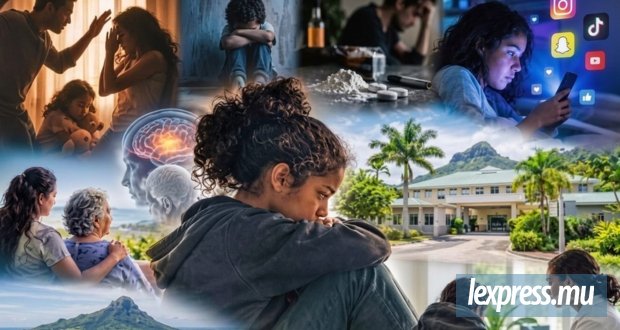
© AI-Generated
Mental health is often discussed as an individual issue – a diagnosis, a period of anxiety or depression. But well-being is rarely shaped by the individual alone: it is shaped by the home a person grows up in, their economic security, their relationships, the substances around them and, increasingly, the digital world they live in.
The roots of distress
Mental health is shaped by economic, social and structural conditions. Financial insecurity, unemployment and unequal opportunity breed chronic stress, while education builds coping skills. Family and community ties protect; isolation, discrimination and stigma deepen vulnerability.
In Mauritius, rising living standards have brought their own costs – demanding jobs, long commutes and rapid technological change. Young people face added pressure from academic expectations, family demands and an uncertain future. Access matters as much as care itself: stigma keeps people away. Support must run through schools, workplaces and primary healthcare, not only hospitals and specialists.
Behind closed doors
One of the most important factors in understanding mental health is what happens in childhood. Exposure to violence, neglect or persistent instability can affect a person long after they leave that environment. The World Health Organization notes that childhood maltreatment affects lifelong physical and mental health, and that violence can pass between generations – through impaired emotional regulation, damaged self-esteem and difficulty coping with stress, sometimes leading to substance use as a coping mechanism.
This does not mean every child exposed to violence becomes violent, or that trauma determines a person’s future. But WHO estimates that about one in three women have experienced physical or sexual violence in their lifetime, and UNICEF estimates that around 1.6 billion children – two in three – regularly experience violent punishment by caregivers at home. These figures are why domestic and child violence are public-health issues, not just isolated criminal incidents – and why early support and a safe environment can help break the cycle.
In Mauritius, domestic violence remains a persistent concern, with women representing the majority of reported victims. Behind the statistics are families living with fear and financial dependence, in cycles of abuse not limited to physical assault – controlling who a person sees or how they spend money can be as damaging as visible injury.
This is particularly relevant following the Domestic Abuse Act 2026, which recognises economic, emotional and psychological abuse and strengthens protection for victims and children. But legislation addresses only part of the problem. A victim may seek a Protection Order and later withdraw it – not necessarily a sign that the situation wasn’t serious, given how fear and dependence complicate the choice to leave. Legal protection needs to be matched by psychological, social and economic support.
Substance-use disorders
Synthetic drugs, locally known as simik, and alcohol have become major social concerns. Substance use and mental illness should not be treated as interchangeable – most people with mental-health conditions are not violent. The concern arises when substance use interacts with trauma or psychological vulnerability: some substances can produce paranoia, confusion or severe behavioural disturbance, turning a social problem into a mental-health emergency and, occasionally, a public-safety issue.
The tragedy in Roche-Bois in August, when a seven-month-old baby was stabbed to death and his father provisionally charged with murder, illustrates this intersection. Reports have pointed to a possible link with synthetic drug use and the father’s mental state, though this remains under investigation and unproven in court. Rather than drawing conclusions from one case, it underscores a broader need: mechanisms for police, social workers and health professionals to identify people at risk before a crisis becomes irreversible.
Online pressure
For young people, social media offers friendship and belonging, but constant exposure creates pressure to compare one’s life with curated images of others – a problem that grows more serious when it replaces sleep, schoolwork or face-to-face relationships. Social media can also amplify bullying, harassment and unrealistic expectations. WHO data from its European region found problematic social-media use among adolescents rose from 7% in 2018 to 11% in 2022, alongside poorer well-being and sleep – figures that are not specific to Mauritius but offer a warning. The answer is not removing young people from platforms, but building healthier digital habits and media literacy.
Hidden burden of dementia
Mental health is not just a youth issue. As people live longer, cognitive health matters more. WHO estimated that 57 million people were living with dementia globally in 2021, Alzheimer’s accounting for 60–70% of cases. As it progresses, it can affect a person’s ability to recognise relatives or manage daily life – and the burden on caregivers, who often reorganise work and finances around a loved one’s needs, can be enormous. WHO’s 2026 guidance points to modifiable risk factors across the life course – tobacco, alcohol, isolation, inactivity, untreated hypertension – a reminder that protecting cognitive health cannot begin only after illness appears.
Breaking the cycle
Mauritius faces a challenge that requires more than psychiatric beds or asking people to seek help once they reach breaking point. Support needs to move closer to communities: schools equipped to spot distress early, primary care able to recognise warning signs, and closer coordination between police, health services and social workers in high-risk cases. Above all, stigma must be confronted – a person with depression should not be dismissed as weak, nor a family managing addiction left to cope in silence.
The deeper question is not how mentally healthy an individual is, but what kind of society is being built around them. Mauritius cannot prevent every crisis, but it can recognise warning signs sooner and get help there faster – making mental healthcare part of everyday life, not something reached only after tragedy.
*****
An expert’s view
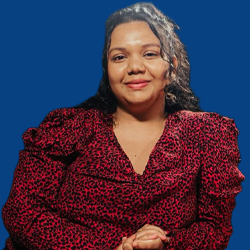
For psychological counsellor Ruchi Swambar (picture), mental health must be understood beyond the point of crisis, by recognising what precedes it. She explains that “childhood trauma – exposure to domestic violence, abuse or chronic instability – can affect a person’s sense of safety and self-worth well into adulthood, contributing to anxiety, risk-taking or difficulty forming healthy relationships”. But trauma does not determine the future: “Supportive relationships and the right intervention can break unhealthy patterns”, she adds. She also links unresolved trauma to substance misuse and is “most concerned about synthetic drugs and their unpredictable effects”. She also points to financial stress and social-media comparison as growing pressures, while advocating for earlier intervention in schools, workplaces and families. “Mental health should not begin receiving attention only when a person can no longer cope,” she says.
Publicité
Publicité
Les plus récents