Publicité
Interview with…
Soorej Jose Puthoopparambil : “Immigration is essential to achieve the economic growth that the country aims to achieve”
Par

Partager cet article
Interview with…
Soorej Jose Puthoopparambil : “Immigration is essential to achieve the economic growth that the country aims to achieve”
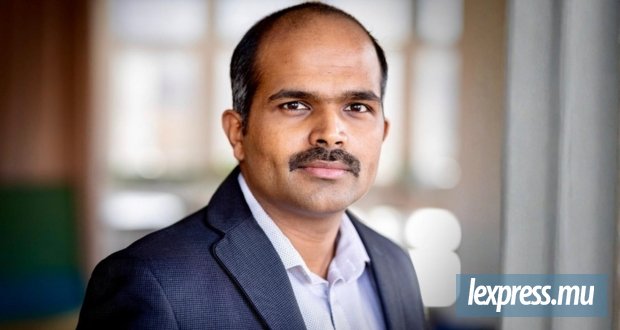
Soorej Jose Puthoopparambil, Associate Professor, Uppsala University | Migration and Global Health.
As young and skilled Mauritians leave the country while employers increasingly rely on foreign workers, Mauritius is facing a profound demographic and economic shift. Soorej Jose Puthoopparambil, Associate Professor, argues that immigration and emigration must be viewed as part of the same equation – one that will shape the country’s workforce, public health, social cohesion and development ambitions for decades to come.
■ Mauritius is confronting two seemingly contradictory realities: young Mauritians are leaving to study and work abroad, while employers increasingly depend on foreign workers to fill vacancies. Are these two sides of the same human-capital problem, and should migration policy address emigration and immigration as one equation?
Yes, migration and emigration need to be addressed together as these are the two sides of the same coin. However, high-income countries often deal with immigration only, as emigration is minimal compared to immigration. However, these processes occur simultaneously and in significant numbers in Mauritius and therefore need to be considered as part of the same equation. During recent years, the number of individuals that left Mauritius (emigrants) is a few times higher than the number of individuals that arrived (immigrants). In addition to the declining fertility rate, emigration is one of the main reasons why the country is experiencing an increase in immigration in recent years. If Mauritius is to maintain its way of living and increase its GDP and other development indicators, it will be due to immigrant labour because Mauritius has an ageing population and will not have the workforce required to achieve its economic and development goals. The upcoming Vision 2050 estimates that the country would need around half a million migrant workers to achieve the vision. This really shows the role of migration in society building.
One other aspect that needs to be added to the equation is internal migration induced by climate change and other environmental factors, specifically due to rising sea levels. Individuals leaving Rodrigues for mainland Mauritius are an example of this.
■ You raise the concepts of brain drain, brain gain and brain circulation. Could Mauritius turn the departure of skilled Mauritians into an economic asset through return migration, investment, knowledge transfer and professional networks? What would a genuine braincirculation strategy look like?
In its simplest form, individuals migrate to have better living conditions. Better conditions mean better salaries, better working and living environments and better quality of life for many. For others, such as forced migrants, migration would often be the difference between being alive or dead. So, individuals will migrate to or migrate back to where there are better living conditions. It is difficult to suggest a strategy for brain circulation as the conditions in Mauritius and the destination countries where Mauritians have emigrated to are changing. If, by brain circulation, we mean return migration of Mauritians, it will depend on what they perceive as good living and working conditions (living standards, cost of living etc.) and if that matches with what they can find in Mauritius. Another form of brain circulation is financial investment and knowledge transfer by the diaspora. Countries, especially those in Asia and Africa, have been increasingly engaging with their diaspora to boost investment and improve their technical and structural resources. This would be a relevant strategy for Mauritius to explore.
I am not sure what an ideal brain circulation strategy would look like and if that were what Mauritius would need to achieve its development goals. It is important to note that brain circular migration, whatever form it might take, will not be enough to achieve the USD 50 billion economy goal that Mauritius is aiming to achieve by 2050.
Mauritius has recruited workers from successive countries and regions as its economic needs have evolved. Should the country move from a vacancy-driven approach to a skills-driven migration policy – asking not simply where workers can be found, but which capabilities Mauritius needs to build its next economy?
It depends on Mauritius’s ambitions and goals. If I understand Vision 2050, it is aiming at a skills-driven policy. However, I think a vacancydriven approach may also continue, probably at a different scale than what it is today.
■ Mauritius needs to move toward higher-value activities requiring skills in technology, health care, education, financial services and maritime activities. Can skilled migration become a source of productivity growth, knowledge transfer and innovation rather than simply additional labour?
I think the answer to this question is yes, based on Mauritius’ own forecast as per Vision 2050.
■ Your presentation makes the point that there can be no meaningful public health policy without addressing the health of migrants. Is Mauritius still treating migrant workers primarily as an economic input rather than as people who become part of the country’s communities and public-health system?
Often, there is a wrong understanding of what public health is. It is not just about hospitals, clinics, nurses and doctors. It is about improving the health of individuals in a society. Improvement of health primarily happens through working and living conditions. These conditions include road safety, good education, housing, water, food, a good enough job that is not abusive, with decent working hours and salary, one that does not damage my health and many other factors. When these factors are suboptimal, migrants, the same as non-migrants, get sick and need to seek healthcare.
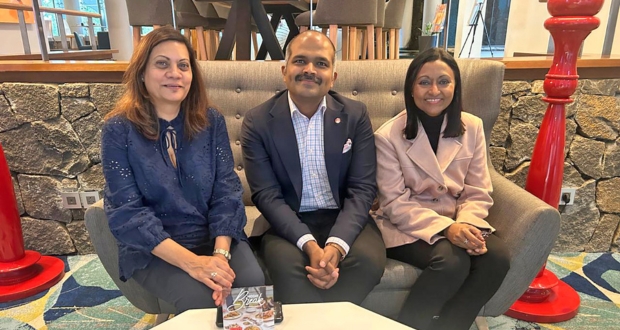 Soorej Jose Puthoopparambil (centre), with Roukaya Kasenally and Ramola Ramtohul, who organised a conference with the interviewee.
A good level of public health is achieved not only by health policies but also through policies that are healthy. For example, if there are regulations that monitor or prevent abuse of migrant workers, which in turn can prevent deterioration of the health of migrant workers, that is a healthy policy. The same goes for social cohesion. The recent Afrobarometer indicates that around half of Mauritians dislike migrants. Feeling not included in society has clear implications for health, especially for mental health.
■ Mauritius has historically absorbed successive waves of migrants, but today’s debate is unfolding amid concerns about identity, inequality and social cohesion. What should successful integration mean in Mauritius? Should the objective be assimilation, or integration that allows migrants to retain elements of their heritage while fully participating in Mauritian society?
There are countries that follow assimilation and other countries that follow integration. Evidence generally indicates that countries that follow integration often result in better health for migrants and public health. It is important to note that integration can take different forms. In a multicultural country such as Mauritius, it needs to develop its own integration format. The present Mauritius retains several elements of the countries from which the citizens’ ancestors came. The principles of this are not that different from integration. Many countries in the Middle East that attract labour migration are based on visas and residence permits, and do not offer a clear pathway to citizenship. On the other hand, many European countries offer pathways to citizenship for long-term residents. Both approaches have their own pros and cons and attract immigrants who prefer one approach over the other.
■ The economic case for migration may become stronger as Mauritius’ workforce shrinks, but the politics can be far more difficult. How can a democratic government build public support for immigration when its economic benefits are often long term, while concerns about jobs, housing, public services and identity are immediate?
I think this is about communication and raising public awareness and citizen engagement. The number of Mauritians who leave the country, in addition to the number of deaths, far exceeds the number of international migrants that arrive. It is self-evident that the annual population growth rate in the country is negative. This is of extreme relevance for an island country like Mauritius.
However, in the age of social media and AI, it is very easy to generate and spread misinformation. Therefore, I think it is a case of more relevant, routine and engaging communication with citizens that is required here. While the lack of jobs, public services, housing etc. are genuine immediate concerns for many Mauritians, declining growth rate is also a concern, but in the long term.
■ Mauritius has moved from fearing population growth to confronting demographic decline. With fertility falling and the population ageing, can the country realistically maintain economic growth, finance its welfare system and sustain living standards without immigration? Or can productivity, automation, higher labour-force participation and the return of Mauritian talent compensate for fewer workers?
I am not an economist. So, this is beyond my expertise to answer. However, looking at the (negative) population growth rate and emigration rates of Mauritians and the government’s Vision 2050, it seems that immigration, particularly labour migrants, is essential to achieve the economic growth that the country aims to achieve.
■ If Mauritius were to redesign its migration policy in 2026, would you recommend more migrants, fewer migrants or simply different migrants? What should determine access to Mauritius – skills, sectoral shortages, investment, qualifications, the possibility of permanent settlement or some combination of these factors?
Migration has economic and humane aspects attached to it. If Mauritius is to achieve its Vision 2050, it needs more labour migrants. Even without Vision 2050, with an ageing population, declining population growth rate and emigration, it seems that immigration must happen. A key point to note is that with labour migration, families will also immigrate to Mauritius. This means that there needs to be public services that can cater to the needs of labour migrants and their families while meeting the needs of Mauritians.
Many of the immigrants that arrive in Mauritius may wish to settle in Mauritius. This means that there needs to be investment in the integration of these labour migrants and their families. So, a migration policy focused on attracting labour migrants must go hand in hand with improved public services and strong integration policies.
■ Mauritius has always been shaped by people who came, stayed, left and sometimes returned. As young Mauritians leave and foreign workers arrive, should we rethink migration not as a question of “foreigners entering Mauritius”, but as part of the country’s long-term strategy for acquiring, retaining and circulating human capital?
This is a very important question and probably more topical for Mauritius than many other countries that experience various forms of migration. Different forms of migration have formed Mauritius, and with its current ambition, they will continue to do so. As I said in the beginning, migration has defined mankind, probably more so in Mauritius than in many other countries. It continues to do so through an ageing population, declining fertility rates, emigration and immigration.
If the country is to increase its economic output, as per Vision 2050, Mauritius must have a long-term sustainable strategy where a good standard of living is affordable for Mauritians and migrants without degrading the environment and while protecting the fragile ecosystem.
Publicité
Publicité
Les plus récents