Publicité
Language • Cultural heritage • Nation-building
Dr Sarita Boodhoo : “Our languages should build Mauritianism, not compete against it”
Par
Partager cet article
Language • Cultural heritage • Nation-building
Dr Sarita Boodhoo : “Our languages should build Mauritianism, not compete against it”
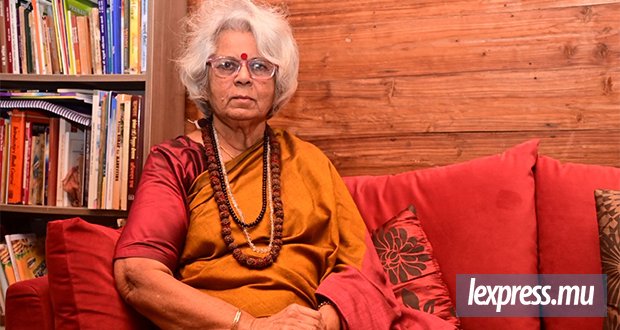
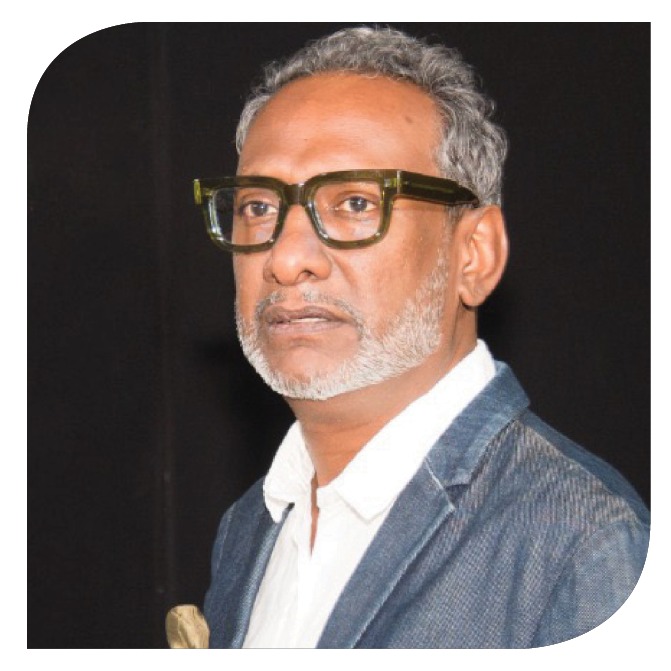
Dr Sarita Boodhoo, author, former Chairperson of the Bhojpuri Speaking Uniong.
The debate over the place of Kreol Morisien in the National Assembly has opened a much larger question about what Mauritius understands by its own linguistic and cultural identity. Dr Sarita Boodhoo, a longtime advocate of Bhojpuri and other Mauritian languages of indenture and trade, has challenged the terms of reference of the Select Committee examining the introduction of Kreol Morisien as a language of proceedings in Parliament. She argues that the exclusive focus on Kreol Morisien risks overlooking other languages that are already recognised, taught and institutionally supported by the Mauritian State.
Her argument, however, is not that recognition of Kreol Morisien should be stopped. In her letter to the Prime Minister and the National Human Rights Commission, she explicitly says she is not asking for that recognition to be delayed or reconsidered. Her demand is that the same institutional door remain open to Tamil, Bhojpuri, Hindi, Marathi, Telugu, Urdu and Mandarin.
In this interview, Boodhoo discusses language, cultural memory, the legacy of indenture and trade, the role of Kreol Morisien in contemporary Mauritian identity, and the difficult question of whether linguistic claims can become an obstacle to national unity – or, if handled differently, one of its strongest foundations.
You have spent decades defending Bhojpuri and other Asian Mauritian languages. Why intervene now, specifically in the debate over Kreol Morisien in Parliament?
Because this is no longer only a debate about one language. It is a debate about how we define Mauritius and how we construct the Mauritian nation. I have been involved in the preservation and recognition of Asian Mauritian languages for decades. I founded the Mauritius Bhojpuri Institute in 1982 to give Bhojpuri language, culture, literature and heritage greater voice, validity, respect and acceptability. Later, in 2012, I was appointed the first chairperson of the Bhojpuri Speaking Union, established under an Act of Parliament. I served for 12 years. So, when I raise the issue today, I am speaking from a long history of engagement with language and heritage. My concern is very precise. If Parliament is examining the institutional recognition of a Mauritian language, why should the terms of reference exclude consideration of other Mauritian languages?
But supporters of Kreol Morisien would argue that Creole occupies a unique position. It is the link language of everyday communication for much of the population and has become deeply associated with Mauritian identity.
I do not dispute that. But I would use a different word. Kreol Morisien is our link language. It is not our common language. A link language is what connects people who do not share the same mother tongue. That is a real function, and a valuable one. A common language suggests that we possess only one, and that we all come from it. That is not the case in Mauritius.
Kreol Morisien has an important place in our national life. It is part of the lived experience of Mauritius. It allows people from different backgrounds to communicate. In that sense, it is an important vehicle of Mauritianism. But we should be careful not to transform the idea of a link language into the idea that there can be only one legitimate Mauritian linguistic heritage. Mauritianism cannot be built by asking people to forget the languages that their ancestors brought here.
The people who came through indenture and trade did not arrive without culture. They brought languages, songs, traditions, literature, religious practices and memories. Tamil, Bhojpuri, Hindi, Marathi, Telugu, Urdu and Mandarin are not foreign decorations added to Mauritius. They became part of Mauritius.
You use the expression “the languages of communities who built this country.” What exactly do you mean by that?
I mean that the history of Mauritius cannot be separated from the people who built its economy and civic life. These languages were carried here by communities whose ancestors came through indenture and trade. Their descendants became Mauritians. Their languages therefore acquired a Mauritian history.
The danger is that if institutions repeatedly send the message that one language deserves consideration while others do not, those other languages gradually become marginalised. That is already happening in everyday life.
A language does not disappear overnight. It retreats generation by generation. First it becomes less necessary. Then less prestigious. Then it is spoken mainly by older people. Eventually, younger generations may understand that their grandparents spoke it, but no longer speak it themselves.
That is why institutional recognition matters.
Yet Mauritius has already recognised these languages in several ways. They are taught in schools, the Speaking Unions exist and the national broadcaster carries programming in several of them. Why isn’t that enough?
Those are important achievements, and they demonstrate that the Mauritian State has already accepted these languages as part of the country’s linguistic and cultural landscape. The Speaking Unions have statutory recognition. These languages are taught as optional subjects in the national curriculum. The Mauritius Broadcasting Corporation has programming in Hindi, Urdu, Bhojpuri, Tamil, Telugu, Marathi, Gujarati and Mandarin, alongside English, French and Creole.
But recognition is not a finished process. The question before us is whether the National Assembly itself should become part of that recognition. If a Select Committee is created to examine linguistic recognition in Parliament, then surely the terms of reference should permit consideration of all the relevant Mauritian languages.
Your letter goes back as far as 1944. Why is that history important to today’s debate?
Because it shows that this struggle is not something we invented in 2026. In 1944, the Select Committee on the Ward Report on Indian Languages considered their place in education. Dr Seewoosagur Ramgoolam and G.M.D. Atchia advocated the teaching of Indian languages in schools. Then, in 1986 and 1991, Select Committees again examined the place of Oriental languages, including Hindi, Urdu, Tamil, Telugu, Marathi and Mandarin, in the education system. Government subsequently gave these languages recognition for certification and later ranking purposes.
So, there is an institutional history here spanning eight decades. The present claim is therefore not opportunistic. It is part of a long process of asking the Mauritian State to recognise the cultural and linguistic realities of its own population.
Let me put the difficult question to you. Could this struggle itself become an obstacle to Mauritianism? If every community insists on recognition of its own language, could we end up emphasizing difference rather than what binds us together?
That is precisely why we need a mature conception of Mauritianism. I would turn the question around. Does Mauritianism mean that we all become culturally identical? Or does it mean that we can come from different histories, speak different ancestral languages and still recognise ourselves as one nation? For me, the second proposition is the stronger one. The link language – and here Kreol Morisien has a very important role – can bring people together. But our ancestral languages can give depth to the national story.
There should be no competition between Kreol Morisien and the other Mauritian languages. Kreol Morisien can be a bridge. The other languages can be roots. A tree needs both.
Underlying all this is a question of identity. Is there a single Mauritian identity?
We do not have one identity. We are one nation with multiple identities, and those identities are already given due recognition by the State itself.
That is not a theory. The State teaches these languages. It created the Speaking Unions by statute. It broadcasts in them. Recognition exists. What is missing is recognition in the one place where the nation deliberates. A Mauritian can be Mauritian, and also the descendant of a particular history, and also the speaker of a particular ancestral language. Those are not three competing loyalties. They are three layers of the same person.
Other countries have accepted this without falling apart. Singapore has four official languages – English, Mandarin Chinese, Malay and Tamil – and a member may address its Parliament in any of them, with simultaneous interpretation in the chamber. South Africa has twelve official languages. Neither country has been weakened by that.
We could give many more examples. The point is simple. Multilingual recognition is an ordinary feature of plural societies. It is not an exotic demand.
That’s a powerful metaphor. But how do you prevent the roots from becoming competing identities?
Through education and through an inclusive national narrative. We should teach children that being Mauritian does not require them to reject their ancestral heritage. A child can speak Kreol Morisien with friends, learn English and French at school, and still learn Bhojpuri, Tamil, Hindi, Urdu, Marathi, Telugu or Mandarin as part of the cultural history of Mauritius.
There is no contradiction. The real contradiction arises when we say we celebrate diversity but allow some languages to become invisible.
You also invoke UNESCO and Geet Gawai. Why is that significant?
Because Bhojpuri in Mauritius is not simply a private community matter. UNESCO recognized “Bhojpuri Folk Songs in Mauritius – Geet Gawai” as Intangible Cultural Heritage of Humanity in December 2016. My letter points out that this recognition carries responsibilities for Mauritius as the State Party to sustain and nurture the element, including through teaching at formal and non-formal levels.
That gives us another dimension. We are not merely discussing whether grandparents should continue speaking a language at home. We are discussing cultural heritage that Mauritius itself has a responsibility to preserve.
Your complaint also refers to Section 16 of the Constitution. Are you saying the current terms of reference are unconstitutional?
I am saying that the exclusion raises a constitutional question that deserves to be examined. Section 16 prohibits discrimination on grounds including race and place of origin. In the Mauritian context, mother tongue can be closely connected with the historical and social identity of communities associated with particular places of origin.
If a State body gives one Mauritian language a pathway towards institutional recognition in Parliament while remaining completely silent on others, we have to ask whether that differential treatment can be justified. I am asking the government to look at the justification, if any, for that difference. I am not saying that the terms of reference themselves explicitly discriminate on the basis of race. The question is whether the effect of the exclusion engages constitutional protection.
You have been careful to say that you are not asking government to delay recognition of Kreol Morisien. Why make that distinction?
Because I do not want this issue to be misunderstood as opposition to Kreol Morisien. I am not asking the government to take away anything from Kreol Morisien. I am asking that the door not be closed to the other languages. If Kreol Morisien is being considered for a place in Parliament, let the Select Committee also have the mandate to consider whether Tamil, Bhojpuri, Hindi, Marathi, Telugu, Urdu and Mandarin merit institutional recognition, and to determine the appropriate mechanism. That is a question of fairness.
Some people might say that Parliament cannot realistically function in all these languages. Isn’t there a practical problem?
That objection belonged to another decade. It no longer holds. The practical obstacle was always interpretation. Who translates, into how many languages, at what cost, and how quickly. Artificial intelligence is dissolving that obstacle. Translation between spoken languages is now close to instantaneous, and it is improving month by month.
The Prime Minister has made artificial intelligence priority number one of his Budget 2026-2027 – the first of its seven strategic pillars. If AI is a national priority for the economy, for education and for public services, it can also serve our democracy. It facilitates the simultaneous availability of any language.
Look at India. Article 120 of the Indian Constitution allows members to address Parliament in the languages listed in the Eighth Schedule. For decades that right existed more on paper than in practice, because interpretation could not keep up. Since 2025, the Lok Sabha provides simultaneous interpretation in all 22 of those languages, supported by AI systems developed with IIT Madras. A member speaks in Tamil, or in Marathi, or in Telugu, and every other member follows in the language of their choice.
So, the question is no longer whether it can be done. The question is whether we want to do it. I am not prescribing one particular mechanism. My request is that the terms of reference allow these languages to be considered. The committee can then examine the practical, institutional and procedural implications.
Recognition does not necessarily mean that every parliamentary speech must suddenly be delivered in every language. There are different possible forms of recognition. The important thing is not to decide in advance that certain languages do not even deserve consideration.
So, your objection is less about the outcome than about the process?
Exactly. A democratic institution should not close the door before hearing the case.
Let me push you further. Mauritius has always had to manage a delicate balance between communities. Could an aggressive language politics reopen old communal divisions?
Any issue can become divisive if politicians use it to divide people. But the answer cannot be to suppress legitimate cultural claims. The answer is to build institutions that treat citizens fairly. I would actually argue that refusing to acknowledge legitimate cultural histories creates greater resentment than recognising them. When people feel that their heritage is respected, they have greater confidence in the national project. That is nation-building.
So, you see cultural recognition as a tool of national unity rather than fragmentation?
Absolutely. Mauritianism should not be a process of subtraction. It should be a process of addition. We should be able to say: this is our link language, Kreol Morisien; these are our other languages; this is our shared history; these are the different historical journeys that produced one Mauritian nation. The link language can keep Mauritianism alive in everyday life. Cultural heritage can keep the memory of where we came from alive. We need both.
What happens if younger Mauritians stop speaking these ancestral languages?
Then we lose more than vocabulary. We lose songs. We lose oral traditions. We lose ways of remembering ancestors. We lose stories. We lose expressions that cannot always be translated. We lose part of the historical record of Mauritius. That is why I have always insisted that language preservation is also heritage preservation.
Is there a danger that the State has created institutions such as Speaking Unions without giving them enough real influence?
Institutions must have meaning. The Speaking Unions are an important recognition by the State. But recognition should not become symbolic only. If the State recognises a language as part of the country’s heritage, it must continuously ask what is necessary for that language to survive. That means education, cultural transmission, documentation, broadcasting and opportunities for younger generations to use it.
You spent 12 years as chairperson of the Bhojpuri Speaking Union. What did that experience teach you?
That language survives when people feel proud of it. You cannot preserve a language simply by putting it in a textbook. People must believe that speaking it is valuable. That is why I speak about validity, respect and acceptability. When a language is treated as something backward or irrelevant, people stop transmitting it. When it is treated as heritage, people become its custodians.
Let’s return to Kreol Morisien. Could it become the language that finally provides Mauritius with a truly common identity?
I would not put it that way. Kreol Morisien acts as a link language. It is not a common identity. The distinction matters. A link language connects people. An identity claims to define them. Kreol Morisien does the first, and does it well. But a link language should not become a substitute for a common history. Kreol Morisien can connect Mauritians across communities in the present. Our ancestral languages can remind us of the different histories that brought those communities here. That is not a weakness. That is Mauritius.
Then what would you say to someone who sees your campaign as essentially a demand for community recognition?
I would say that they are looking at the issue too narrowly. I am talking about the national heritage of Mauritius. Take Bhojpuri. It is equally a common language, understood by a large part of the population. Its songs are enjoyed by all Mauritians, not only by those whose ancestors came from Bihar.
Bhojpuri in Mauritius is not the same thing as Bhojpuri somewhere else. Tamil in Mauritius has a Mauritian history. Hindi in Mauritius has a Mauritian history. These languages have evolved within our society. They belong to the history of this country. When we preserve them, we are not preserving something outside Mauritius. We are preserving Mauritius.
And what would you say to those who fear that recognising too many languages will make the idea of a nation more difficult?
I would ask them to reconsider what makes a nation strong. A nation is not strong because everyone has exactly the same heritage. A nation is strong when its citizens can bring different histories into a shared national space. Our challenge is not to erase difference. It is to make difference compatible with belonging.
So, in the end, is your struggle an obstacle or an enabler of Mauritianism?
It should be an enabler. But that depends on how we conduct the debate. If language becomes a competition – Kreol against Bhojpuri, Bhojpuri against Tamil, one community against another – then yes, it becomes an obstacle. But if we say that Kreol Morisien is a link language and that our ancestral languages are part of our shared cultural inheritance, then recognition becomes a nation-building exercise.
I am not asking for one language to defeat another. I am asking for the State to recognise the many strands that make up the Mauritian fabric.
And what is your immediate request to government?
Amend the terms of reference of the Select Committee. Include express consideration of Tamil, Bhojpuri, Hindi, Marathi, Telugu, Urdu and Mandarin as Mauritian languages that may merit institutional recognition in the National Assembly. Let the committee determine the mechanism.
What matters is institutional recognition of all languages spoken and written in this country as parliamentary languages of proceedings at the National Assembly. And let that happen without delaying or reconsidering the recognition of Kreol Morisien. That is the point I have made. The door should remain open.
And if the government does not amend those terms of reference?
Then, the country itself must be heard. I am urging a nationwide campaign of signatures, so that Asian Mauritian languages are considered as languages of parliamentary deliberation at the National Assembly, at par with Kreol Morisien.
This is how rights have always been claimed in this country.
In 1871, Adolphe de Plevitz gathered the signatures and marks of more than 9,400 immigrants and carried their grievances all the way to London. In 1947, when the Constitution was revised so that anyone able to write their name in English, French or an oriental language could vote, Dr Seewoosagur Ramgoolam pressed for constitutional reform while Pandit Basdeo Bissoondoyal took literacy in Indian languages into the villages. At the election that followed, the electorate rose from some 12,000 to nearly 72,000.
Language, in Mauritius, has never been a decorative question. It has been the key to citizenship. I place myself in that line. Not against anyone. In continuity with a Mauritian tradition of asking the State, respectfully and in numbers, to recognise what is already there.
Finally, if you had to define Mauritianism in one sentence, what would it be?
Mauritianism is not the disappearance of our differences; it is the ability to transform those differences into a shared national inheritance. And if Kreol Morisien is the language that allows us to speak to one another as Mauritians, then let our ancestral languages help us remember why we became Mauritians in the first place.
Publicité
Publicité
Les plus récents