Publicité
Down memory lane
On becoming a teacher
Par

Partager cet article
Down memory lane
On becoming a teacher
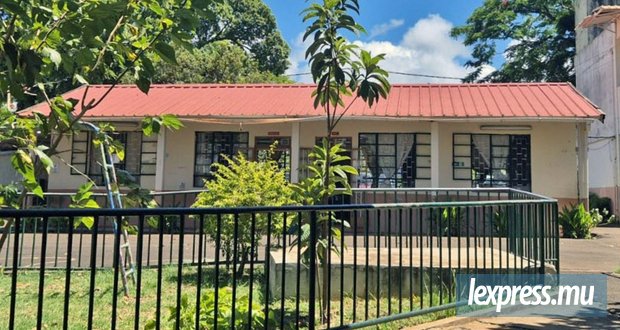
The ambition I had carried since childhood was finally beginning to take shape. I had wanted to become a teacher, and after the long years of schooling, hard work and determination, I succeeded in passing both my Cambridge examinations and the London O Levels. For a boy who had started his education in the “below class” on a sugar estate, walked five kilometres each way to Rivière du Poste Government School, worked in the cane fields during the holidays and collected dry wood with his parents for cooking fuel, this was a moment of considerable significance. I had crossed a threshold.
The books that had once seemed so distant from my rural surroundings had become instruments of my progress. Shakespeare, Keats, Wordsworth and Byron had not merely enriched my imagination; they had strengthened my command of language and helped prepare me for the profession I had chosen. Then came an unexpected and memorable opportunity. The Manager of Presidency College, Yogi Rummun, called me and offered me a position as a teacher of English and French in lower Forms. I was naturally pleased. The boy who had once dreamed of standing before a classroom was now being given the opportunity to do precisely that. I accepted the offer. I was posted to the Curepipe Road Department, where I began my teaching career.
I had a particular feeling when I entered a classroom for the first time as a teacher rather than as a pupil. The same four walls that had once represented authority and instruction now had to be approached from the other side. I was no longer the young man sitting at a desk waiting for the teacher to ask a question. I was the person expected to provide the answers, to explain difficult concepts, to maintain discipline and, above all, to help young people learn. It was both exciting and demanding. I was still relatively young myself. The transition from student to teacher was therefore not as great in age as it was in responsibility.
Wearing a suit and tie
I remember one piece of advice from Yogi Rummun with particular amusement. He warned me that, because of my height, I should make a point of wearing a suit and tie, especially when teaching. His reasoning was wonderfully practical. Otherwise, he told me, the taller students might take me for a student myself! I have never forgotten that advice. There was humour in it, but there was also wisdom. A teacher has to establish a certain presence in the classroom. Students must recognise that the person standing before them is their teacher. In those days, formal dress carried considerable importance. A suit and tie were part of the image and dignity of the teaching profession. So, my height, which might otherwise have been an advantage, presented me with an amusing problem. I had to make sure that my appearance left no doubt as to which side of the classroom I belonged to.
The anecdote also captures something of the atmosphere of the time. Teaching was regarded as a profession with dignity and responsibility. Appearance mattered. The teacher was expected to conduct himself properly and to command respect not through intimidation but through knowledge, discipline and personal example. For me, entering the classroom was particularly meaningful because I remembered where I had come from. I had been one of those children walking along the road to school in all weather. I had experienced the disruption of Cyclone Carol, when our school building was pulled down and schooling was interrupted for about three months.
I had returned to lessons when classes resumed on Saturdays. I had worked in the sugar-cane fields during the Easter and winter holidays. I had collected dry wood with my parents. I had tended a kitchen garden. I had flown kites in the harvested cane fields.
And now I was standing in front of students, teaching English and French. The journey seemed extraordinary when viewed from that perspective. Perhaps my own experiences made me particularly conscious of the importance of teachers. I knew that. Something changed on the estate. People started calling me Professeur instead of my nickname.
I had been such a child myself. I therefore understood that education could be transformative. A teacher could do more than teach a lesson. A teacher could awaken confidence in a young person who doubted himself. A teacher could encourage a student who came from a modest background to believe that he too could achieve something. That was the kind of teacher I hoped to become. Teaching English was especially meaningful to me because English literature had played such a large role in my own development.
Languages opened doors
I had lived through Macbeth. I had entered the worlds created by Keats, Wordsworth and Byron. I had memorised passages and answered context questions with confidence. Literature had changed the way I saw people and the world around me. Now I had the opportunity to pass some of that experience on to another generation. French, too, became part of my professional life. To teach both English and French was a responsibility, but it was also an intellectual pleasure. Languages opened doors. They allowed students to communicate with a wider world and to encounter different cultures and ways of thinking.
My first teaching appointment lasted about one and a half years. Those eighteen months were important in my development. They were a period in which I learned what it meant to stand before a class, to prepare lessons, to deal with different personalities and abilities, and to assume responsibility for the progress of young people. Teaching also taught me humility. Knowing a subject oneself is one thing. Being able to explain it clearly to someone else is another. A teacher may understand something perfectly but still fails to communicate it effectively. One must learn to see the subject from the student’s point of view. That requires patience. It also requires observation. Those first eighteen months gave me valuable experience, but I knew that my education as a teacher was not yet complete. I wanted professional training.
In 1971, I left my teaching position to enter Teachers Training College. In 1973 I became a fullfledged teacher. My grandmother, my mother and my father, humble as they were, kept their pride to themselves. They too had made of me a teacher. In less than ten years I moved from pedagogy to andragogy. Teaching the masses became a life engagement.
Publicité
Publicité
Les plus récents