Publicité
The Boy I was on Britannia Sugar Estate
Par

Partager cet article
The Boy I was on Britannia Sugar Estate
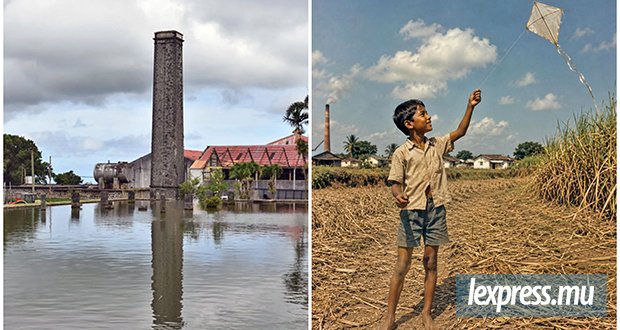
■ Virtual reality: the author as a child in a world that seemed ordinary then, but which, looking back, was anything but. Today he looks back at the people, housing units currently being bulldozed, and memories that shape him. © Nad Sivaramen
When I look back at my childhood in the 1960s, I sometimes wonder how a world so simple could have left such deep and lasting memories. Much has changed since those days. Mauritius has moved forward in many ways that we could hardly have imagined then. Roads, houses, schools, electricity, communications and modern conveniences have transformed the lives of ordinary people.
Yet strangely enough when I close my eyes, I can still return to that earlier world unlike some who are ashamed of saying they come from a sugar estate. Inferiority complex, psychologists say. I can see the sugar cane stretching across the estate. I can hear the voices of labourers in the fields. I can imagine the movement and noise of the sugar mill during the crop season, the warm smell of the molasses pervading the air. I can see our humble straw hut and, later, the little corrugated- iron sheet shelter that became our temporary home after Cyclone Carol destroyed it. I was an ordinary boy then. I came from a very poor family so I did not have any special advantages. But I had a dream. I wanted to pass my examinations, continue my education and, one day, become a teacher. That simple ambition became one of the guiding forces of my childhood.
A childhood on the sugar estate
Life on the sugar estate in the 1960s was very different from life today. There were few amenities. We did not have the comforts that many people now take for granted. Life was governed largely by the necessities of the day: work, food, family, school and the changing seasons. The sugar cane harvest was the great event of the year. For roughly half of the year, the estate seemed to revolve entirely around the crop. The fields became the places of intense activity. Men and women labourers worked among the cane, cutting, loading and transporting it on ox-carts, lorries, and wagons. Their work was physically demanding and required strength, endurance and discipline. Still, I could hear some cutters singing Indian film songs like ‘Dil kahal sune dil wala’ as if to energise themselves.
 © Nad Sivaramen
The men were not all field labourers. Some were skilled and unskilled artisans but all their specialized skills were indispensable to the estate. They repaired, maintained and built the rollers and cylinders that had to keep the operations functioning. I remember some names of my father’s colleagues all gone now, Bakar, Dada, Nanda, Arjoon, Namdeo, Cateaux, Stephen. In those days the sugar estate was not simply a place where cane was grown. It was a community, almost a world in itself, in which people with different occupations depended on one another. For a child, however, the estate was more than a place of work. It was our world. The cane fields, the workers, the factory, the housing units, the roads between them formed the landscape of our childhood. We knew no other way of life.
Cyclone Carol
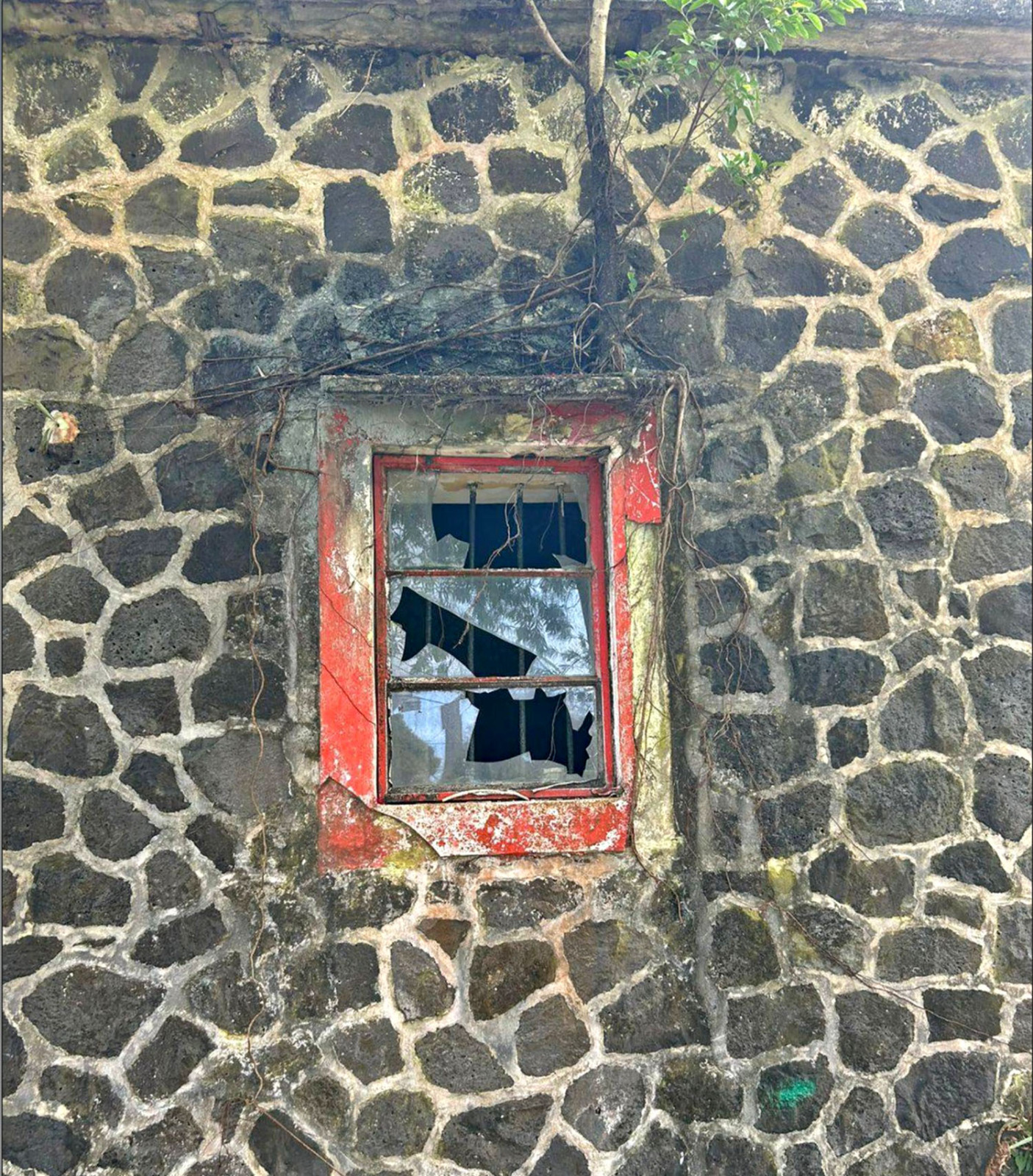
Among the memories of those years, one stands apart: Cyclone Carol. This cyclone brought destruction and uncertainty. Our straw hut could not withstand the violence of the storm. It was destroyed, leaving us without the home in which we had lived. For us, a house was not something that could simply be replaced by unfortunate occupants. The estate erected a small shelter for us made of corrugated iron sheets. I remember the image of that little shelter because of the contrast it represented. It was a far cry from a proper house. It was a small, basic and functional - a temporary refuge until the estate could construct stone housing units. As children we had a remarkable capacity to adapt. We did not analyse our circumstances as adults might have done. We accepted what had happened and continued with life. The shelter was our home for a time. We lived in it because we had to.
 © Nad Sivaramen
Looking back many decades later, however, I understand what that experience taught us. We belonged to a generation that learned early that life could be uncertain and that adversity had to be faced with courage rather than complaint. We would make claims much later in life at other stages of our self-development.
My grandmother
Among the strongest figures in my childhood was my paternal grandmother whom everybody on the estate called affectionately Nani Baboo. I too called her Nani instead of Babam. She was a formidable woman. I entitled my second book ‘A Formidable Mother’ in her honour. Her life had not been easy. My father himself had been orphaned when he was about ten or twelve years old. My grandmother therefore had the enormous responsibility of raising him. She had to be mother, provider and protector at a time when there were few social safeguards for families in difficulty.
Nani was a woman of determination. She worked as a labourer on the estate and, remarkably, her work took her inside the sugar factory. Her particular duty was to sweep the floor of the mill. She had a colleague who was about the same age as herself. She was known as Dady. As I remember it, the two of them were the only women working inside the factory. That image has remained with me. Inside the great sugar mill, surrounded by machinery, heavy engines looked like monsters to my eyes. There were noise, heat and the activity associated with sugar production, and there stood these two older women carrying out their humble but necessary tasks. At that time, I probably did not fully appreciate what their presence represented. I was only a child. Today, I see it differently. They were part of the invisible workforce of the estate.
 © Nad Sivaramen
Nani and Dadi were not managers or technicians. Their names would never appear in the history books of the sugar industry. Yet they worked, contributed and earned their living with dignity. My grandmother’s story also reminds that behind many families of my generation were women of extraordinary resilience. They raised children, worked, endured hardship and kept households together, often without recognition. She had raised my father after he lost his parents at a very young age. She had worked as a labourer. She had endured hardships of estate life. Yet she continued. When I think of her today, I do not see merely an elderly woman sweeping the floor of a sugar mill. I see a survivor.
My father Ramsamy
My father’s story was also unusual. Having been orphaned at around ten or twelve years of age, he had grown up without the security that most children take for granted. Yet he managed to make something meaningful of his life. He found time to learn Telugu, the ancestral language of the family. He worked in the mill but volunteered as teacher to conduct classes in Telugu in the evening in the village Mandiram without asking for payment. This is another memory that I value more deeply now than when I perhaps did as a child.
My father understood that education was not merely a means of obtaining employment. It was also a way of preserving a people’s language, heritage and identity. During the day there was work and the ordinary business of earning a living. In the evening, however, he gave his time to others. Children and perhaps adults came to learn Telugu, and my father taught them without expecting anything in return. He had himself experienced deprivation. Perhaps that was one reason he understood the value of giving. He knew what it meant to grow up without parents. He knew the importance of education. And he knew that knowledge becomes more valuable when it is shared. In many ways, my father’s example influenced my own ambition to become a teacher.
My mother Prabha
My mother was very different in character and circumstances. She was a very simple woman. She had never attended school and so did not read or write except in later years she learnt to sign her name. Today, when education is regarded as an essential part of childhood, it is difficult to imagine growing up without ever entering a classroom. But in her generation, there were people -particularly women- whose circumstances prevented them from receiving formal education.
My mother never had the opportunity to learn to read and write. Yet I would never measure her worth by her lack of schooling. There are forms of intelligence that cannot be measured by examinations. There is practical wisdom, patience, understanding and the ability to mange the difficulties of everyday life. My mother possessed the simplicity and strength of a woman who had learned about life through experience rather than books. Between my grandmother, my father and my mother, I grew up surrounded by three very different forms of experience: my grandmother’s determination, my father’s commitment to education and my mother’s quiet simplicity. Perhaps, I did not recognize this as a child.
Today I do.
The ordinary boy
And there was me. I was simply an ordinary boy. I did not dream of becoming wealthy or famous. My ambition was modest.
I wanted to pass my examinations. I was the first in the estate to pass the Cambridge Qualifying Test Examination in English to take the School Certificate examinations. Each examination seemed to represent another step towards the future I imagined for myself. I wanted to become a teacher. Perhaps the dream was already present in the family environment. My father was a teacher, and I saw him teaching others in the evenings. I also saw the importance of education in a family where my grandmother had never enjoyed the advantages that education could provide and where my mother had never attended school at all.
For me education represented possibility. The sugar estate was the world I knew, but I did not want it to become the limit of the world I could imagine. I respected the laborers I had seen their strength and dedication. I knew that their work sustained families and contributed to the prosperity of the country. But I also wanted to discover what education could do. I wanted to move forward.
Looking back
Many decades have passed since I was that boy on the sugar estate. It was not merely an agricultural enterprise. It was a social environment in which generations of families lived and worked. People knew one another. They shared hardships and, in their own ways, shared hopes. We were poor in material possessions, but rich in experiences. Looking back, I inherited from my grandmother the lesson of perseverance, from my father I inherited respect for education and the belief that knowledge should be shared and from my mother I inherited the value of simplicity.
When I look back now, I no longer describe myself simply as an ‘ordinary’ boy. I realise I was a boy growing up in extraordinary times, surrounded by ordinary people who were themselves extraordinary in their courage.
I wanted only to pass my examinations and become a teacher. I did not know where that ambition would take me. I only knew that, somewhere beyond the sugar cane fields, there was a future waiting for me.
And I wanted to reach it.
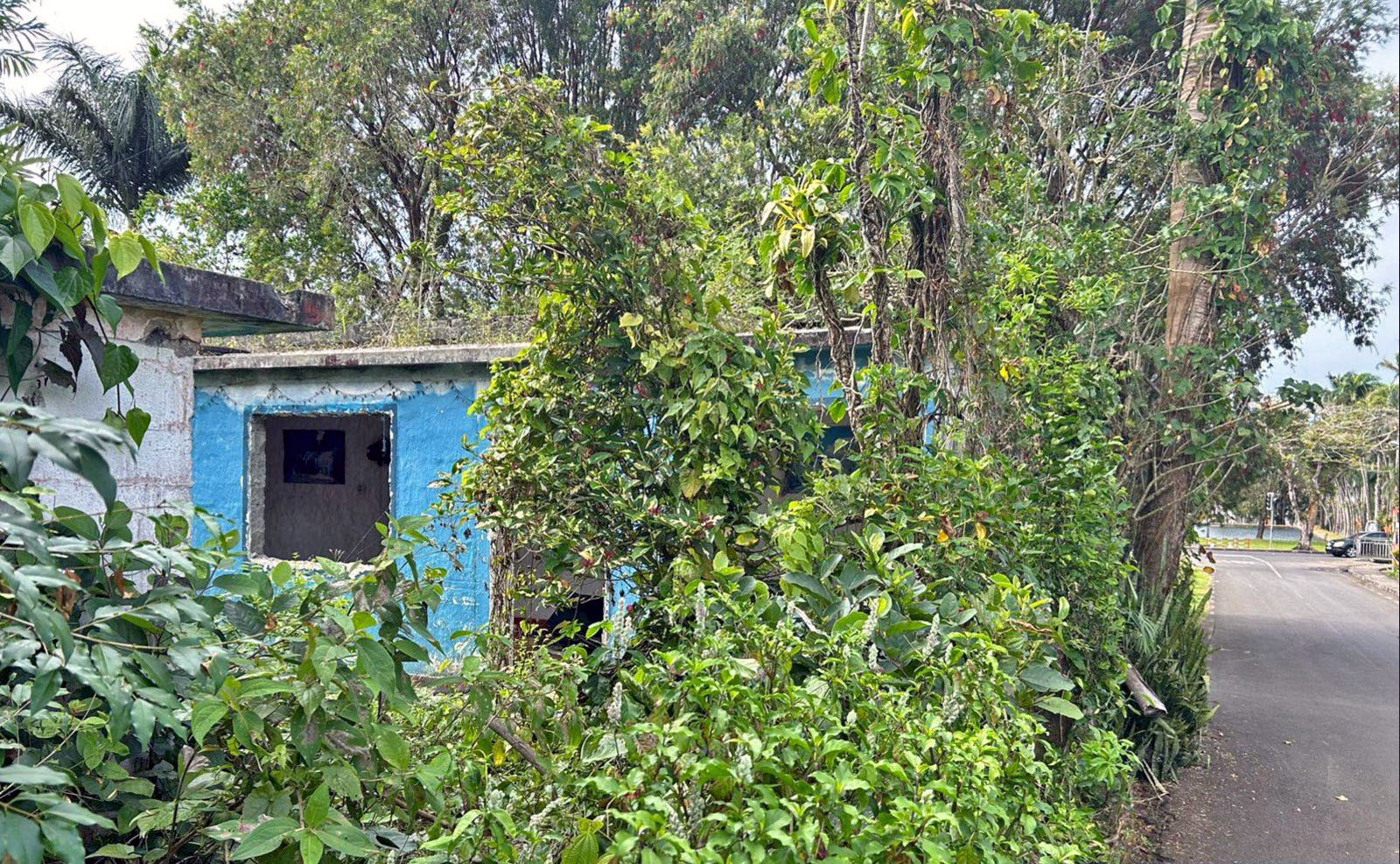
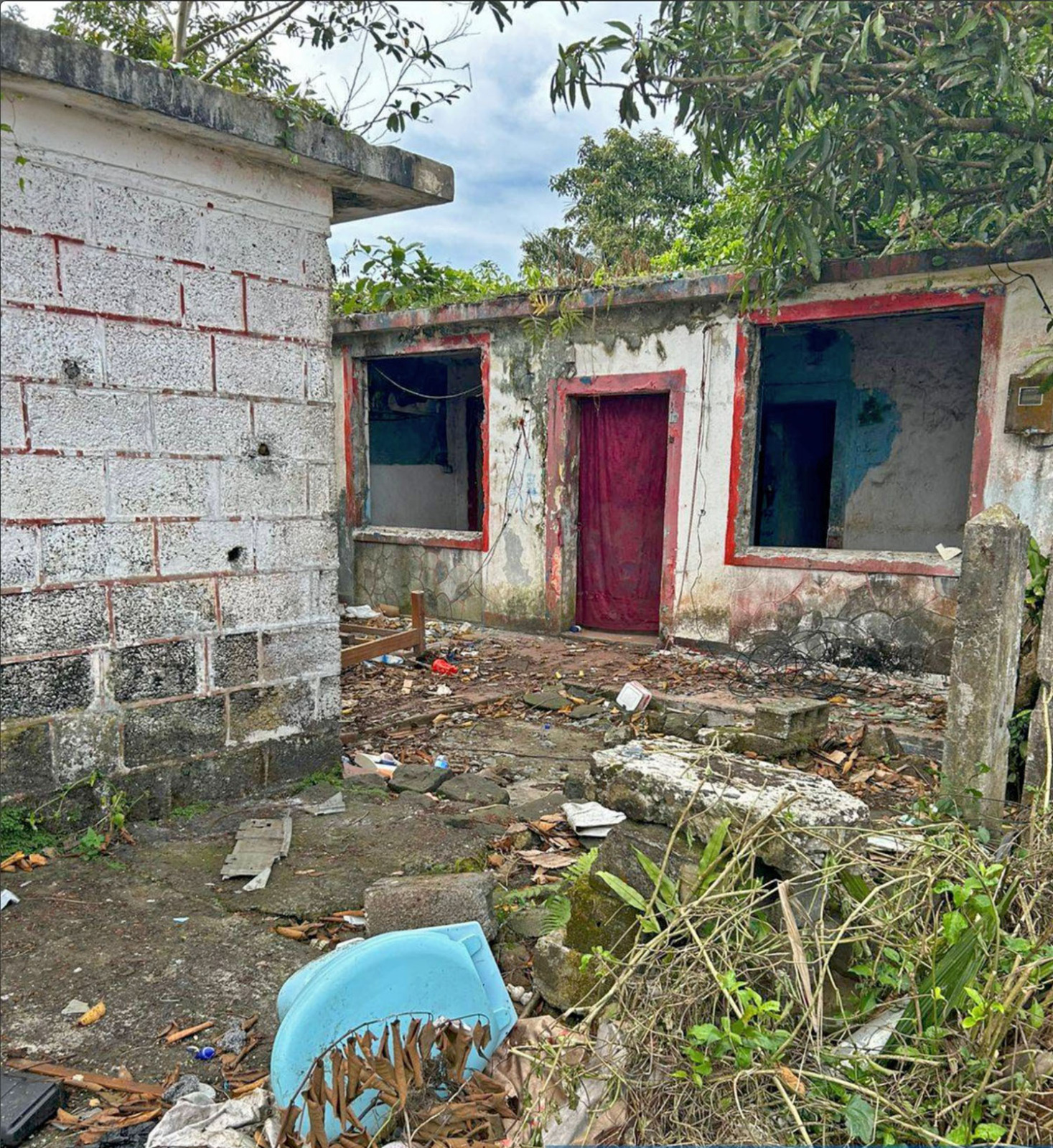
This article has been prompted at the sight of housing units being bulldozed on the estate of my childhood.
Publicité
Publicité
Les plus récents