Publicité
The Russian Revolution
1917-2017
On the occasion of the centenary of the Russian Revolutions (March and November 1917), the author recaps the major events that led to the collapse of Czarism and paved the way for the coming of the Provisional Government and the eventual Bolshevik coup, together with the consequences thereof until Communism itself exploded under Mikhail Gorbachev. Under Vladimir Putin, the new Czar, Russia is struggling to reinvent itself as the superpower she once was. The author hopes readers will enjoy this little-known history.
Chapter I
Introduction
100 years ago the events that shook Russia brought to an end Czarism and paved the way for the Communist Bolsheviks. Why and how Czarism collapsed and the revolutionaries succeeded? What was the role of that Siberian peasant turned Holy Man/Man of God, Miracle Worker in this transformation of Russia? How can a single man be responsible for such a tragedy?
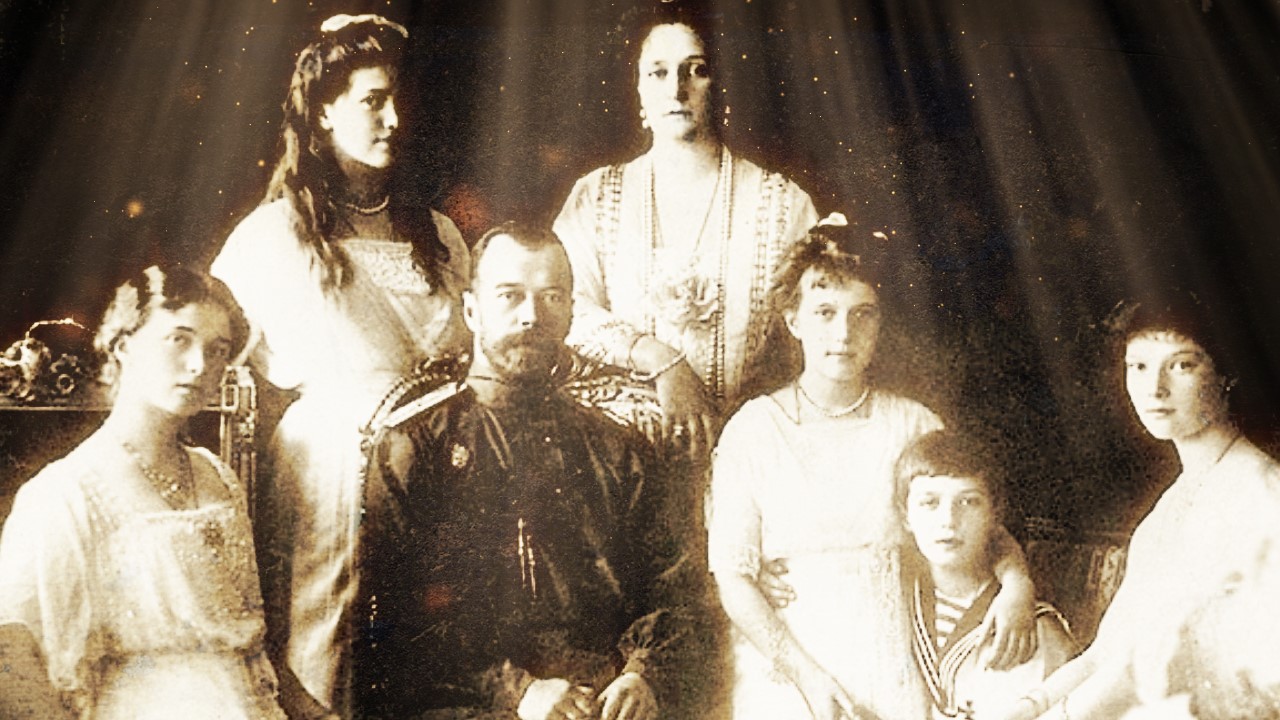
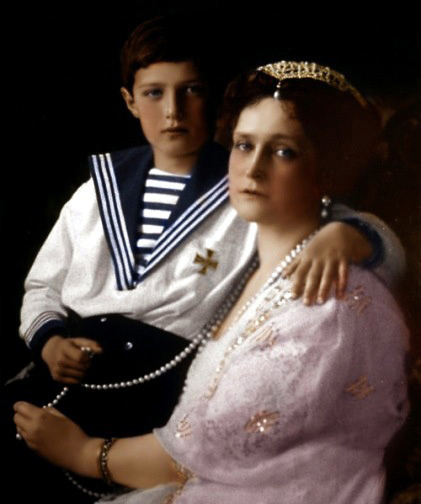
Whatever political and constitutional changes that were taking place in Western Europe, where monarchical rule gave way to limited constitutional monarchies or its complete abolition and replacement by republican system of government, Czarist Russia in the East remained immune from such changes. Apart from the emancipation of the serfs in the early 1860s, which heralded the modernisation of Russia, nothing serious was undertaken until the 1890s with the coming of Count Witte and the construction of the great Trans-Siberian Railway, connecting Moscow and Vladivostok in the Far East. The Czar and the imperial family ruled over a vast backward feudal society, with farmers on tenements being exploited by the aristocratic landlords. Living conditions were precarious, associated with periodic famines due to the vagaries of nature. But despite this economic and social backwardness, Russian society still admired its Czar. And the more the Czar was cut off from its people, the greater the admiration. Unfortunately, for the last Czar, Nicholas II, nature and destiny were both hostile. Czar Nicholas II and Alexandra (grand-daughter of Queen Victoria of Britain) had five children, four daughters in a row and the last one was the Czarevich Alexei, the only male heir to the imperial throne. The son, a haemophiliac, (a disease alleged to have been propagated in Europe by Queen Victoria, the carrier of that disease and spread across the continent by her daughters) turned out to be the cause of the downfall of the Czarist regime. Very surprising! The bleeding of the haemophiliac, once started, went on and on without the blood clotting quickly. In those days, even the doctors could do little. Russian and European medical advice and prescription were sought and applied, but of no avail. And both the Czar and Czarina were really concerned about the future of the heir, the dynasty and Russia.
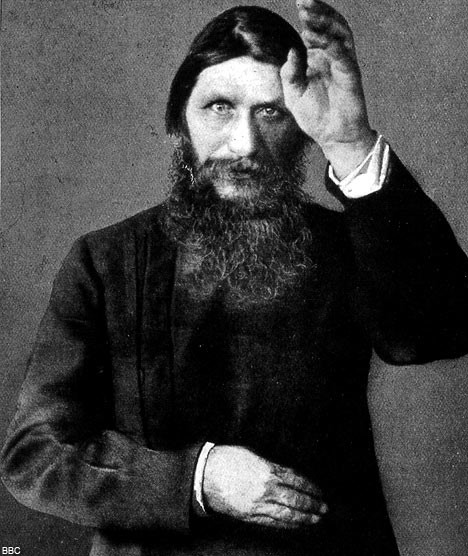
It so happened that the Siberian peasant monk got wind of Alexei’s ill health through two court ladies known as the Black Princesses and came to the court at Petrograd (St Petersburg). Grigori Rasputin was a real Russian peasant, dirty looking, unkempt hair and beard, unwashed, loose blouses, and baggy trousers and alleged to be stinking like a goat. Such a semi-literate man got access to the Imperial Court. The consequences would be catastrophic to the imperial family and Russia. Through his prayers and other alleged hypnotical powers, Rasputin brought relief to Alexei and Alexandra. However, what really made the Czarina believe that Rasputin was in fact a Man of God, a “Starets”, a real mystagogue, was an incident that took place at Spala in Poland in late 1912. The Imperial family and their retinue had gone to their last holiday. Alexei, though convalescing there, suddenly felt pain and swelling in his thigh and groin. The pain accentuated and the complexion of Alexei changed. The eight-year-old boy cried with pain and pleaded to his mother for help. As days passed, the situation was turning dramatic. The family began to expect the unexpected, in tears. They even performed the last Sacrament, fearing the imminent demise of the Czarevich. With all hopes lost, Alexandra, through Anna Vyrubova, her confidante, cabled “Father” Rasputin at his native village of Pokrovskoe in Siberia, begging him to pray for the life and relief of the pain of the son. Rasputin responded immediately: “God has seen your tears and heard your prayers. Do not grieve. The little one will not die. Do not allow the doctors to bother him too much.” The next morning, Alexandra, coming down from Alexei’s room, had a smile on her face long not seen. “Father Grigori told me Alexei will be alright soon”, she told her retinue. In less than 36 hours after receiving the cable, the pain was no more, no swelling, his face bright again and he looked relaxed. Rasputin became Alexandra’s God, the Miracle Worker, and the saviour of the heir of the throne. And this belief, no power in Russia could erase from her mind. Spala opened the doors of Tsarkoe Selo, the imperial residence in Petrograd, to Father Grigori Rasputin, an opening that would work havoc at the last Romanov ruler of Russia. For the services he rendered to the imperial family, Rasputin was lavishly rewarded by the Czarina herself: gifts of expensive clothes and a solid gold cross which he wore round his neck. His closeness to the Czarina Alexandra and the court was to prove fatal to Russia and the imperial family.
Chapter 2:
RASPUTIN AT TSARKOE SELO
What Rasputin exactly did to relieve Alexei of his pain and bring comfort to the imperial family has always been a matter of speculation among friends and foes alike. But to Alexandra, there was one indisputable fact: only Rasputin saved her son, the heir to the imperial throne of Russia. And this alone made Alexandra have an unconditional faith in him, a faith that will remain unshaken till the end. At the Imperial Court where Rasputin laid residence, his outlook soon changed. The loose peasant blouses and baggy trousers were to give way to expensive colourful silk blouses and smart trousers. But his hair and beard remained unkempt as before, thus, adding to the mysticism surrounding him. This rare Russian mystagogue’s strength lay in his eyes – dark blue eyes that sent an energy when focused on an individual. When the eyes failed him, his tongue did the job – the biblical verses with which he opiated his victims and devotees alike. At the court, Rasputin exerted enormous influence over the Czarina who sought his advice on any subject. She would then pass on the advice to the Czar: “Our friend” has so advised and the advice becomes law of the land. It is said that Rasputin had so much influence that “a whisper from his libidinous lips into the ears of the Czarina, passed onto her feeble husband, is enough to undermine confidence in the most loyal officers.” Promotions and demotions were based on suspicion of hostility and servility towards Rasputin. Soon it was all versus Rasputin at the court (except Nicholas and Alexandra). Through his interference in the affairs of the state via Alexandra, Rasputin was encouraging a corrupt system of government where mediocrity and servility were rewarded at the expense of meritocracy and efficiency. When World War I erupted, Rasputin’s influence increased. He advised Alexandra that Russia’s future lies on friendship with a German Kaizer and not on hostility towards Germany. This was often wrongly interpreted by Russians who accused the Czarina of being a German spy, an accusation she vehemently rebuffed: “I love England. I speak English.”
Like Janus, Rasputin was a double-faced man. To Alexandra and the imperial family, Rasputin was the representative of God on Earth, the saviour of her son, the man in whom she had placed her total and unconditional faith. Whoever talked ill of Rasputin was declared the enemy of the court and eliminated. This facet was that of Rasputin the Mystagogue, the miracle man from Siberia. To his enemies, and he had many, Rasputin was a satyr of hypnotic powers, a morally corrupt, squalid peasant who had come to exert great influence on the Czarina and corrupt her mind. At night, out of sight of Alexandra, Rasputin is alleged to be involved in unholy affairs with high society ladies, powered with vodka flowing freely. Tales of his exploits were never believed by Alexandra who discarded them as being motivated by jealousy. To his enemies, Rasputin was the “Holy Devil” who used his hypnotical powers to win the favours of the society ladies who fell prey to this filthy goat-smelling upstart. As news of his exploits and philandering spread, the numerical size of his enemies increased among the males at the Court. Plans were made to get rid of this notorious Holy Man/Holy Devil, poisoning and assassination being on the agenda. Emissaries were sent to Alexandra to persuade her to get rid of this fake miracle worker but to no avail. All stories against the Holy Man were dismissed as palavers. This stubbornness of Alexandra even led the conspirators to the conclusion that to get rid of Rasputin, they need to get rid of both Nicholas and Alexandra first. So the anti-Rasputin elements took up matters in their own hands. On 31st December 1916, Prince Yussupov, the Czar’s nephew, in great secrecy concocted a plan: to lure Rasputin out of the Court on the ground that his wife Irina was sick. He was given poisoned Madeira and cakes but the potassium cyanide did not work. Felix Yussupov had to use a pistol and shot him thrice. The body was thrown nearby a river but was found later on for autopsy and burial. The Czarina was shattered when the news of the assassination reached her, bearing in mind the health of Alexei. In tears, she remembered what Rasputin had whispered in her ears: “If ever I am violently assassinated, you will not survive more than six month” – a prophecy that was to prove correct.
Chapter 3
Russia and World War I
When the First World War erupted, Russia was caught ill-prepared. It had ammunitions for one million soldiers, but through unplanned conscription, some seven million men left farms and industries and responded to the call. The immediate effects of this unplanned recruitment was a drop in farm and industrial output, thus causing chaos not just at the front but in the country as well. Shortage of military equipment and accessories led to mutiny and retreat as the Russian army suffered heavy losses at the hands of the Germans. Of the seven million recruited, some 3,800,000 men were lost by the end of 1916. Army morale declined and the soldiers mutinied and retreated, causing further chaos in the country. Trotsky put the situation clearly: “the first days of the war were the first days of disaster.” Food shortages in the country led to riots at the bakeries. The fault was placed on the Czar and the Imperial government for their incompetence and inaction. It was at this critical juncture that Rasputin advised Alexandra to request the Czar to lead the Russian army against Germany. The Czar left Tsarkoe Selo for General Head Quarters. (Rasputin had given Alexandra an apple to be given to the Czar to eat, that would give him authority and firmness).
As soon as Nicholas left Petrograd, communication between the court and the Czar was cut off by saboteurs. The end of Czarism was not far and was fast approaching.
The Allied Powers called a conference in Petrograd in March 1916 to review Russia’s potential in the East and its ability to keep the Germans at bay at the eastern front. According to General Milner and the British Ambassador to Russia, Sir George Buchanan, by 1916, Russia was deficient in almost anything to carry on the war against Germany. Britain and France, more concerned with the presence of a strong Russian army than the Russians themselves, made arrangements for the shipment of their requirements, although they were a bit skeptical, given the administrative inefficiency and corruption among the officials. Moreover, according to Ambassador Buchanan, the atmosphere was already tense in Russia, as if the revolutionaries were just behind the conference doors, waiting for the conference to be over to overthrow the regime. And this is what exactly happened.
The political crisis forced the Czar to come back. The Duma (Russian Parliament) called for the resignation of the Czar, who, in turn, called for the dissolution of the Duma. While this show of strength was going on, Alexandra instructed the Czar to remain firm and impose his will on the Duma. The leader of the Duma, Alexander Kerensky, simply ignored the Czar and formed a Provisional Government. The Czar and Czarism came to an end by the stubbornness of the Czarina. In March 1916, Czarism collapsed – in line with Rasputin’s prediction. This was the first Russian Revolution, with the Czar powerless and the Duma now in charge of the situation. But those who took over from the Czar were no better either: a bunch of rabbles with a weak leadership unable to take any major decision. The immediate task was what to do with the war and the Czar and his family. The inaction and indecision was going to prove catastrophic. Food and bread shortages led to street disorders and chaos. Gangs of roaming mutineers in the streets were a common feature. Only a leader was lacking to galvanise this rowdy mass.
When the First Revolution took place in March 1917, Lenin was a refugee in Switzerland and Trotsky, next after Lenin, was a journalist in a loss-making Communist newspaper in New York. Neither had any bearing on the First Revolution. However the Germans, fully aware of all Russian moves through their intelligence network, succeeded in neutralising the Anglo-French plan of a strong Allied power country in the East. They smuggled Lenin out of Switzerland in a sealed train to Finland with a view to pull Russia out of the war. This plan would liberate the Germans in concentrating on one front only. With Lenin’s arrival at Finland station and his exhortation to the crowd, the history of Russia took a new turn. Russia under the Provisional Government of Prince Lvov, was likened to a battered ship in the high seas, with a rabble of officers at every decision-making level, with the result that nobody knew the direction and destination.
It was in this state of affairs that a bunch of high seas pirates seized the vessel, got rid of the occupants and took control. This was not a revolution: It was a coup d’état. Rasputin was the originator of the revolution and Lenin was the exploiter and ultimate beneficiary. Lenin had nothing, neither an army nor logistics. He simply seized the opportunity, an opportunist brought in by the Germans at the right moment and at the right place to play in the German hands. Between March and November 1917, the Romanovs remained a real headache for Kerensky and Lvov. They had no clear idea as to what to do with the imperial family and its retinue. Britain offered to help but the provisional government remained undecided until Kerensky himself was overtaken by events. Circumstances also played against the family: two of the daughters caught measles and were unable to travel for a month. The British kept their promise till the end and did not accept any blame for the fate of the family. After Brest-Litovsk, Britain lost interest in Russia and the Czar when Russia officially pulled out of the First World War. While the Provisional Government dilly-dallied, many Romanovs fled Russia, mostly via Crimea, only to resurface in England, their safe haven. After the treaty of Brest-Litovsk, attempt was made to Germany to accept the family as refugees, but without success. With their efficient managerial, administrative and military skills, the Bolsheviks who seized power in 1917 galvanized the loose disorderly forces into a powerful organisation – the Red Army – to stamp out any further uprising against their authority. With the consolidation of power through the Red Army, the Bolsheviks’ main task was the construction of the Soviet economy and infrastructure. However they faced one serious obstacle: the absence of resources due to the war. Procrastination was the only solution.
The Bolsheviks inherited a hot potato in their hands. What to do with the Czar and his family? The failure of Lvov to facilitate the escape of the Czar and his family via Crimea to Britain and then the failure of the Kaiser to decide the line of action to follow eventually allowed the Bolsheviks to deliver the final blow. Early in July 1918 about 14 miles outside Ekaterinburg, the whole family was shot by the Bolshevik fanatics of the region. A barbarous murder by a savage bunch when described in detail will revolt and shudder the civilised world. Thus ended in the most inhuman manner the last Romanov, who ruled Russia and his family, the Czarina Alexandra, their daughters Olga, Tatyana, Maria, Anastasia and the heir to the imperial throne, Alexei. With the collapse of the Soviet Union in the late 1980s, all the murdered members of the Romanovs were elevated to the status of uncanonised sainthood.

Chapter 4
The coming of the Bolsheviks.
With Czarism gone and the threat of rebellion inexistent, the Soviet’s task of reconstruction hung in the balance. Delays in decision taking led to public exasperation and frustration. In 1921, the sailors at Kronstadt mutinied and rose in rebellion against the regime – the very regime they fought for in 1917. For Lenin, Kronstadt was an eye opener and concluded that something must be fundamentally wrong with the new nation, the Union of Soviets of Socialist Republics – the USSR. Kronstadt had two immediate consequences: “putting the lid on the opposition to the new regime and the introduction of the New Economic Policy (NEP), which, in practice, meant a reversion of communism to capitalism. Through NEP, the confiscated arable land was distributed to the landless peasants who, through profit motives, helped boost farm output. The programme, though ideologically incorrect, helped save the catastrophic situation prevailing in the country. On the other hand, by sealing the fate of the opposition, the Bolsheviks also sealed the fate of democracy in the USSR. To suppress the ugly head of dissenters up and down the country, the regime had recourse to the powerful Soviet secret service, the KGB, the harbinger of the Red Terror of the late 1920s and the 1930s.
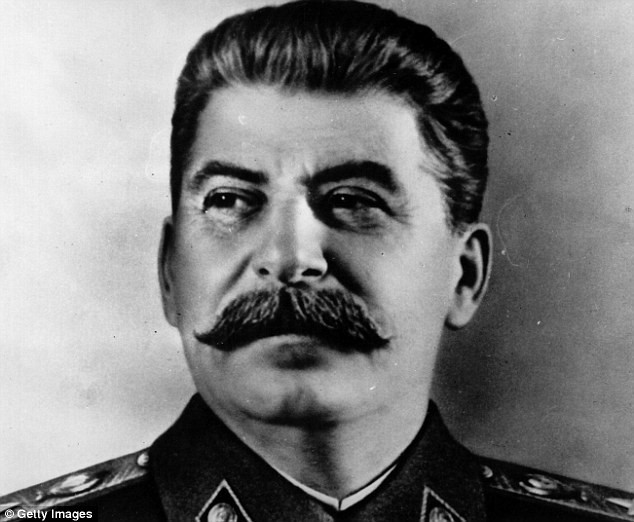
By 1921, the CPSU secretariat was in the hands of comrade Stalin, who took it upon himself to organise the party into a mass movement in the USSR. But Stalin also used the party organisation to consolidate his own position within the party. Lenin saw the danger coming and, from his sick bed recovering from a stroke warned his wife, Krupskaya, and Trotsky to put a stop to Stalin’s role in the party as he himself could not handle Stalin from his sick bed. Matters worsened with a second stroke. And in January 1924, Lenin died. Even for the funeral, Stalin, as secretary general of the CPSU, outwitted Trotsky by cabling the latter a wrong date for the funeral. When Trotsky arrived in Moscow, the funeral had already taken place on the eve. Stalin scored excellent points over Trotsky on that day in the presence of the millions who kept asking: “Where is comrade Trotsky?”
It was after Lenin’s death that Stalin really began consolidating his position in the CPSU by neutralising all possible rivals. It took him some four years after 1924 to eliminate the Tomsky, Rykov, Bukharim group and the Kamenev – Zinoviev group. Trotsky he kept for the last round. By 1927, even Trotsky came to be branded as a traitor and banished from the USSR. Stalin did not leave him in peace even in Mexico where he took refuge. He was hacked by Stalin’s ax-man to death.
With all known challengers to his authority neutralised, Stalin emerged as the single most powerful man in the USSR, far more powerful than the Czar he replaced. Given the state of the country, the economy was expected to grow at a rate 3% to 4% per year as forecast by the professors. Stalin dismissed these professors and their forecasts. He called in their students, known as the Red professors, who forecasted an annual growth rate of between 16% - 18%. This will be achieved through the policy of collectivisation and industrialisation. The NEP was abandoned. The primary sector (agriculture) was used to finance the secondary (manufacturing) sector. To guarantee the export earnings to buy imported capital goods, the agricultural sector was nationalised, with collective farmers given quotas to fulfil. Such a policy, implemented by diehard party men would cause havoc in case of drought and other natural calamities, when output really suffered. However, the quotas had to be met first and then what was left would be for collective consumption and next season’s sowing. Just one year after its introduction, the result was starvation and famine in the USSR. Farm output and livestock declined due to lack of incentives and people slaughtering their animals for consumption rather than sending them to the collective farms.
Stalin’s and the regime’s unpopularity grew but the programme went on. To give it a new boost, Stalin needed a subterfuge. He got one in the name of General Kirov – a young rising star whom Stalin long considered as a threat to his authority and position. He concocted a plan to have him assassinated by a KGB man, who would himself be murdered once he had fulfilled his mission. Kirov’s murder gave Stalin the pretext to tighten his grip in the party and country by introducing a reign of terror, with nocturnal arrests, fictitious trials, imprisonment in Siberia and even execution when found guilty of treason (an accusation that was not difficult to prove in the Iron Curtain country of Stalin). Millions perished in the USSR in the 1930s, with the Soviet demographic chart showing a significant dip for the decade. The same happened to livestock whose size in the 1950s was that of the late 1920s – giving an idea of the slaughter that took place in the 1930’s.
Enormous crimes were committed against humanity by Stalin in the 1930s and onwards. For many economic and social historians, the USSR lost between 9-12 million people in the 1930s. The truth is quite different. When Gorbachev came to power in the 1990s, he was asked by Western historians to confirm the 9-12 million figure. He smiled, and, shaking his head, responded: “Double that top figure”. Words cannot describe the misery of the Russians during the 1930s. From whatever “samizdat” (manuscripts) that were smuggled out to the West, the books published by Russian authors who fled to the West, the story is appallingly unbelievable (Readers and students can refer to Alexander Solzhenitsyn’s “One day in the life of Ivan Denisovitch” and the “Gulag archipelago” and George Katkov “The Trial of Bukharin” and Bukharin’s widow “This I Cannot Forget” to have an idea of what life was in the USSR since the 1930s). Anna Larina Bhukharina, Bhukharin’s widow, fought hard for the posthumous rehabilitation of her husband ever since her release from Soviet jail on frivolous changes. Her plea was only heard when Gorbachev came to power in 1990. Bukharin was rehabilitated and given the rightful place in the Kremlin pantheon. At the same time, Stalin’s mausoleum was thrown out of the Kremlin for his “reign of terror” and crimes against the Soviet people.
The horror and terror slowed down when World War II erupted and the USSR joined the Allied Powers. The USSR remained shut as before to the outsiders, hence the term “Iron Curtain Countries” and the horror continued at a lesser extent.
Chapter V
The post-war era did not bring any respite as long as Stalin was still alive. Only his death in 1953 brought to an end the brutal rule. At the 1956 CPSU Congress, Khrushchev, addressing the huge gathering, criticised Stalin’s rule and crimes committed against the Soviets and party members alike. An anonymous delegate shouted: “What the hell were you doing, then?” Khrushchev congratulated the delegate for his question and invited the delegate to meet him at the dais in five minutes. At the end of the five minutes as nobody turned up, Khrushchev rose to say: “I was in the same position as you are today”.
The Soviet Union and the CPSU always believed one day the world would become communist. During the Cold War, they exported communism worldwide, mostly in the Third World. They supported revolutionary and independence movements anywhere, whenever needed and asked for. Belgian Congo, Castro’s Cuba, Vietnam, Korea, China, Angola? They embarked on an aggressive “offensive” policy of communist expansion. At the UN General Assembly just after John F.Kennedy’s election as US President, the Soviet Leader, Khrushchev, banging his shoe on the table, told Kennedy: “I will bury you.” Members present, though horrified, took the gesture for a joke. The truth that became known to the US later was that the Soviets wanted to bog down the US in Vietnam so as to get time to accelerate their own economic growth and military might with a view to take over the US. Once the Americans realised the real meaning of Khrushchev’s statement at the UN, they pulled out of Vietnam, abandoning it to the Soviets. Though the US lost Vietnam the Soviets did not get it either. It took the communist Vietnamese sometime to realise their future was with the West and AGOA.
In the face of the Soviet expansionist policy, the West developed a “defensive” policy to contain that expansion. Hence the various defense arrangements of the post-war era. The North Atlantic Treaty Organization (NATO) to prevent communist expansion in Western Europe, Central Treaty Organization (CENTO), in South and Central Asia, Australia, New Zealand and the US (ANZUS). The US base in Diego Garcia fits in this anti-Soviet arrangement.
The coming of Gorbachev in the 1980s exposed the hollowness of the slogans on which the system rested. For Gorbachev, all statistics on output, growth, living standards etc. were pure exaggerations and fake. He introduced Glastnost (Reform) and Perestroika (Transparency). Under him, Soviet Union and communism collapsed and with them the Berlin Wall and all Soviet satellite states.
So ended seven decades of Soviet experimentation in a backward agrarian society that cost the lives of millions. The regime that hijacked a movement in November 1917 turned out to be far worse than the one it replaced – and displaced. In the end, it rested on fallacies and terror. Realities and Gorbachev delivered the fatal blows in the end.
Rasputin is dead and buried, but his ghost is still haunting Russia, both the rulers and the ruled alike. Without being conscious of it, Rasputin was the principal architect of the collapse of Czarism and the eventual Bolshevik coup. As Alexander Kerensky (Leader of the Provisional government after the February 1917 revolution) put it: “Had there been no Rasputin, there would have been no Lenin.” And the consequential misery suffered by the people. The collapse of Czarism should drive home another lesson: heredity is no guarantee of fitness to rule. Czar Nicholas II proved and confirmed this point beyond any reasonable doubt. Sir Winston Churchill said of the Czar after his fall in March 1917: “A leader must have the qualities fitting him for his job. He would never have been chosen by any responsible Board of Directors to manage any business of any magnitude.” Nicholas II’s failure can also be attributed to a “conspiracy” of the “kitchen cabinet” where Alexandra and Rasputin concocted palatable dishes to be fed to the Czar. The wrath this tandem caused led to Rasputin’s murder and the eventual fall of Czarism.
Communism as an official ideology is almost dead but its ghost has not been laid to rest. Its techniques have been updated and successfully applied: a controlled blend of capitalism and communism can produce a super cocktail that can work miracle, as in China. Pure unadulterated ideology does not exist today, as Marine Le Pen learnt at her expense. What works is pragmatism. But it takes time to learn this lesson. As one historian once put it: “If at the age of 20 you are not a communist, it means you have no heart. But, if at the age of 50 you are still a communist, it means your heart is sick”. Have we got any such sick hearts? In Mauritius, many of the post-independence communists and revolutionaries have recycled and reinvented themselves so much so that they are unrecognisable today. Age and experience are two sides of the same coin and without which many peoples have broken their backbone for good.
Publicité
Publicité
Les plus récents