Publicité
Remission must go through rehabilitation
Par

Partager cet article
Remission must go through rehabilitation

The release of Sam Poongavanon points at the changing attitude of government towards remission. It may help solve problems in prisons and present no danger for society if rehabilitation is done properly.
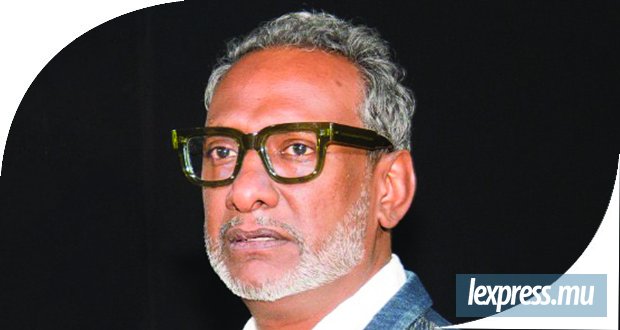
Ponsamy (known as Sam) Poongavanon, is now free. He had hardly come out of the prison that he was already making a plea for rehabilitation and remission. He is ?the living example that it can work?, he revealed in a press conference after being freed. After the Court sentenced him to the death penalty in 1987 for murder, his sentence was then changed into 20 years? imprisonment.
He is considered to have paid his debt to society and now says he is ?ready to start anew? thanks to the support of his family, which gave him the strength to be rehabilitated. But what happens to all those who do not have any hopes of getting out of prison one day? What happens to those who do not benefit from any support?
?As soon as their first month in prison begins, everything must be set for their social reintegration. It is the state?s duty to make a person free and responsible for his or her actions...?
Since the government has come to power almost two years ago, they have often expressed their intention to come forward with remission for all prisoners. This was a few months back. Since then, it may have realised how unpopular such a decision could be with the population and is now less inclined to talk about the issue. The Sexual Offences Act is intended to be amended during the coming parliamentary session making sentences for sexual offences more severe but no mention is made of a possible re-introduction of remission for each and every prisoner.
And yet, all prisoners were entitled to sentence remission if they behaved well during their stay in prison until 1994. But that year sounded the end of remission for the ones condemned under the Dangerous Drugs Act and the ones found guilty of serious sexual offences because the government of the time wanted to make sentences more severe to try and stop the resurgence of drug trafficking and sexual offences. In fact, this new legislation was applied two years later, in 1996.
But the legislation did not bring the expected results. Instead of fighting the evils of society, it only helped fill the prisons and create an explosive situation in there. And the government continues dilly-dallying between the unpopular measure of freeing those having committed serious crimes against the society and the facts to give a second chance to those who have paid their debt to society and tackle the problem of overcrowded prisons.
Former prisons commissioner, Deepak Bhookhun, is adamant: ?Politicians lack guts and prefer to surf on security and repression ? which are popular in the electorate. I am convinced that, if you apply necessary measures to reduce the number of detainees, the system will start breathing alone and quietness will come back (?). Politicians must act on the causes and not on the consequences of the problems.? There are no two solutions for him: ?If we want the prison to be useful, it must help the detainee be rehabilitated.?
Many of those who have worked in prisons ? including former commissioners Deepak Bhookhun and Bill Duff as well as most prison officers ? see remission as the best way of making prisoners behave while they are in prison because they know they have something to gain from this attitude. It is only if prisoners feel that they are treated like human beings that they will behave.
Remission will indeed not help prisoners in their future lives if they are not given proper follow-up when they get into prison. ?As soon as their first month in prison begins, everything must be set for their social reintegration. It is the state?s duty to make a person free and responsible for his or her actions. It is not through repressive, severe and intolerant behaviours that a criminal will get his or her dignity back?, comments Sophie de Robillard, founder of Kinouete, a non-government organisation for the rehabilitation of prisoners.
Rehabilitation should not be limited to the learning of a job but should involve the complete reconstruction of the person who must be brought ?to reflect on his or her action, learn to accept himself and give himself a second chance,? explains psychologist Juliette François.
In Germany, for instance, the combination of work, training or education, and the participation of detainees in therapies makes it possible to review their sentence. Remission is decided upon by judges on a case-to-case basis. This is only one of the possibilities that could be examined in Mauritius as well.
Last year, a document published by NGOs Kinouete, Right Now and the Société d?entraide et de bienfaisance (SEB) pointed at the fact that eight detainees out of ten commit another offence after coming out of prisons. This should not be an excuse for the government to back-pedal on remission but it should be a reason for making sure rehabilitation is properly done before prisoners leave the prisons. It has never been proved that making sentences more severe reduces the crime rate?
Publicité
Publicité
Les plus récents