Publicité
“The heritage of Jean-Baptiste: the intellectual way of thinking”
Par

Partager cet article
“The heritage of Jean-Baptiste: the intellectual way of thinking”

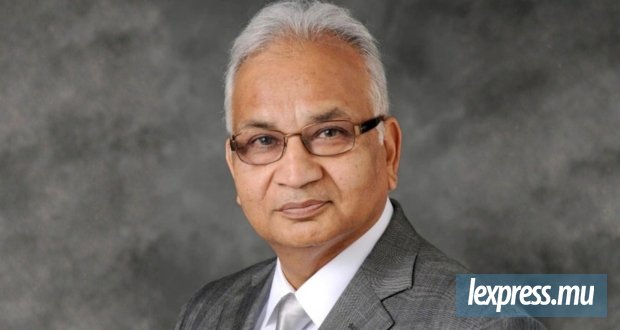
“There was a period of my life when I was highly influenced by teachers. This was definitely in secondary school. I was from a humble background. My father was a forest officer. My classmates, according to my knowledge, were not born with a silver spoon in their mouths either. Consequently, we had to rely on our teachers to progress.
Private tuition was not the order of the day. Most of those who taught us at RCPL, gave the best of themselves. Today it is quite evident that, for a teacher to be effective in the afternoon, he/she has to rest during the day! At that time, teachers were not like this. For example, when I was in Form I, there was a gentleman called Jean Baptiste Mootoosamy. At that time he had no degree. He was from a very poor family and almost self-educated. He managed to make us discover the beauty of French Literature. Without any degree, he still knew everything about the subject.
My classmates and I even saw him once during a staging of Julius Cesar where he played Octavius brilliantly, alongside Cassam Uteem, in the role of Mark Antony and Dev Virasawmy in the role of Casca. I still remember the long and complicated articles Jean-Baptiste wrote about Unesco in l’express. He even created an “academy of letters” with a man called Camille de Rauville. Unfortunately, he did not end up very well. He went to France but mixed up with the wrong people. He was then hospitalised and, when he returned to Mauritius, he was placed in the Human Service Trust Ashram. Some years after, he passed away. But he left us a heritage: the intellectual way of thinking.
Moreover, I have to admit I was quite lucky at RCPL to belong to a very special generation of students. And these students later on were eventually called upon to hold great positions in this country. The students I am talking about are the likes of Alan Ganoo, Jacques Panglose, Jean-Claude Bibi, Madan Dulloo, Roger Cerveaux and many more. I have to say that most of us must have been subjected to some form of positive influence to become the men we are now, as we all came from humble families.
Suren made us believe in our country</B>
I grew up along with some that I consider as the luminaries of our society during these days. We had new teachers all the time. They all taught us, irrespective of our community and religion. Some did give private tuition. But they never insisted to on getting paid by those who did not have the means. Amongst them, there was one man who really converted many of us into thinkers rather than brain-washed performing seals. He is Suren Bissoondoyal.
Suren joined the college as science teacher, but we knew he could also teach other subjects. So my classmates and I went to ask the then rector, Roger Murat, to allow Suren to take us for GP classes. This was certainly a master move that my class-mates and I do not regret. With his personality and deep sense of social cynicism he made us think a lot! We were allowed to challenge this firm thinker! Those were the days of debates in which inevitably I was involved. He taught us not to take our system of education for granted.
Today he might not remember his views on post-independent Mauritius facing the sequels of British colonialism. This made us challenge the influence of the alien civilization, which had been in charge of us. I grew up at primary level in an era of God save the Queen and Britannia rules the waves. Towards the end of my secondary schooling, Mauritius became independent. Our choice as adults was either to become mimic men of our masters or develop an identity of our own. Some teachers were against independence. They wanted us to be British in mentality. Others like Suren made us believe in our country.
Suren changed my vision of life. More importantly, he proved to me that, despite having been a science laureate and a mathematics teacher, one could still master the intricacies of English Literature. I still meet him. Not for professional reasons but at jogging time…”
Publicité
Publicité
Les plus récents