Publicité
Sithanen keeps resisting requests for more flexibility
Par

Partager cet article
Sithanen keeps resisting requests for more flexibility

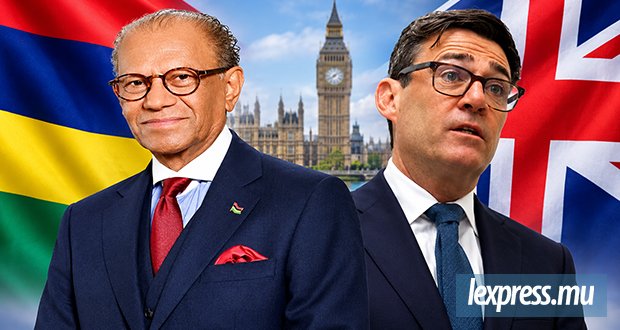
The minister of Finance is almost on the finish line. This last week before the budget speech could however prove quite difficult, as he has consultations with his fellow ministers. In an interview to l’express-dimanche, minister Sithanen expressed his awareness of the various problems facing him. “As minister of Finance, I have an overall view of the situation. Others will have only a partial vision of the state of affairs.”
The week is indeed a hard time for the minister, as he gets down to clearly defining his strategy. Giving more funds to each department will enhance the government’s humane and social weight; at the same time, not giving anything to Tourism could appear unrealistic at a time when the sector appears as the main pillar of the economy for the coming years.
Even though Rama Sithanen is aware that all his colleagues will put pressure on him “for the good cause” - as they all believe their projects should have priority - he is also fully conscious that it is impossible to satisfy everyone in such difficult times. A tight budget has to be introduced.
In any case, the minister has not tried to placate anyone since the pre-budget consultations started. When he had to tackle the trade unions, he did it without any qualms of conscience as he intends to implement more flexibility in the work market. He is adamant that workers will have to be trained so that they can move from one sector to another whenever the situation so requires.
Likewise, the minister chose to speak the truth to the private sector. The duty-free island will sooner or later have to be implemented for the future of the country and local companies will have to adapt… or perish.
Both the previous and present governments made it clear that the only way of surviving for Mauritius is by having a more open economy. Pravind Jugnauth’s last budget showed how committed his government was to achieving more openness through a duty-free island. If there was a feeling that the project had lain dormant during the first months of the government, it has reappeared with the preparation of the budget.
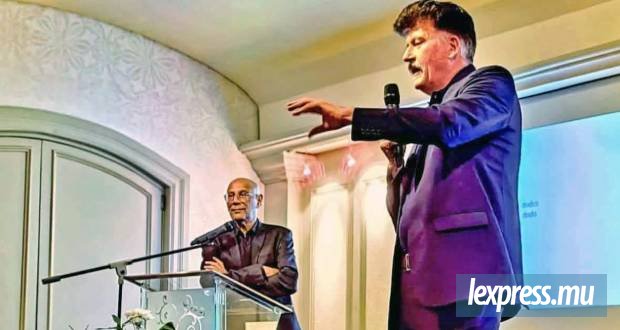
The financial secretary designate, Ali Mansoor, did not mince his words at the workshop for the liberalisation of trade organised by the Chamber of Commerce and Industry and the Association of Mauritian Manufacturers. Faced with the reluctance of the private sector to see the project launched too rapidly, he was far from being out of his depth and stuck to his point. Even though the government is ready to help the private sector adapt to this new layout, it is out of the question to give up the idea.
Even though the private sector says it agrees with the principle, it appears quite reluctant as the project moves forward. Operators say such a change in trade circles should not occur so rapidly as they need time and accompanying measures to face the new economic model.
However, Ali Mansoor asserts that the opening-up of the economy will be successful only if it is done in one go. “We have to show to our international backers that we are really committed to start in-depth and bold projects. The bolder the reforms will be, the more interest international partners will have in dealing with us.”
Achieving the duty-free island doesn’t mean just opening duty-free shops. It is a whole concept as in Singapore or Dubai. There is no doubt that the economy of such countries has prospered thanks to a decision to be more open.
On the other hand, countries that have not opened up completely have failed in their objective. If countries like Malawi have not been able to face global competition, it is because they took half-decisions. With this in mind, the financial secretary designate appealed to the private sector, “Do not tell me that we can’t do it but tell me what we can do to help you move to the new model. Give me your shopping list.”
<I>Unlike Ali Mansoor, Gibert Espitalier-Noël from Food and Allied does not believe that the concept of a duty-free island and a certain degree of protection are incompatible.</I>
For Ali Mansoor, it is just a matter of local companies adapting to the new system. At first sight, the operators seem to be reacting positively to the Finance minister’s appeal; but they first want the government to establish conditions that will allow the companies to adapt more easily. “The government wants to rush in implementing liberalisation. It has to rush in giving us the means to face the abolition of customs rights as well,” explains Gilbert Espitalier-Noël from Food and Allied.
Unlike Ali Mansoor, Gilbert Espitalier-Noël does not believe that the duty-free island and a certain degree of protection are incompatible. In his opinion, about ten products considered to be hypersensitive ones should be kept under state protection. But, for Ali Mansoor, there should be no half-measures. “Do you think we can compete with countries like Singapore, Hong-Kong and Dubai while protecting a section of our local industry? (…) One can’t be a little bit pregnant. Either one is pregnant or one isn’t. Either we are an open country or we’re not. Unsuccessful countries are those that tried to be open while keeping up a minimum of protection. This did not work,” he concluded.
Publicité
Publicité
Les plus récents