Publicité

Family life education

My friend and colleague Shakuntala Hawoldar spoke for many a parent when, with her usual eloquence, she described how the family and family solidarity were deteriorating in this country (MBC-TV debate, January 2006). In the late 70s, the same ?feeling? led UNESCO (with UNFPA) to develop a response through a project on Family life education (FLE), offered to all member states.
Under minister Parsuraman, the MIE took it up and, from 1984 to 1987, developed a local adaptation, costing some 280,000 US $, mainly spent on external consultants. I was a contributor to both the international and local projects they were very good programmes. However, for many reasons (the rat-race being one), it never caught the imagination of teachers, parents and pupils, accent remaining on the famous examinable subjects.
Two programmes from the Catholic diocese have made headway, with similar objectives (improving family life): one is CPM (Cours de préparation au mariage), very popular in some milieu and extremely beneficial to those fiancés who make time for it; the other is Marriage encounter (a couple?s meet-and-share experience).
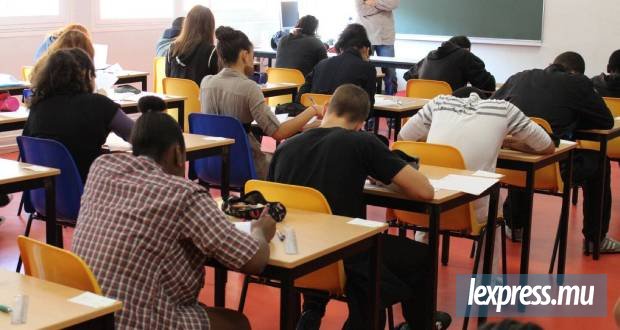
Various school-based subjects (e.g. Social studies, Citizenship, PSHE, Home economics, Sex education, PE, Religion) do touch to varying degrees upon family life and well-being. Also several NGOs have set up family and parental education programmes such as ?L?éducation à la vie et à l?amour? by a group called EVA.
Overall, nowhere near enough, when one considers that a 14-year old may spend the 168 hours in a week as follows: 35 hrs at school, 21 hrs in public places and a whopping 112 hrs (66%) at home, with the family! But who has not heard parents complaining that their teenagers treat the family home as a convenient restaurant, a place to sleep and watch TV and the source of funds! What has happened to quality family time - meals together, conversation, helping each other?
So should we not turn once again to formal FLE programmes and offer them at both primary and secondary levels, to all students? Much prior training of staff may, of course, be necessary. But what exactly is FLE ?
FLE is a multidisciplinary field that attempts to improve and enrich the quality of life for individuals and families across the life cycle. This can be accomplished using a preventive approach, in small groups. It has also been proposed and tried as a school subject, on its own or integrated into existing ones. FLE can be anything from teaching about relationships in schools to providing a parent?s day out.
There is a large variety of FLE programmes available. Many from the USA tend to confuse FLE with sexual education or religious studies. The Unesco programme was strongly population-control oriented, no doubt due to UNFPA influence. What, anyway, goes into a balanced FLE course? Here are a few typical themes, generally NOT part of the ministry?s curricula for the primary and lower secondary, nor in SC or HSC syllabuses.
-
Strengthening families: building a healthy family; responsibilities and rights of parents and children; equity; step-families (more and more common today); navigating the legal system in cases of marital violence, abuse, separation etc; dealing with milestones - birth and bereavement, courtship and wedding, new job, exam results; moving house; imprisonment, illness, loss of employment; education, advancement, finance and home-building; and, for parents, learning care for oneself as a prerequisite of caring for others.
-
Living together: facilitating daily life and developing; the extended family; neighbourhood and national solidarity; courtesy and family tradition; healthy living for elders; relationships between three successive generations under one roof and the role of grandparents; conflict avoidance and resolution.
-
Personal well-being: stress management; lifestyle management at work, at school, during leisure time, at home; personal advancement, physical and mental well-being; worship, spiritual and human values.
-
Home structures: home management; house layout for privacy and community living; self-sufficiency for the family.
FLE on its own is not going to save the Mauritian family, but it can contribute to it. My recommendation of best practice is to integrate FLE elements into the new umbrella subject (Personal, Social and Health Education) for the key formative years of five to 14, i.e. at primary and lower secondary levels.
Dr. Michael ATCHIA
Publicité
Publicité
Les plus récents