Publicité

Straight ANSWERS

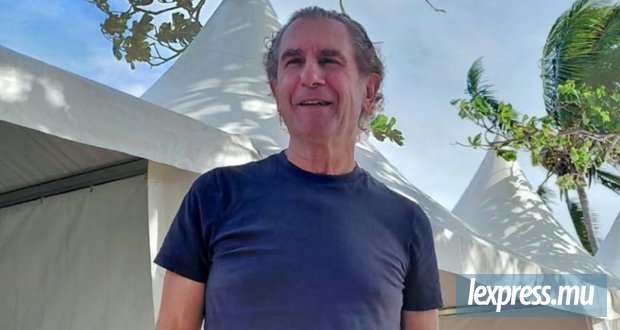
<B>Dr. Ben Veeraragoo</B> Company doctor
<B>Why do you feel so concerned about road safety? </B>
As a company doctor, I think that companies should do everything to avoid such tragic events. They should be given the means and give themselves the means to fight against accidents at their own level. Many accidents are due to a lack of proper regulations for drivers.
Then, as a Mauritian citizen, I feel very sad to see that Mauritius has one of the world?s highest rates of fatal road accidents. I am scared when I see pensioners driving so many young children to school in the morning. There is no measure in the law that allows the authorities to check whether these people are fit to drive. We have many checks to see if cars are safe enough, educational campaigns and so on, but we are forgetting the key-actor: the driver.
<B>In practical terms, what are the problems that companies should solve and what measures could be applied? </B>
I think that there are many campaigns and programs for safe driving in Mauritius but unfortunately no concrete measures follow. The government should act by implementing regulations that would give companies adequate means for better control over their drivers. It should start by ascertaining that all drivers employed by a company are ?vocational drivers.? A certificate of medical fitness should be attached to the driving licence, which would involve a full-eye test as in Great Britain. This test would be strict and would include checking the vision, the heart and any disability. The law should bind doctors to notify the National Transport Authority (NTA) of any relevant disability. A Medical Advisory Board should also be attached to the NTA to inform companies and authorities of any problem. Are working hours regulated as they should be? People work and drive hours on end; they are thus very tired and we should not be astonished when some people fall asleep at the wheel. Finally, companies should be given the right to check their drivers before work if the latter are suspected of being drunk. This is common practice abroad.
<B>Are there any other measures that have been implemented. Do they work?</B>
At government level, there is no concrete measure yet. However, there are proactive companies, which are conscious of the problem and want to contribute to making our roads safer. As a result, their drivers are bound to follow a defensive driving course at the IVTB. Shell already does it and I think every company should follow the example. The course is divided into two parts: a theoretical one that involves a review of the highway code and a more practical one when a monitor goes with the driver in his/her truck or car for one or two hours. The monitor judges his driving ability and then gives a certificate of aptitude to drive if he/she thinks the driver deserves it.
Publicité
Publicité
Les plus récents