Publicité
Less grammar and more vocabulary for oral English
Par

Partager cet article
Less grammar and more vocabulary for oral English

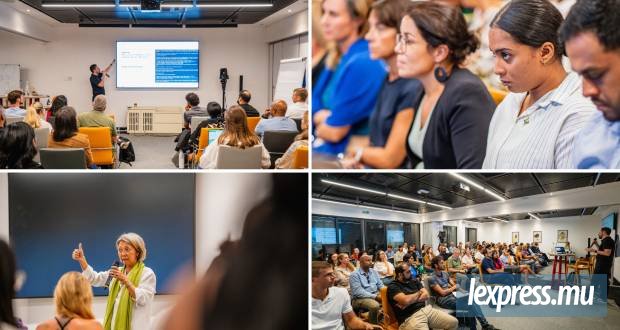
?You want to go outside, isn?t it?? Many English teachers or those who simply love the language of Shakespeare will be shocked at the sight of this sentence. Yet, it may be part of the English language and considered as correct in the future. Christine Latham Koenig, who held training sessions for teachers of schools under the aegis of the Bureau of Catholic Education (BEC) last week, revealed that English was increasingly turning into a global language and that research tends to show that it will be made more international for communication purposes as years go by. As a result, teachers may have to review the way they have been teaching English.
?I have been working as an English teacher for years in Spain and it still can happen that I do not understand what my pupils tell me ? when they speak to me in English,? she says. In fact, research shows that the main problems of communicating in English are related to pronunciation followed by vocabulary. Grammar only comes in third place. ?And yet, we see that most teachers insist on grammar in classrooms. But this will not help pupils to communicate outside school,? states Christine. More attention should actually be focused on pronunciation and vocabulary to allow people to communicate in this global language, as it might develop towards something called International English in a few years.
Use of different media needed
As a lingua franca, there are different types of English. English is the main language in many countries ?but none of them possesses the language,? Christina points out. As a result, and as English is used in almost all countries today for business purposes, less attention will be paid to grammar ? the most important thing being that people make themselves understood. This is why the teaching of English might also have to develop towards oral classes.
Teachers have to get students to speak in English. The classes might no longer be based only on books but may use different media like television, CD-ROMs or anything else that could help make the class livelier and help the kids get used to the language before being brought to express themselves.
Such a trend could be used both at primary and secondary levels, as teachers would only have to make sure that the materials correspond to the level of pupils. But the methodology could remain the same.
Moreover, Christine was not alone when she came in Mauritius at the request of the BEC. Her sister, Ghislaine Kenyon, was also here and they gave complementary training sessions to BEC teachers. With her experience gained at the National Gallery in London, Ghislaine explained to teachers how they could use drawings, paintings or any work of art to help pupils express themselves in English. Through the description of images, they can be brought to use the language and become more fluent.
Publicité
Publicité
Les plus récents