Publicité
Kenya’s Green Entrepreneurs are the Epitome of Plastic Waste Management
Par

Partager cet article
Kenya’s Green Entrepreneurs are the Epitome of Plastic Waste Management
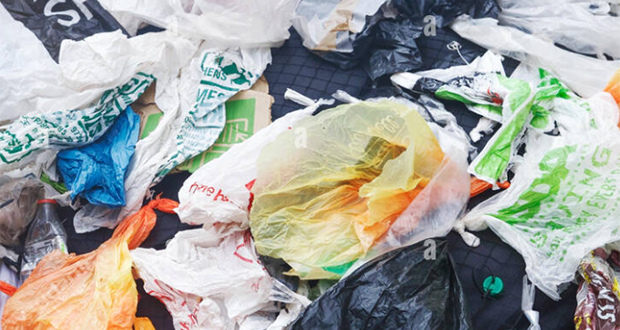
Kenya is emerging as a leader in the fight against plastic pollution and is among the first countries in East Africa to limit single-use plastics and sign the Clean Seas initiative to rid waterways of plastic waste. Like many countries, Kenya has long struggled with plastic waste across its Indian Ocean coastline and within its lakes. In Mombasa, the country’s second-largest city with some 2 million residents, 3.7 kilograms of plastic per capita leach into bodies of water annually.
With sustainability issues taking centre stage on the global agenda, Kenya has banned plastic bottles, cups and cutlery in its national parks, a move that followed a country-wide prohibition on plastic bags in 2017. The result of implementing these changes is boosting Kenya’s role in environmental stewardship for Africa and the world.
Beyond its efforts to curb the plastic menace, Kenya has also been an early adopter of the Green University Initiative. For over a decade, universities around the country have focused on greening their campuses, while enhancing student engagement and learning. Higher education offerings in environmental science, management and policy are also available at both public and private institutions.
As we mark World Entrepreneurship Week, we cannot forget the entrepreneurs and SMEs that have put Kenya on the global map in its quest to fight plastic pollution. By scaling innovative business solutions to local climate challenges, their contribution is not limited to Kenya but spans beyond the national boundaries to other areas in the region. Such entrepreneurs or organisations include Watamu Marine Association Kenya and Taka Taka Solutions. Both are finalists in Strand 1 of the Afri-Plastics Challenge, themed Accelerating Growth.
Through its Ambatana Project, Watamu Marine Association Kenya is creating innovative value chains, through initiating dynamic partnerships between the tourism industry and local women and youth groups who provide an environmental service.
TakaTaka Solutions, on the other hand, is the only end-to-end waste management company in Kenya – providing a service that spans the waste value chain all the way from waste collection to in-house recycling. They sort collected waste into over 40 fractions. As finalists in the Afri-Plastics Challenge, they have been receiving capacity-building support to help in implementing their scaling plans, alongside a grant of £100 000.
The role of SMEs in economic development cannot be overstated. A recent National Economic Survey report by the Central Bank of Kenya (CBK) indicates that SMEs constitute 98% of all business in Kenya, create 30% of the jobs annually as well as contribute 3% of the GDP (gross domestic product).
At the regional level, the East African Community (EAC) Vision 2050 recognises the role of SMEs in the regional industrial development agenda, underscoring the need for enhanced competitiveness through innovation and value addition to tap into intra- and inter-regional trade opportunities.
Despite their immense contribution, SMEs face barriers to the implementation of a circular economy such as limited financial capabilities, and scarcity of raw materials, assets and infrastructure. In addition, lack of IT (information technology) resources and technical skills are key impediments.
Currently, Africa suffers from a $2.5 trillion green financing gap that without proper resource mobilisation and with an increasing population, is expected to soar to $19.5 trillion by 2030. Consequently, the potential role of SMEs and entrepreneurs more widely in economic development and social mobility needs to be capitalised upon to bridge the gap. In Kenya, Kenya Climate Ventures (KCV), among others, will be pivotal in mobilising both international and local resources to narrow the green financing gap.
Building on the legacy of the Afri-Plastics Challenge, Challenge Works, together with the Government of Canada and USAID, have also recently launched the Mombasa Plastics Prize to seek out innovative ideas to tackle marine plastic pollution across Mombasa county, Kenya. The prize aims to encourage innovation and awareness among young adult entrepreneurs and leaders across Mombasa, by inspiring the development of solutions that tackle the problem of marine plastic waste mismanagement within informal settlements. Applications are open until Tuesday, 8th November 2022 and more information on submission requirements are available here.
To build on the above initiative, the Kenyan government should strengthen policies that encourage the transition from single-use plastic packaging towards reuse models of consumption, as this is critical to address the harmful effects of plastic pollution on the planet, people and economy. Such policies bode well for SMEs that have demonstrated tremendous leadership and ambition to reduce single-use plastic waste through reuse models, which has been catalysing growing momentum towards a circular economy across the country and the continent of Africa.
Publicité
Publicité
Les plus récents